Hadi Wijaya
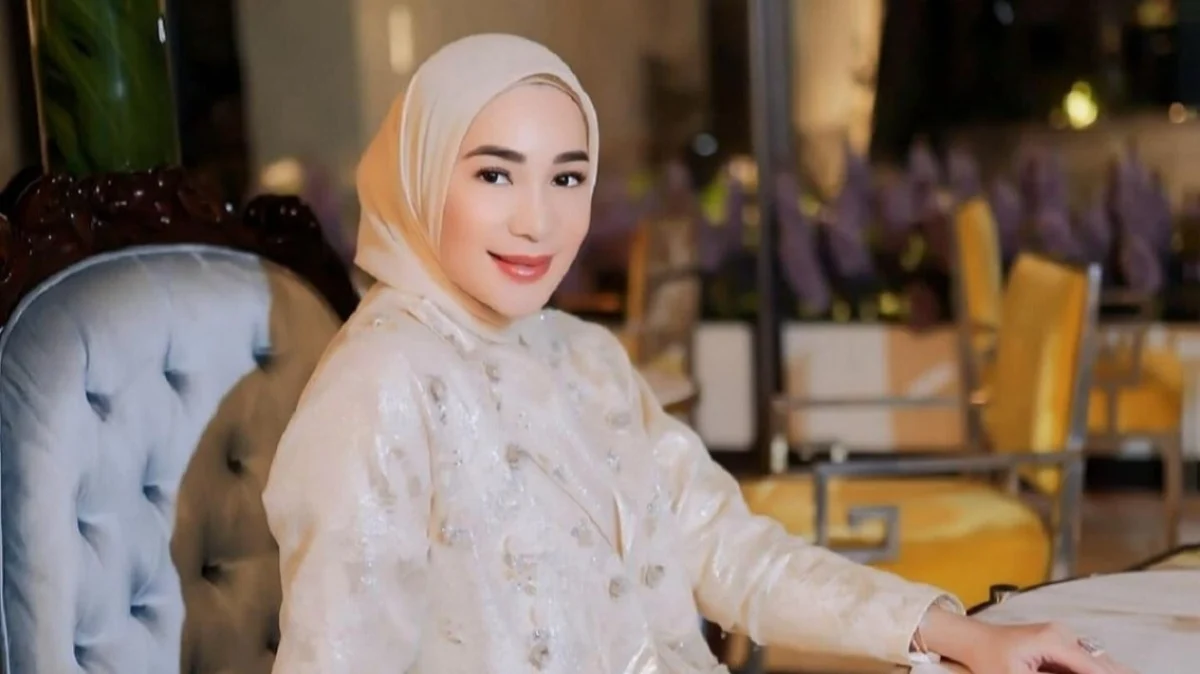
The discourse surrounding the "childfree" lifestyle choice has intensified across Indonesian social media platforms following controversial remarks by influencer and YouTuber Gita Savitri Devi, known as Gitasav, who suggested that not having children is a "natural anti-aging" remedy and that children can be a financial and emotional burden. These statements have prompted a wide array of responses from public figures, religious scholars, and professionals. Among the most prominent voices offering a counter-narrative is Rr. Sarwi Peni Wulandaru, a seasoned business coach popularly known as Coach Wulan. At 48 years old, Wulan presents a lifestyle that directly challenges the notion that motherhood inhibits personal growth or professional success, as she manages a thriving career while raising ten children without the assistance of domestic helpers.
A Life of Multitasking: The Profile of Coach Wulan
Coach Wulan’s perspective is rooted in her lived experience. As she nears the age of 50, she oversees a household of ten children, ranging in age from 18 years to a one-year-old infant. Speaking in Yogyakarta, Wulan emphasized that her large family has not served as a barrier to her external engagements. She remains a highly active figure in the Indonesian business community, holding positions in the Indonesian Association of Muslim Intellectuals (ICMI), the Indonesian Chamber of Commerce and Industry (Kadin), and the Sharia Economic Society (MES) of the Special Region of Yogyakarta.
Wulan’s daily routine involves balancing the demands of high-level organizational leadership with the intensive requirements of a large household. By choosing not to employ domestic workers, she asserts a philosophy of "hands-on" parenting and household management that she believes strengthens the family unit. "I have 10 children, and I am still active in business, organizations, and various activities," Wulan stated. Her narrative serves as a rebuttal to the "childfree" argument that children inherently drain a woman’s capacity to contribute to society or maintain her own well-being.
The Theological and Economic Counter-Argument
Central to Wulan’s rebuttal is the Islamic concept of rizq (sustenance) and the spiritual value of children. In response to the argument that children are a financial burden, Wulan pointed to the religious belief that every soul brought into the world has its provision guaranteed by the Creator. This perspective shifts the view of children from "liabilities" on a balance sheet to "assets" of spiritual and emotional wealth.
"For me, children are the coolness of the heart in all situations," Wulan explained. She invoked the traditional Indonesian adage, banyak anak, banyak rejeki (many children, many blessings), but framed it through a modern lens of spiritual resilience and community support. She argued that a large family provides a built-in support system of mutual care and prayer, which she considers more valuable than the perceived freedom of a childless life.
Furthermore, Wulan addressed the "childfree" movement through the lens of Islamic feminism and the high status accorded to mothers in the faith. She referenced the well-known Hadith where the Prophet Muhammad (PBUH) emphasized that a mother deserves three times more honor and respect than a father. This elevated status, she argued, is a recognition of the immense physical and mental struggles involved in pregnancy, childbirth—which is equated to jihad—and breastfeeding. By highlighting these struggles as noble rather than burdensome, Wulan sought to reframe the biological realities of motherhood as a source of empowerment and divine reward.
Contextualizing the Childfree Controversy in Indonesia
The debate sparked by Gitasav is not an isolated incident but reflects a growing global trend that is beginning to take root in Indonesia’s urban centers. The "childfree" movement—the voluntary choice not to have children—is often cited by its proponents as a way to achieve greater financial stability, career focus, and environmental sustainability. However, in the context of Indonesian society, where familial bonds and religious values are deeply entrenched, the movement faces significant cultural friction.
Data from the Central Bureau of Statistics (BPS) indicates that while Indonesia’s Total Fertility Rate (TFR) has seen a gradual decline over the decades—moving toward the replacement level of 2.1—the cultural expectation of marriage and parenthood remains a dominant social norm. The rise of the childfree discourse, largely facilitated by social media influencers, represents a demographic shift among millennials and Gen Z who are grappling with the "sandwich generation" phenomenon, rising costs of living, and an increasingly competitive job market.
Critics of the childfree movement, like Wulan, express concern that such views are often adopted "raw" from Western influences without being filtered through local cultural and religious values. Wulan warned the younger generation to be more discerning in following influencers, noting that the values of "good" and "bad" are often subjective and shaped by the media environment rather than foundational truths.
Comparative Analysis: The Global Demographic Shift
To understand the weight of this debate, one must look at the global demographic landscape. Countries like South Korea, Japan, and several European nations are currently facing "demographic collapses" due to plummeting birth rates. South Korea, for instance, has the world’s lowest fertility rate (0.78 as of 2022), leading to school closures, labor shortages, and a strained pension system for the elderly.
In Indonesia, the government is currently banking on a "Demographic Bonus"—a period where the working-age population outnumbers the dependents. If the childfree sentiment were to become a widespread demographic trend, the long-term economic implications could mirror the struggles seen in East Asia. From a macro-economic perspective, a shrinking youth population reduces the future workforce and innovation capacity. Coach Wulan’s advocacy for large families, while rooted in faith, aligns with the traditional economic view that human capital is a nation’s greatest resource.
The Role of Digital Literacy and Family Values
A significant portion of Wulan’s message was directed at digital literacy. She urged millennials and Gen Z not to accept the opinions of influencers as absolute truth. The "childfree" campaign, often wrapped in the language of feminism and personal autonomy, is viewed by Wulan as a potential deviation from the spiritual path outlined in the Quran and Hadith.
"If young people start directing their obsession toward the afterlife, their value becomes obedience [to God]," she said. She emphasized that the role of the family is crucial in filtering external influences. In an era where algorithms often dictate social trends, Wulan advocates for a return to family-centered education where parents actively instill values that can withstand the "negative campaigns" of the digital world.
Implications for Modern Motherhood
The story of Coach Wulan serves as a case study for "having it all" in a traditionalist context. Her ability to navigate the complexities of the 21st-century business world while adhering to a traditional family structure offers a middle ground in the polarizing childfree debate. It suggests that the perceived conflict between career and motherhood is not an inherent reality, but a logistical and psychological challenge that can be overcome with specific mindsets and support systems.
However, sociologists point out that Wulan’s experience, while inspiring, may not be easily replicated by everyone. The ability to manage ten children without domestic help while running businesses requires a high level of organizational skill, physical stamina, and likely a supportive partner and community. For many women in the "sandwich generation," the lack of such support systems is exactly what drives the interest in a childfree lifestyle.
Conclusion: A Call for Wise Discernment
The clash between the childfree movement and traditional family values in Indonesia highlights a society at a crossroads. On one hand, influencers like Gitasav represent a shift toward individual autonomy and a rejection of traditional gender roles. On the other hand, figures like Coach Wulan represent the resilience of traditional structures and the belief that fulfillment is found through sacrifice, family, and faith.
Wulan’s message to the women of Indonesia is one of empowerment through expansion rather than limitation. She encourages women to continue learning and increasing their value without fearing that marriage or children will diminish their potential. As the debate continues to unfold in the digital sphere, the consensus among observers is the need for a more nuanced conversation—one that respects individual choices while also acknowledging the societal, economic, and spiritual frameworks that have long defined the Indonesian identity.
Ultimately, the discourse serves as a reminder of the power of narrative. Whether children are seen as a "burden" or a "blessing" often depends on the philosophical lens through which one views life. For Coach Wulan, the answer is clear: the path to a meaningful life is paved with the challenges and joys of a large family, guided by the principles of faith that have stood the test of time.