Azin Asro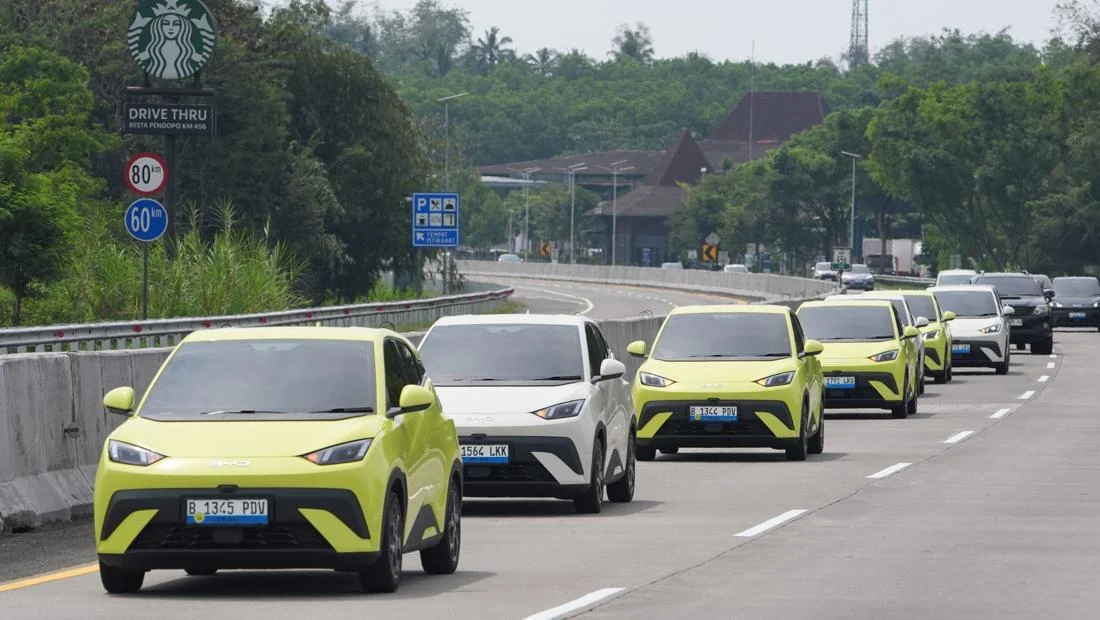
The Indonesian automotive landscape is witnessing a dramatic shift in the trajectory of one of its most prominent electric vehicle (EV) players, as recent data reveals a sharp decline in the wholesale distribution of the BYD Atto 1. After dominating the market as the top-selling electric vehicle throughout 2025, the Atto 1—a five-passenger compact SUV that redefined consumer expectations for affordable yet high-tech EVs—has seen its monthly distribution figures plummet to double digits. According to the latest industry reports for the first five months of 2026, the wholesale numbers for May recorded a mere 26 units, a stark contrast to the thousands of units moved monthly just a year prior. This downturn is not being characterized by the manufacturer as a loss of consumer interest, but rather as a calculated strategic pivot as BYD Motor Indonesia transitions from a Completely Built-Up (CBU) import model to a full-scale local assembly (CKD) operation at its new facility in Subang, West Java.
To understand the magnitude of this transition, one must look at the historical performance of the vehicle. In 2025, the BYD Atto 1 solidified its position as the "king" of the Indonesian EV market, with total wholesale distributions reaching 22,582 units. During that period, BYD benefited from aggressive import quotas and a massive push to establish a brand presence in Southeast Asia’s largest economy. However, the data for the first half of 2026 tells a story of intentional deceleration. Total wholesale figures for the Atto 1 from January to May 2026 reached 7,867 units, with the vast majority of those figures concentrated in the first two months of the year. The decline became evident in March when distributions dropped to 672 units, followed by a slide to 108 units in April, eventually bottoming out at 26 units in May.
Analyzing the 2026 Wholesale Performance
The breakdown of the 2026 wholesale data provides a clear timeline of the company’s inventory management strategy. In January, BYD recorded 3,361 units of the Atto 1 being moved from the factory/port to dealers. This momentum continued into February with 3,700 units. These high figures were largely the result of clearing out the remaining 2025 import allocations and fulfilling backorders from the previous year’s successful marketing campaigns. However, the subsequent months show a deliberate "choke point" in supply.
The drastic reduction in March (672 units), April (108 units), and May (26 units) suggests that BYD Indonesia has exhausted its initial import quotas granted under the government’s incentive programs. Under Indonesian regulations, specifically those tied to the acceleration of the battery electric vehicle program, manufacturers are permitted to import CBU units duty-free for a limited period, provided they commit to substantial local investment and meet specific local content requirements (TKDN) within a set timeframe. For BYD, 2026 marks the critical juncture where the "grace period" for massive imports ends and the obligation for local production begins.
Industry analysts suggest that the 26 units recorded in May are likely "inventory cleaning" or specialized units intended for internal testing and dealership displays rather than mass-market fulfillment. This lull in wholesale activity is a common phenomenon in the automotive industry when a brand shifts its entire supply chain from overseas manufacturing to domestic production.
The Strategic Shift to Local Assembly in Subang
The heart of BYD’s long-term strategy in Indonesia lies in its massive investment in the Subang Smart Industrial Park in West Java. The facility, which is currently being optimized for full-scale production in late 2026, is projected to have an annual production capacity of 150,000 units. This factory is not merely a satellite assembly point but is designed to be a hub for BYD’s regional operations in ASEAN.
Luther Panjaitan, Head of PR & Government Relations at PT BYD Motor Indonesia, addressed the sales fluctuations during a press gathering at Hutan Kota by Plataran in Jakarta. He acknowledged that the market might perceive the drop as a "shock," but emphasized that it is a natural consequence of the transition. "This is indeed the impact of that transition. One can see why there is a significant reduction; it is part of our internal adjustment and the optimization of our upcoming local facilities," Panjaitan explained.
The transition to local production (CKD) is a multifaceted challenge. It involves setting up supply chains for local components, training a domestic workforce to meet BYD’s global manufacturing standards, and ensuring that the vehicles produced in Subang meet the 40% to 60% Local Content Requirement (TKDN) to qualify for continued government VAT incentives. By moving to local production, BYD will be able to stabilize its pricing, insulate itself from currency fluctuations, and more importantly, fulfill the legal commitments it made to the Indonesian government when it first entered the market with zero-import duties.
Regulatory Context and Government Incentives
The Indonesian government, under its "Golden Visa" and EV incentive schemes, has been aggressive in courtships with global EV giants. The policy allows companies to import CBU vehicles without the usual 50% import duty and luxury goods tax, provided they match every imported unit with a commitment to produce a certain volume locally by 2026. BYD’s 2025 "import spree" was a utilization of this specific window of opportunity.
As 2026 progresses, the Indonesian Ministry of Industry requires these companies to prove their investment realization. The drop in Atto 1 imports is a signal that BYD is moving into the second phase of this agreement. Failing to transition to local production would not only result in heavy penalties but would also strip the brand of its competitive pricing edge, as imported CBU units would once again be subject to high taxes, making them significantly more expensive than locally-made rivals from Wuling or Hyundai.
Furthermore, the Indonesian government is pushing for the development of a complete "nickel-to-battery" ecosystem. While BYD currently uses its proprietary Blade Battery (Lithium Iron Phosphate or LFP), the company’s presence in Indonesia is seen as a cornerstone of the national strategy to become a global EV battery hub.
Future Product Roadmap: The BYD M6 DM and Beyond
Despite the temporary slowdown in Atto 1 distributions, BYD is not idling. The company is already preparing for its next wave of product launches, which are expected to be the first to roll off the Subang assembly lines. One of the most anticipated models is the BYD M6 DM (Dual Mode), a Multi-Purpose Vehicle (MPV) specifically tailored for the Indonesian market, where three-row family vehicles dominate the sales charts.
Panjaitan hinted that the M6 DM is being prepared with a high degree of local integration. "Technically, I cannot speak officially yet, but yes, it should be locally produced. The M6 DM is specifically prepared for Indonesia, equipped with components manufactured right here," he stated. This move into the MPV segment is a strategic masterstroke, as it targets the "heart" of the Indonesian car culture—the family segment currently dominated by internal combustion engine (ICE) vehicles like the Toyota Avanza or Mitsubishi Xpander.
By introducing a plug-in hybrid or "Dual Mode" MPV alongside its pure EV lineup (Atto 1, Dolphin, and Seal), BYD aims to capture consumers who are still hesitant about the charging infrastructure for long-distance travel. This diversified approach ensures that even as the Atto 1 numbers reset during the factory transition, the brand maintains its relevance across different consumer demographics.
Market Implications and Competitive Landscape
The temporary vacuum left by the Atto 1’s wholesale decline provides a window for competitors. Brands like Hyundai, with its locally-produced IONIQ 5 and the new Kona Electric, and Wuling, with its BinguoEV and Cloud EV, are vying for the top spot. Additionally, new entrants from China, such as Chery (Omoda E5) and GAC Aion, are aggressively expanding their footprints.
However, industry experts believe BYD’s current "lull" is the silence before the storm. Once the Subang factory is operational, BYD will have a cost structure that few other manufacturers can match, thanks to its vertical integration. Unlike many competitors who source batteries from third parties, BYD manufactures almost every component of its vehicles in-house. When this efficiency is combined with the logistics of local Indonesian production, the Atto 1 and its siblings could see a significant price correction, potentially making them even more affordable than they were as imports.
Conclusion: A Temporary Reset for Long-Term Dominance
The decline of the BYD Atto 1 from 22,582 units in 2025 to a mere 26 units in May 2026 is a striking data point, but it must be viewed through the lens of industrial strategy rather than market failure. The "shock" mentioned by BYD officials is the result of a deliberate transition from an import-dependent brand to a domestic manufacturer.
For the Indonesian consumer, this transition promises several benefits: better parts availability, potentially lower prices due to reduced logistics costs and tax incentives, and the knowledge that the vehicles are contributing to the national economy through job creation in Subang. As BYD prepares to restart the engines of its wholesale distribution with "Made in Indonesia" badges, the Atto 1 is expected to reclaim its position on the leaderboards by the end of 2026. The current period of low distribution is merely the necessary pause required to build a foundation for sustainable, long-term growth in the Southeast Asian EV powerhouse.