Azin Asro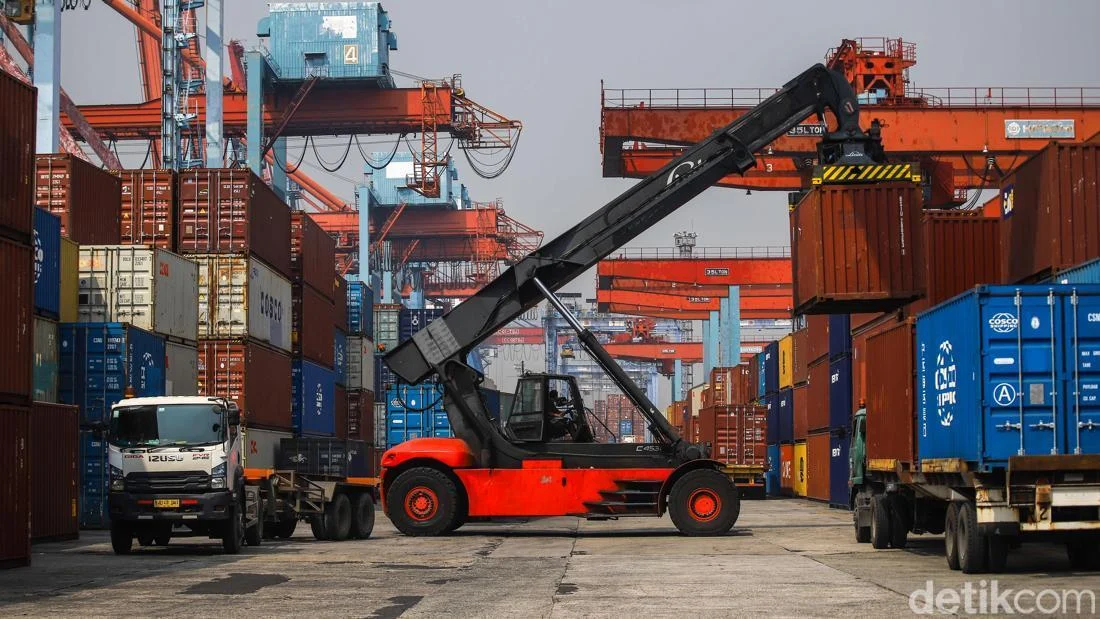
PT BYD Motors Indonesia has formally responded to allegations regarding its role in the significant accumulation of approximately 10,000 shipping containers at Tanjung Priok Port in North Jakarta. The company, which has recently made a major entry into the Indonesian electric vehicle (EV) market, acknowledged that while a number of its containers were among those delayed at the terminal, the situation was the result of complex logistical challenges rather than a deliberate strategy to utilize the port as a temporary storage facility. The clarification follows statements from high-ranking government officials who identified automotive manufacturers as contributors to the bottleneck, which has sparked concerns over port efficiency and national supply chain stability.
Luther Panjaitan, the Head of Marketing, PR, and Government Relations at PT BYD Motor Indonesia, issued a public apology on Friday for any inconvenience caused by the logistical backlog. He emphasized that the company has been working diligently to resolve the issue and that the number of containers attributed to BYD is significantly lower than some reports have suggested. This development comes at a critical time for BYD as it scales up its operations in Southeast Asia’s largest economy, aiming to capitalize on the government’s aggressive push for automotive electrification.
The Genesis of the Logistics Crisis at Tanjung Priok
The controversy gained public attention following statements by Djaka Budhi Utama, the Director General of Customs and Excise (Bea dan Cukai) at the Ministry of Finance. According to the Director General, a massive buildup of 10,000 containers had occurred at Tanjung Priok, the nation’s busiest maritime gateway. The government’s investigation suggested that several major automotive players, specifically mentioning BYD and Wuling, had allowed their imported goods to remain in the port area for extended periods.
Under standard operating procedures and port regulations, importers are expected to clear their goods within a specific timeframe to maintain "dwelling time" efficiency. The government alleged that these companies were utilizing the port’s facilities by failing to move their containers within the first three days of arrival. Such delays can lead to severe congestion, impacting the flow of goods for other industries and increasing the overall cost of doing business in Indonesia. For a port like Tanjung Priok, which handles more than 50% of Indonesia’s international trade, even a minor disruption in container turnover can have a ripple effect across the national economy.
BYD’s Defense: Financial and Operational Realities
In response to the government’s scrutiny, BYD has firmly denied any intent to stall the movement of its cargo. From a business perspective, the company argues that leaving containers at the port is an economically disadvantageous move. Luther Panjaitan explained that the costs associated with port storage and the resulting daily penalties—often referred to as demurrage and detention fees—are significantly higher than the costs of transporting the goods to private warehouses or temporary storage sites.
"We want to convey that there is no intentional effort to slow down the process," Panjaitan stated. He elaborated that the financial burden of storage fees and daily penalties at the port far exceeds the logistics and storage costs of utilizing the company’s own facilities or third-party temporary storage. In the world of international shipping, ports impose escalating fee structures for containers that exceed their "free time" (the period allowed for a container to stay at the terminal without charge). For a high-volume importer like BYD, these costs can accumulate into billions of rupiah, making "intentional" delay a highly improbable business strategy.
BYD’s internal audit of the situation revealed that the actual number of their containers involved was a "small fraction" of the 10,000 containers cited in the news. While the company did not disclose the exact figure, they maintained that their contribution to the total volume was disproportionate to the level of public and governmental focus directed toward them.
Multifaceted Factors Behind the Accumulation
The accumulation of containers at Tanjung Priok was not an isolated event but rather the result of a "perfect storm" of logistical and external factors. BYD identified several key drivers that contributed to the delay in moving their cargo:
- High Volume of Arrivals: As BYD expands its footprint in Indonesia, the volume of incoming shipments has surged. The company noted that large quantities of containers often arrive within the same weekly window, putting immense pressure on their logistics partners to clear the goods simultaneously.
- National Holidays: The period leading up to the congestion coincided with several national holidays in Indonesia. During such times, port operations may continue, but the availability of truck drivers, logistics personnel, and government administrative staff often decreases, leading to a natural slowdown in the "last-mile" delivery of containers from the port to the warehouse.
- Distribution Traffic Density: North Jakarta, where Tanjung Priok is located, is notorious for extreme traffic congestion. The movement of heavy trucks is often restricted to certain hours, and any increase in general traffic or road maintenance can significantly delay the turnaround time for container haulage.
- Fuel Price Adjustments (BBM): BYD pointed out that recent adjustments in fuel prices have forced logistics companies to recalibrate their transport capacities and pricing models. This transition period caused some transport providers to reduce their active fleets or renegotiate contracts, temporarily slowing down the evacuation of containers from the port.
- Logistics Capacity Constraints: The rapid growth of the EV sector in Indonesia has, at times, outpaced the growth of the specialized logistics infrastructure required to handle high volumes of automotive components and spare parts.
Contents of the Containers: Purnajual and Production Focus
A significant point of clarification provided by BYD was the nature of the cargo within the detained containers. Contrary to some public assumptions that the containers held finished electric vehicles (CBU – Completely Built Up units) ready for sale, Luther Panjaitan clarified that the cargo consisted primarily of essential components and spare parts.
These items are critical for two main pillars of BYD’s Indonesian strategy: local production and after-sales service (purnajual). As BYD prepares to establish local assembly lines to meet the government’s Domestic Component Level (TKDN) requirements, a steady flow of parts is essential. Furthermore, ensuring a robust supply of spare parts is vital for maintaining consumer confidence in a new brand. By clarifying that these were components rather than finished cars, BYD highlighted that the delay was actually a hindrance to their own production timelines and service commitments to Indonesian customers.
Mitigation Strategies and Coordination Efforts
Since the issue came to light in early June, BYD Indonesia has implemented a series of "acceleration steps" to clear the backlog. The company has been in constant coordination with port authorities, customs officials, and their logistics partners to streamline the discharge process.
To address the shortage of transport capacity, BYD has increased its "logistic company fleet," hiring additional trucks to move containers out of the terminal more rapidly. Furthermore, the company has adopted a "buffer" strategy by renting vacant land and temporary storage areas in the vicinity of the port. This allows them to move containers out of the high-pressure port terminal quickly, even if their primary warehouses are at capacity.
"Since the beginning of June, various acceleration steps have been taken and have shown positive results," Panjaitan noted. He added that the majority of containers from the previous period have already been moved, and the company is monitoring the situation daily to ensure that the remaining units are cleared in the shortest possible time.
Chronology of the Event
The timeline of the container buildup and the subsequent response can be summarized as follows:
- May 2024: Logistics volumes at Tanjung Priok begin to rise due to a surge in imports following new trade regulations and the arrival of multiple shipments for the automotive sector.
- Late May – Early June 2024: National holidays and logistical bottlenecks lead to a peak in container dwelling times. Government monitors identify a buildup of 10,000 containers.
- Mid-June 2024: The Director General of Customs and Excise publicly identifies BYD and Wuling as companies with significant container volumes remaining at the port beyond the three-day window.
- June 19, 2024: BYD Motors Indonesia issues a comprehensive statement explaining the situation, citing logistical complexities and denying intentional delays.
- Late June 2024: BYD reports that the majority of its containers have been moved to temporary storage or their final destinations, with increased fleet capacity in operation.
Broader Implications for the Indonesian EV Industry
The incident at Tanjung Priok serves as a case study for the growing pains of Indonesia’s burgeoning electric vehicle industry. The Indonesian government has set ambitious targets to become a global hub for EV production and battery manufacturing, leveraging its vast nickel reserves. To achieve this, the country has invited global giants like BYD, Wuling, and Hyundai to set up shop.
However, as this incident demonstrates, the physical infrastructure—specifically ports and inland logistics—must keep pace with industrial growth. If leading investors like BYD face significant hurdles in moving components through the country’s primary gateway, it could signal a need for further investment in port automation and logistics debottlenecking.
Furthermore, the scrutiny from the Ministry of Finance highlights the government’s sensitivity toward "dwelling time" metrics. For Indonesia to improve its global competitiveness ranking, it must ensure that its ports operate with maximum efficiency. This creates a high-pressure environment for multinational corporations who must balance their rapid expansion with the rigid operational requirements of Indonesian customs and port authorities.
Analysis: The Cost of Growth
From an analytical perspective, the container buildup reflects the sheer scale of BYD’s commitment to the Indonesian market. The "high volume of arrivals" mentioned by Panjaitan suggests that BYD is importing components at a scale intended to dominate the market quickly. In the first few months of 2024, BYD launched several models, including the Dolphin, Atto 3, and Seal, receiving thousands of pre-orders. Fulfilling these orders requires a massive influx of both finished units and the spare parts infrastructure to support them.
The friction at Tanjung Priok is likely a temporary hurdle in a long-term growth trajectory. However, it emphasizes the importance of "Local Content" (TKDN). The more BYD can source and manufacture within Indonesia, the less reliant they will be on the high-volume container throughput at Tanjung Priok, thereby insulating their supply chain from port-related disruptions.
In conclusion, while the accumulation of 10,000 containers created a temporary logistical crisis and drew sharp government criticism, BYD’s proactive response and explanation suggest a commitment to resolving the issue. The company’s focus on increasing logistics fleet capacity and securing temporary storage indicates a shift toward more resilient supply chain management. As the automotive industry continues to transition toward electrification, the lessons learned from this bottleneck will likely inform future infrastructure and policy decisions to ensure that Indonesia’s ports can support the "green" industrial revolution.