Azin Asro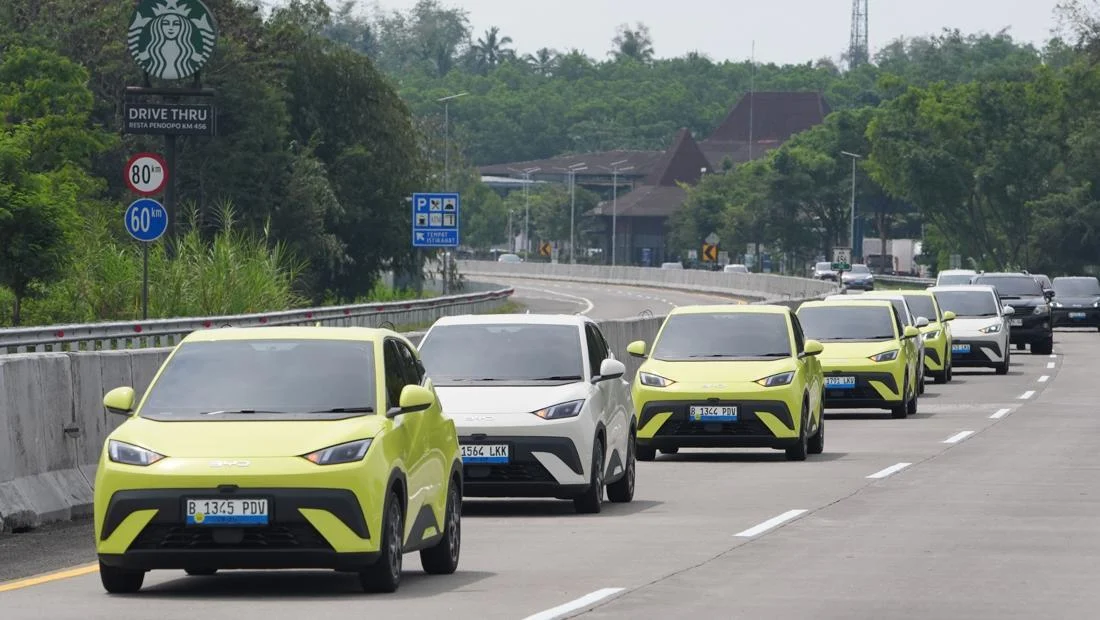
The Indonesian automotive landscape witnessed a significant shift in the electric vehicle (EV) sector during the first half of 2026, marked most notably by a sharp decline in wholesale distribution figures for BYD, the global leader in electrified transportation. According to the latest industry data, PT BYD Motor Indonesia recorded its lowest wholesale performance since its official entry into the Indonesian market, with May 2026 figures plummeting to just 895 units. This represents a stark contrast to the previous months where the brand consistently moved upwards of 4,000 units per month, signaling a temporary but impactful "shock" to its supply chain as the company pivots from a Completely Built-Up (CBU) import model to a localized production strategy.
The downturn is particularly evident in the performance of the BYD Atto 1, a vehicle that had previously established itself as one of the most sought-after electric SUVs in the archipelago. At the beginning of 2026, the Atto 1 demonstrated immense market strength, recording wholesale deliveries of 3,361 units in January and peaking at 3,700 units in February. However, as the company began preparing for its manufacturing transition, the numbers began a steady and then rapid descent: March saw 672 units, April dropped to 108 units, and by May, the figure had reached a nominal 26 units. This trend was mirrored by the BYD M6, the brand’s electric multi-purpose vehicle (MPV), which saw its distribution numbers shrink from 2,472 units in April to a mere 197 units in May.
Strategic Pivot: From Import Dependence to Local Manufacturing
The primary driver behind this statistical anomaly is not a lack of consumer demand, but rather a calculated logistical restructuring by PT BYD Motor Indonesia. The company is currently in the midst of a critical transition period, moving away from relying on imports from China to establishing a robust local production footprint. This shift is a response to the Indonesian government’s aggressive incentives for manufacturers who achieve high levels of Domestic Component Level (TKDN) and commit to localizing their supply chains.
Luther Panjaitan, Head of PR and Government Relations at PT BYD Motor Indonesia, addressed the situation during a press briefing in Jakarta. He characterized the current distribution slump as a "supply system reorganization" necessary for the brand’s long-term sustainability in the region. Panjaitan explained that as the company shifts its focus toward locally assembled units, the traditional pipeline of imported CBU vehicles must be scaled back to prevent inventory imbalances and to clear the way for the new Indonesian-made variants.
"We are currently refining our supply system during this transition from CBU items to local production," Panjaitan stated. "This has naturally caused a slight shock in our wholesale figures, but we anticipate that distribution will return to normal levels as early as June. This is a part of the factory transition dynamics that we anticipated as we prepare to serve the Indonesian market more efficiently from within."
The Impact on Market Rankings and Competitor Performance
The reduction in wholesale volume has had a visible impact on the monthly sales charts. For the first time since its debut, BYD’s top-selling models have slipped out of the national top 10 list for monthly deliveries. This temporary vacuum has allowed other players to capitalize on the market’s appetite for new energy vehicles.
In the broader context of the first five months of 2026, the Indonesian EV market remains robust. Total electric vehicle sales from January to May 2026 reached 57,087 units, contributing to a total national automotive market of 359,015 units. This places the EV market share at a healthy 15.9%, a significant increase from previous years, reflecting a growing consumer confidence in charging infrastructure and the environmental benefits of electrification.
Despite the May slump, BYD remains a dominant force in the year-to-date (YTD) standings. From January to May, BYD secured a total of 17,993 units in sales, accounting for approximately 31% to 32% of the entire Indonesian EV market. In essence, nearly one out of every three new electric vehicles sold in Indonesia during this period carried the BYD badge.
However, the competition is intensifying. The crown for the highest wholesale performance in the Jan-May 2026 period was claimed by the Jaecoo J5, which recorded an impressive 13,949 units. BYD’s models still hold strong positions in the top five, with the Atto 1 maintaining a cumulative total of 7,867 units and the M6 following with 5,017 units. The rise of brands like Jaecoo suggests that while BYD navigates its production hurdles, other Chinese and international manufacturers are aggressively vying for the pole position in Southeast Asia’s largest economy.
Chronology of BYD’s Industrial Footprint in Indonesia
To understand the current distribution "shock," it is essential to look at the timeline of BYD’s expansion in Indonesia. After a highly publicized launch in 2024 and 2025, the brand quickly realized that to maintain competitive pricing and meet the government’s "Made in Indonesia" requirements, a local factory was a necessity rather than an option.
- Early 2026: BYD records record-breaking imports to meet the initial surge in demand for the Atto 1 and Dolphin models.
- March 2026: Initial reports of the pilot production phase at BYD’s Indonesian facility begin to circulate among industry insiders.
- April 2026: PT BYD Motor Indonesia begins tapering off CBU orders from its parent plants in Shenzhen and Changsha to prepare for the local rollout.
- May 2026: Wholesale figures hit a record low as the company focuses on internal logistics, dealer training, and the production of "trial units" for showrooms and test drives.
- Late May 2026: The company confirms that local assembly has commenced, although an official grand inauguration ceremony is still pending.
The units currently being produced on Indonesian soil are reportedly being prioritized for dealer stock and test-drive fleets to ensure that when full-scale retail deliveries resume, the customer experience is seamless. This strategy ensures that the first wave of locally produced vehicles meets the rigorous quality standards expected by Indonesian consumers.
Analysis: Why Local Production is a Game Changer
The move to local production is widely viewed by automotive analysts as a masterstroke for BYD’s long-term dominance. By assembling vehicles locally, BYD can potentially lower the retail price of its vehicles by avoiding high import duties and taking advantage of VAT (PPN) incentives provided by the Indonesian government for EVs with high local content.
Furthermore, a local factory provides BYD with a "buffer" against global supply chain disruptions. During the CBU era, the brand was susceptible to shipping delays and port congestion. With a domestic assembly line, the turnaround time from factory floor to customer driveway is significantly reduced. This also allows the brand to better customize vehicle specifications—such as suspension tuning and interior materials—to suit the unique tropical climate and road conditions of Indonesia.
Industry observers also point out that the 15.9% market share for EVs in early 2026 is a tipping point. As EVs move from a niche luxury segment to a mainstream choice, the ability to provide consistent supply is what will separate the market leaders from the also-rans. BYD’s willingness to take a short-term "hit" in its May wholesale numbers suggests a confidence in its ability to reclaim the top spot once the local production lines are running at full capacity.
Future Outlook and Market Implications
As the calendar turns to June, all eyes are on PT BYD Motor Indonesia to see if the promised normalization of distribution materializes. If the transition is successful, the second half of 2026 could see a massive surge in BYD deliveries as backlogged orders are fulfilled by the new local facility. This would likely result in a fierce battle for market share between BYD and the current frontrunner, Jaecoo.
The implications for the Indonesian economy are also significant. The shift toward local EV production supports the national goal of becoming a global hub for the EV ecosystem, leveraging the country’s vast nickel reserves for battery production. BYD’s commitment to a local factory is a vote of confidence in Indonesia’s industrial policy and a signal to other global manufacturers that the era of simply importing vehicles into Indonesia is coming to an end.
While the May 2026 figure of 895 units might appear alarming at first glance, it is a classic example of "stepping back to leap further." For BYD, the temporary decline is the cost of doing business in a market that is rapidly maturing. As the "Made in Indonesia" BYD units begin to roll off the assembly lines and into the hands of waiting customers, the company is poised to not only regain its lost ground but to potentially redefine the standard for the Indonesian electric vehicle industry. For now, the automotive sector remains in a state of watchful anticipation, waiting for the giant of the EV world to complete its transition and resume its aggressive expansion across the archipelago.