Azin Asro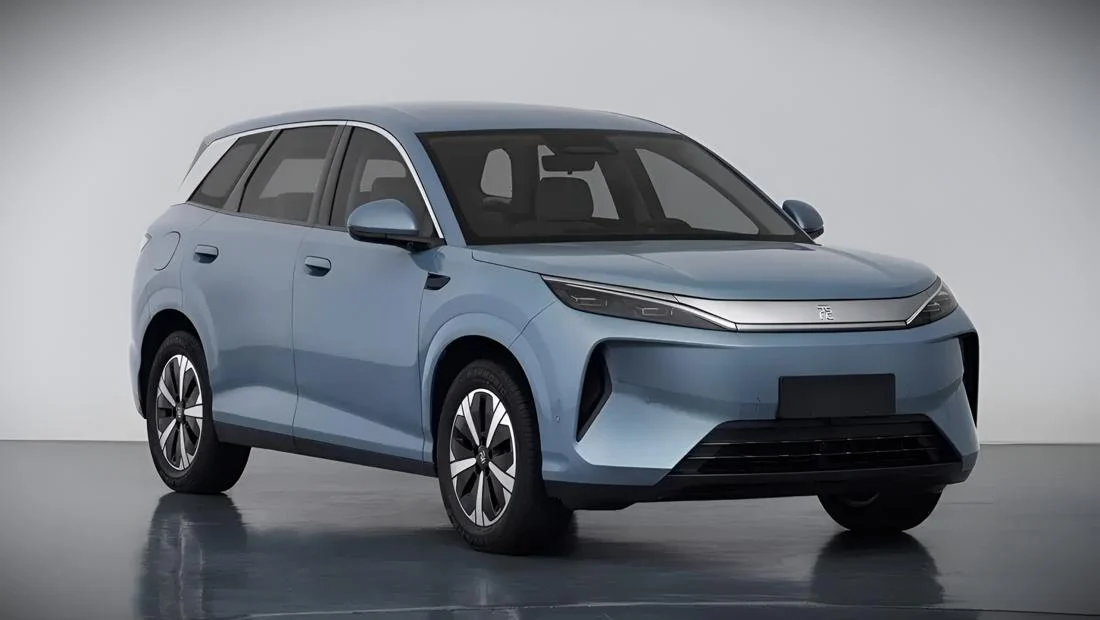
BYD, the world’s leading manufacturer of new energy vehicles (NEVs), has officially registered a significant update for its flagship electric SUV, the Atto 3, in its home market of China. Known domestically as the BYD Yuan Plus, the latest iteration of this globally successful vehicle has appeared in the Chinese Ministry of Industry and Information Technology (MIIT) and the New Energy Vehicle Purchase Tax Exemption Directory, signaling an imminent launch. The updated model represents a substantial leap forward in electric vehicle technology, boasting a more powerful powertrain, a sophisticated rear-wheel-drive platform, and the debut of the second-generation Blade Battery, which promises industry-leading "flash charging" capabilities and extended driving ranges.
Technical Evolution: Battery Capacity and Range Extensions
The core of the new BYD Atto 3’s appeal lies in its upgraded energy storage systems. According to official government filings, the SUV will be offered with two distinct lithium iron phosphate (LFP) battery configurations. The standard-range variant features a 57.545 kWh battery pack, while the long-range version is equipped with a high-capacity 68.547 kWh unit. These upgrades directly translate to improved efficiency and endurance on the road.
Under the China Light-Duty Vehicle Test Cycle (CLTC), the Atto 3 is now rated to achieve a range of between 540 kilometers and 630 kilometers on a single charge, depending on the chosen battery size. This is a notable improvement over the outgoing model, which typically offered ranges between 430 km and 510 km (CLTC). By pushing the upper limit beyond the 600-km mark, BYD is positioning the Atto 3 to compete more aggressively with premium electric crossovers that have traditionally occupied a higher price bracket.
The Second-Generation Blade Battery and Flash Charging
The most significant technological breakthrough included in the new Atto 3 is the integration of BYD’s second-generation Blade Battery. While the first generation revolutionized the industry with its safety-focused "sandwich" structure and LFP chemistry, the second generation focuses on energy density and thermal management, specifically optimized for ultra-fast charging.
BYD has introduced "flash charging" technology with this update, claiming performance metrics that challenge the current industry standard. The manufacturer states that the new Atto 3 can charge from 10% to 70% in just 5 minutes under optimal conditions. Furthermore, a near-full charge of 10% to 97% can be achieved in 9 minutes. This level of speed is designed to eliminate "range anxiety" and "charging anxiety," two of the primary hurdles for mass EV adoption.
A critical component of this new battery technology is its resilience in extreme environments. Standard LFP batteries often struggle in cold climates, experiencing significantly slower charging speeds and reduced range. However, BYD’s new thermal management system ensures that even at temperatures as low as -30°C, the charging time only increases by approximately 3 minutes compared to normal operating conditions. This makes the Atto 3 a viable year-round vehicle for markets in Northern Europe, North America, and Northern China.
Shift to Rear-Wheel Drive and Enhanced Power
In a departure from the previous front-wheel-drive (FWD) architecture, the new Atto 3 utilizes a newly developed pure electric platform designed for rear-wheel drive (RWD). This architectural shift is expected to improve the vehicle’s handling dynamics, providing a more balanced weight distribution and better traction during acceleration.
The powertrain options have also seen a boost. The new model will be available with two motor configurations:
- A 200 kW (approx. 268 hp) electric motor.
- A high-performance 240 kW (approx. 322 hp) electric motor.
Compared to the 150 kW motor found in the current global version of the Atto 3, these new outputs represent a significant increase in performance, likely resulting in a much faster 0-100 km/h acceleration time and improved highway overtaking capabilities.
Refined Design Language and Dimensions
Visually, the new BYD Atto 3 continues to evolve the "Dynasty" design language, which blends traditional Chinese aesthetic elements with modern aerodynamic efficiency. The front fascia features a distinctive silver grille panel, a hallmark of the "Dragon Face" design philosophy, flanked by slim, blackened LED headlight clusters. The bumper has been redesigned to incorporate vertical air intakes on either side, which not only provide a more aggressive stance but also serve to reduce aerodynamic drag around the front wheels. A trapezoidal lower grille completes the front-end look.
The vehicle’s physical footprint has also been slightly adjusted to accommodate the new platform and larger battery packs. The dimensions are as follows:
- Length: 4,665 mm
- Width: 1,895 mm
- Height: 1,675 mm
- Wheelbase: 2,770 mm
These measurements indicate a slightly longer and wider body compared to the previous version (4,455 mm length), placing it more firmly in the mid-size SUV segment. The 2,770 mm wheelbase ensures a spacious cabin, a key selling point for families. To complement the updated body, BYD offers a choice of new 18-inch or 19-inch alloy wheels with aerodynamically optimized designs.
At the rear, the Atto 3 retains its signature through-type taillight bar, which creates a seamless light signature across the tailgate. New additions include a two-segment high-mounted brake light and a redesigned rear wiper assembly, emphasizing a cleaner and more premium aesthetic.
Chronology of the Atto 3 Development
The journey of the Atto 3 (Yuan Plus) has been one of rapid expansion and constant iteration.
- February 2022: BYD officially launched the Yuan Plus in China, built on the then-new e-Platform 3.0. It was the first SUV designed with global markets in mind.
- Late 2022 – 2023: The vehicle was rolled out globally under the "Atto 3" nameplate, reaching markets in Australia, Thailand, Europe, and Southeast Asia. It quickly became the top-selling EV in several countries, including Thailand and Israel.
- Early 2024: BYD released the "Honor Edition" of the Atto 3 in China, focusing on price reductions to compete in the domestic "price war" while adding a new "Black Knight" interior and exterior color scheme.
- Late 2024: The registration of this newest model marks the first major technical overhaul since the vehicle’s inception, moving it away from the e-Platform 3.0 toward a more advanced RWD-based architecture.
Market Context and Competitive Landscape
The release of the updated Atto 3 comes at a time of intense competition in the global electric vehicle market. BYD is currently locked in a battle for global EV supremacy with Tesla, while also facing domestic competition from brands like Xiaomi, GAC Aion, and Geely.
By introducing a 630-km range and 5-minute flash charging, BYD is directly targeting the weaknesses of its competitors. For comparison, most vehicles in the Atto 3’s price segment currently offer 10% to 80% charging times in the 25-to-40-minute range. If BYD can deliver on its 9-minute 10-97% claim in production models, it will set a new benchmark for the "mainstream" EV segment, a feat usually reserved for high-end luxury EVs using 800V architectures like the Porsche Taycan or the Hyundai Ioniq 6.
Official Responses and Industry Implications
While BYD has not yet held a formal press conference for the new model, industry analysts suggest that the registration in the MIIT directory indicates a market launch within the next quarter. Sources close to the company suggest that the "flash charging" technology is part of BYD’s broader strategy to vertically integrate its supply chain, producing its own chips, motors, and batteries to maintain a cost advantage while pushing technical boundaries.
Logical inferences from market experts suggest that this update is not just about the Chinese market. The Atto 3 is BYD’s "world car." Therefore, the technology seen in this MIIT filing is expected to migrate to international versions of the Atto 3 by mid-2025. This would allow BYD to maintain its momentum in Europe, where stringent emissions regulations and a growing demand for high-quality, affordable EVs play into the company’s strengths.
Analysis of Broader Impact
The implications of this update extend beyond a single car model. First, the introduction of the second-generation Blade Battery signals that BYD is ready to move the entire industry toward LFP batteries that do not compromise on charging speed. This is crucial because LFP (Lithium Iron Phosphate) is cheaper and more sustainable than NCM (Nickel Cobalt Manganese) chemistries, which are more common in long-range vehicles but rely on scarcer materials.
Second, the shift to a RWD platform for its core SUV suggests that BYD is prioritizing "driving pleasure" and premium mechanical configurations to shed its image as a budget-focused manufacturer. This move aligns with the company’s recent launch of high-end sub-brands like Yangwang and Fangchengbao.
Finally, the focus on extreme cold weather charging performance is a strategic move to capture markets that have been hesitant to adopt EVs. If the Atto 3 can truly maintain its charging efficiency at -30°C, it removes one of the final technical barriers for EV adoption in regions like Scandinavia, Canada, and Northern China.
As BYD prepares for the official commercial rollout of the new Atto 3, the automotive world will be watching closely. If the vehicle’s real-world performance matches its registered specifications, it could very well redefine expectations for what a mid-range electric SUV can achieve, further solidifying BYD’s position at the forefront of the global energy transition.