Azin Asro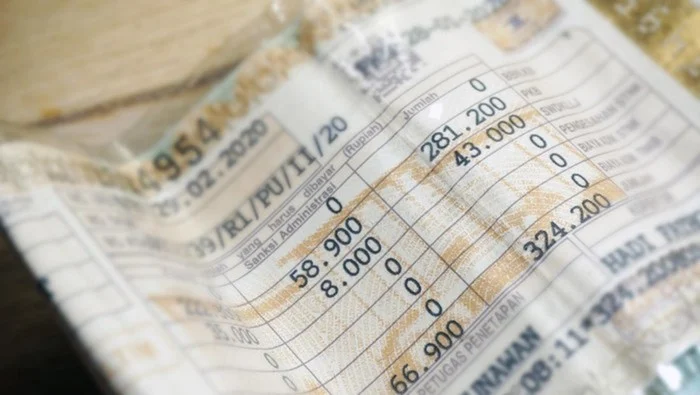
The debate surrounding the affordability of vehicle ownership in Southeast Asia has once again taken center stage, driven by a striking disparity in annual automotive taxation between Indonesia and Malaysia. For consumers and automotive enthusiasts alike, a side-by-side comparison reveals that maintaining the exact same vehicle model in Malaysia can cost a fraction of what Indonesian owners are required to pay annually. This financial gap is not merely a byproduct of random fiscal policy; rather, it is rooted in fundamentally different regulatory frameworks, calculation methodologies, and state philosophies regarding transportation economics.
As the automotive markets in both nations continue to expand rapidly, the burden of recurring vehicle taxes has become a critical factor in household budgeting and consumer purchasing behavior. Understanding how these taxation systems operate requires a deep dive into the legal bases, mathematical formulas, and socio-economic implications that govern vehicle ownership in Indonesia and its northern neighbor.
Main Facts and the Core Disparity
At the heart of the discussion is a stark numerical contrast. Take, for instance, a popular multi-purpose vehicle (MPV) such as the Toyota Kijang Innova Zenix. In Indonesia, specifically within the Special Capital Region of Jakarta, the baseline annual vehicle tax for a first-registered unit begins at approximately Rp 7 million (roughly $440 USD) for standard combustion or hybrid variants. This figure represents only the starting point and can scale upward significantly depending on the vehicle’s specific trim, progressive tax rates for multi-car households, and regional luxury vehicle surcharges.
In stark contrast, vehicle taxation in Malaysia is structured around an entirely different metric: engine displacement, commonly measured in cubic centimeters (cc). Rather than taxing the vehicle based on its current market value or purchase price, the Malaysian Road Transport Department (Jabatan Pengangkutan Jalan or JPJ) levies a road tax (Cukai Jalan) determined primarily by the volume of the engine. Under this system, the financial burden for smaller-displacement engines is remarkably light. For instance, non-sedan vehicles such as SUVs, MPVs, and pick-up trucks equipped with engines up to 1,000 cc incur an annual road tax of merely 20 Malaysian Ringgit, which equates to roughly Rp 87,000 ($5.50 USD). Even as engine sizes scale up to 1,499 cc—a category that encompasses many modern family vehicles—the annual fee remains exceptionally modest at around 120 Ringgit, or approximately Rp 520,000 ($33 USD).
Even at the higher end of the spectrum, where larger performance or luxury vehicles utilize 3,500 cc engines, the annual road tax in Malaysia caps at approximately 2,440 Ringgit (around Rp 10 million) for non-sedan models and 4,380 Ringgit (around Rp 19 million) for sedans. While these higher tiers are more substantial, they still pale in comparison to the progressive luxury sales taxes and cumulative annual levies imposed on high-end vehicles in Indonesia, where total annual ownership costs can easily eclipse the equivalent brackets in Malaysia when factoring in cumulative regional and national duties.
Mechanics of Taxation: Indonesia’s Market-Value Approach
To comprehend why Indonesian vehicle taxes are considerably higher, one must examine the legal and administrative framework mandated by the Ministry of Home Affairs. In Indonesia, the annual Motor Vehicle Tax (Pajak Kendaraan Bermotor or PKB) is calculated using a formula anchored to the Vehicle Sale Value (Nilai Jual Kendaraan Bermotor, or NJKB).
The NJKB is defined as the general market price of a motor vehicle, derived from comprehensive and accurate data sources compiled by the government. Annually, the Ministry of Home Affairs issues a formal regulation that serves as the baseline for the National Database of Vehicle Values. This regulation outlines the standardized NJKB for every make, model, year, and variant of a vehicle circulating within the country.
To calculate the final PKB liability, the regional provincial government applies a specific regional tax rate—typically ranging between 1.5% and 2% for a first-registered vehicle—to the established NJKB figure. This product is then added to the mandatory Road Traffic Accident Fund Contribution (Sumbangan Wajib Dana Kecelakaan Lalu Lintas Jalan, or SWDKLLJ), a fixed insurance premium managed by state-owned PT Jasa Raharja to cover third-party bodily injury liabilities in traffic accidents.
Furthermore, Indonesia’s system incorporates progressive taxation. If a household or individual registers a second, third, or subsequent vehicle under the same name and residential address, the regional tax rate multiplies incrementally, sometimes reaching up to 10% or more of the NJKB. Consequently, Indonesian car owners face a taxation model that directly penalizes higher market valuations and multi-vehicle ownership, viewing private automobiles partially as wealth indicators subject to escalating state levies.
Mechanics of Taxation: Malaysia’s Engine-Displacement Model
Malaysia’s approach, codified under the Road Transport Act, approaches motor vehicles primarily as utilitarian tools of mobility rather than assets of wealth accumulation. The road tax structure is bifurcated into two primary schedules: one for private-use sedan vehicles and another for non-sedan models, which include sports utility vehicles (SUVs), multi-purpose vehicles (MPVs), windows vans, and pick-up trucks.
Under the Malaysian schedule, vehicles featuring exceptionally small engines enjoy deep fiscal incentives. For instance:
- Engines up to 1,000 cc: 20 Ringgit (approx. Rp 87,000) per year for both sedans and non-sedans.
- Engines between 1,001 cc and 1,200 cc: 55 Ringgit (approx. Rp 240,000) for sedans and 70 Ringgit for non-sedans.
- Engines between 1,201 cc and 1,400 cc: 70 Ringgit (approx. Rp 306,000) for sedans and 100 Ringgit for non-sedans.
- Engines between 1,401 cc and 1,600 cc: 90 Ringgit (approx. Rp 393,000) for sedans and 120 Ringgit for non-sedans.
The progression remains gradual until engine capacities exceed 2,000 cc, after which progressive base rates and cubic-capacity increments begin to add up. However, even with these additions, the absolute financial output required by a Malaysian motorist to maintain legal registration on public roads is significantly lower than the baseline amounts paid by Indonesian motorists driving comparable vehicle classes.
It is important to note, however, that while Malaysia’s annual road tax is exceptionally low, vehicle owners are legally mandated to purchase comprehensive private motor insurance every year before renewing their road tax. The cost of this insurance varies dynamically based on the vehicle’s market value, model, age, and the policyholder’s No-Claim Discount (NCD) history. Thus, while state-levied road taxes are minimal, total annual compliance costs in Malaysia are balanced by mandatory private insurance premiums.
Historical Context and Chronological Evolution
The divergence in automotive taxation between the two neighboring nations is not a recent phenomenon; it is the result of decades of distinct economic planning, industrial policy, and fiscal strategy.
During the late 20th century, both Indonesia and Malaysia sought to establish domestic automotive industries as catalysts for manufacturing growth and technological transfer. Malaysia launched its national car project, Proton, in the early 1980s under state-backed industrialization policies. To support local manufacturing and encourage motorization among the burgeoning middle class, the Malaysian government deliberately kept the cost of vehicle operation—including fuel subsidies and road taxes—relatively low, utilizing an engine-size-based tax system that favored economical, locally produced compact cars.
Conversely, Indonesia focused heavily on attracting foreign joint-venture manufacturing plants, particularly from Japanese automotive giants, establishing the archipelago as a premier production hub for utility vehicles, specifically MPVs designed for large families. However, as urban centers like Jakarta expanded rapidly, congestion and environmental concerns prompted the Indonesian government to utilize fiscal instruments to manage vehicle growth. The transition toward utilizing NJKB as the core tax metric allowed regional governments to capture revenue tied directly to the rising market prices of modern vehicles, transforming the annual vehicle tax into a crucial source of local government revenue (Pendapatan Asli Daerah or PAD).
Over the subsequent decades, these respective policy paths hardened. Malaysia maintained its engine-capacity road tax structure as a matter of social continuity, while Indonesia progressively layered on luxury sales taxes (PPnBM), regional progressive vehicle taxes, and periodic adjustments to NJKB calculations to reflect inflationary pressures and currency fluctuations.
Official Responses and Institutional Perspectives
Financial and transportation authorities in both countries defend their respective frameworks by pointing to broader macroeconomic objectives.
Indonesian fiscal policy makers frequently emphasize that the NJKB-based tax system ensures progressive taxation, aligning with the constitutional mandate that wealth and high-value assets should contribute proportionally more to state and regional development funds. Representatives from regional tax agencies argue that revenue generated from the PKB is directly funneled back into infrastructure development, road maintenance, and public transportation improvements within the specific provinces where the vehicles are registered. Furthermore, officials note that the current tax system accommodates green vehicle incentives; electric vehicles (EVs) and hybrid vehicles in Indonesia often enjoy substantial tax reductions or exemptions on both NJKB valuations and luxury sales taxes, signaling a deliberate policy pivot toward decarbonization.
On the other side of the Malacca Strait, Malaysian transport ministry officials and economic analysts defend the engine-displacement model as a mechanism that keeps basic mobility accessible to the working and middle classes. By tying taxes to engine size rather than vehicle valuation, owners of older or more economical vehicles are not penalized by rising market prices or inflation. Furthermore, Malaysian authorities utilize the road tax framework to encourage efficient energy consumption; vehicles with smaller engines naturally incur lower operational overhead, aligning with national goals of energy efficiency and resource conservation.
Socio-Economic Implications and Broader Impact
The profound difference in annual vehicle taxation carries significant implications for consumer behavior, the used car market, and overall household expenditures in both countries.
In Indonesia, the relatively high annual tax burden serves as a constant consideration for prospective car buyers. It reinforces the cultural preference for vehicles that hold high resale value, as owners are acutely aware that higher-priced vehicles will attract correspondingly steeper annual tax bills. Additionally, the progressive tax structure in major urban centers has influenced household vehicle ownership patterns, encouraging families to carefully evaluate whether a second car is financially viable given the escalating tax multipliers.
In Malaysia, the low annual road tax reduces the ongoing cost of vehicle maintenance, making car ownership a more predictable and less burdensome recurring expense. This affordability factor has contributed to Malaysia maintaining one of the highest vehicle ownership per capita ratios in Southeast Asia. However, it also presents challenges, particularly regarding urban traffic congestion and the management of carbon emissions in major metropolitan areas like Kuala Lumpur, prompting ongoing policy debates regarding whether the country should eventually transition toward congestion pricing or carbon-based fuel taxation to curb excessive private vehicle usage.
Conclusion
The comparative analysis of car taxation in Indonesia and Malaysia illustrates two distinct philosophies of state governance regarding private transportation. While Indonesia utilizes a market-value (NJKB) framework that ties annual taxation to asset valuation and regional revenue generation—resulting in higher recurring costs for consumers—Malaysia employs an engine-displacement model that prioritizes accessible mobility and low operational overhead. As both nations navigate the future of sustainable transportation, the evolution of these tax structures will undoubtedly continue to shape the automotive landscape, influencing consumer choices, industrial strategies, and urban mobility for years to come.