Azin Asro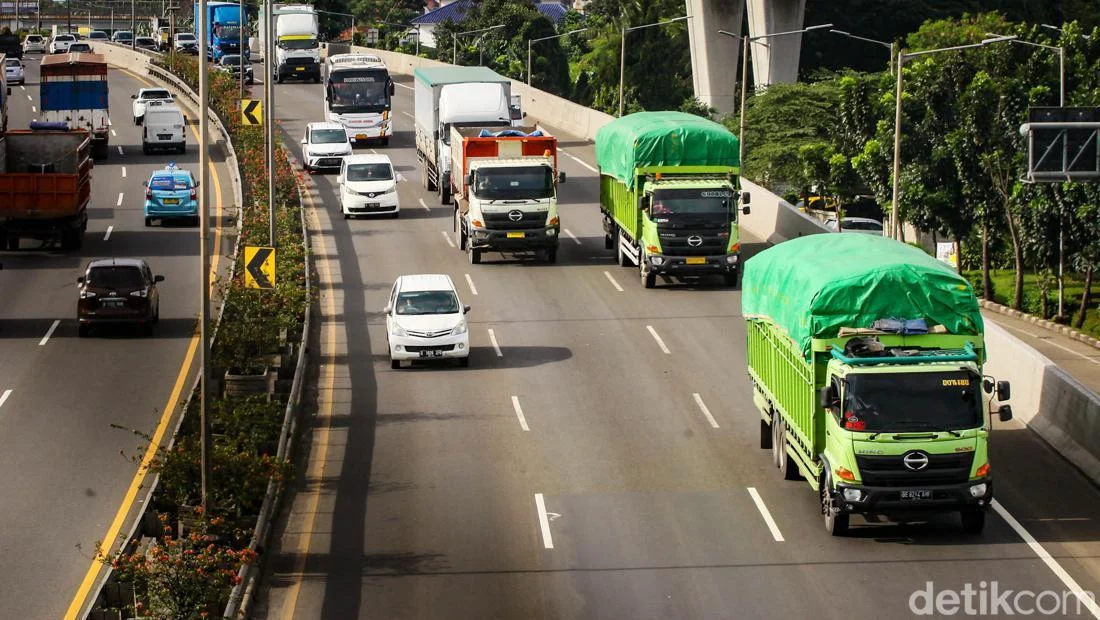
The Indonesian House of Representatives (DPR RI) and the central government have initiated a comprehensive legislative review of Law Number 22 of 2009 concerning Road Traffic and Transportation, with a primary focus on eradicating the persistent and dangerous practice of over-dimension and over-loading (ODOL) vehicles. During a recent high-level working meeting between the Ministry of Transportation and Commission V of the DPR RI in Jakarta, Transportation Minister Dudy Purwagandhi announced that the executive branch has formally signaled its approval of a series of severe punitive measures proposed by lawmakers. Among the most striking provisions under consideration is a maximum criminal fine of up to Rp 50 billion directed at parties responsible for operating severely non-compliant freight transport vehicles. This sweeping legislative push marks a crucial turning point in Indonesia’s ongoing struggle to protect its national infrastructure, reduce alarming traffic fatality rates, and restore regulatory compliance across its bustling logistics corridors.
Background and Context of the ODOL Crisis in Indonesia
The phenomenon of trucks operating outside legal limits regarding weight and dimensions has plagued Indonesia’s transportation sector for decades. Commonly referred to as ODOL, this practice involves modifying truck chassis, extending cargo bays beyond manufacturer specifications, and loading freight far beyond the maximum legally permitted gross vehicle weight rating. Logistics companies and transport operators often resort to these illegal modifications to maximize profit margins per trip, effectively undercutting competitors who operate within the boundaries of the law.
However, the economic efficiency gained by a few comes at an exorbitant cost to the wider public. Overloaded freight trucks exert immense destructive pressure on asphalt and concrete roadways, drastically accelerating wear and tear. According to data from the Ministry of Public Works and Public Housing, the Indonesian government spends trillions of rupiah annually on emergency road repairs and premature reconstruction projects caused largely by the relentless pounding of overweight vehicles. Furthermore, ODOL trucks are notoriously hazardous on highways and arterial roads. Their modified dimensions create massive blind spots, while excessive weight severely compromises braking efficiency, steering responsiveness, and tire integrity. Consequently, these lumbering vehicles are frequently implicated in catastrophic rear-end collisions, multi-vehicle pileups, and fatal accidents that claim hundreds of lives each year.
Chronology of the Legislative Review and Recent Developments
The journey toward reforming Law No. 22 of 2009 has been protracted, characterized by years of industry pushback, delayed enforcement deadlines, and tense negotiations between transportation authorities, business associations, and labor unions. The recent momentum materialized when Commission V of the DPR RI placed the Third Amendment of the Traffic and Transportation Law on its priority legislative agenda. Lawmakers recognized that existing penalties—historically limited to minor administrative fines or brief, ineffective driver detentions—failed to deter large-scale logistics corporations from repeatedly violating the rules.
In the subsequent working sessions, parliamentary committees collaborated with the Ministry of Transportation to draft a more robust legal framework. During the joint session attended by Transportation Minister Dudy Purwagandhi, the government formally aligned itself with the legislative proposals. Minister Dudy confirmed that the executive branch not only supports the introduction of harsher criminal sanctions but also advocates for a structural broadening of liability. Rather than unfairly placing the entire burden of enforcement on truck drivers who are often under pressure from employers, the revised legislation seeks to hold the entire commercial ecosystem accountable.
Expanding the Scope of Legal Liability
A fundamental flaw in historical enforcement strategies was the tendency to penalize solely the individual operating the vehicle at the time of the infraction. Under the proposed legislative amendments, the legal net will be cast significantly wider. Minister Dudy explicitly stated that criminal sanctions and financial penalties will now target vehicle owners, corporate entities, and cargo owners.
This multi-tiered approach addresses the economic incentives driving the ODOL crisis. Cargo owners—ranging from manufacturing conglomerates to commodity producers—frequently demand that transport vendors carry maximum loads at minimum rates, implicitly encouraging overloading. By holding cargo owners and corporate executives legally and financially liable, the law targets the origin of the pressure rather than merely punishing the end-of-the-line employee. Corporations found to be systematically orchestrating or benefiting from fleet overloading will face severe corporate fines, potential asset seizures, and possible revocation of operational licenses. The inclusion of these expanded subcategories represents a paradigm shift in Indonesian commercial jurisprudence, signaling that logistics safety is an institutional responsibility rather than an individual burden.
Technological Integration and Automated Weighing Systems
To ensure that the newly empowered regulatory framework can be enforced effectively without relying solely on manual checkpoints—which have historically been vulnerable to bribery and administrative bottlenecks—the revised law mandates the implementation of advanced technology. Minister Dudy highlighted that the government plans to integrate mandatory electronic weighing systems across national transport routes.
These electronic weigh-in-motion (WIM) systems are designed to measure vehicle weights and dimensions dynamically as trucks pass at normal highway speeds. By removing human discretion from the initial detection phase, the system aims to create a transparent, tamper-proof record of every commercial vehicle traversing major freight arteries. Data captured by these electronic checkpoints will feed directly into a centralized regulatory database, instantly flagging non-compliant vehicles and automatically generating digital citations or operational holds. This technological upgrade is viewed by transportation experts as an indispensable prerequisite for large-scale deterrence, ensuring that illegal operators cannot simply bypass traditional weigh stations through informal workarounds.
Economic Implications and Industry Reactions
The prospect of sweeping legal reforms carrying fines up to Rp 50 billion has sent ripples through Indonesia’s logistics, manufacturing, and supply chain sectors. Industry associations have expressed mixed reactions to the aggressive timeline and heavy financial penalties. Representatives from trucking and transport associations have long argued that strict enforcement of ODOL regulations, while theoretically necessary, must be accompanied by comprehensive structural adjustments. These include the standardization of logistics tariffs, improvements in port and terminal processing speeds, and financial incentives or transition periods for fleet modernization.
Transport operators point out that decades of suppressed shipping rates have forced many small and medium-sized transport businesses into a survival mode where overloading is perceived as the only way to remain economically viable amid rising fuel costs, toll fees, and spare parts prices. Without a parallel intervention to address freight rate fairness and provide fiscal support for purchasing compliant vehicles, independent operators fear the draconian fines could bankrupt significant segments of the domestic transport industry.
Conversely, consumer goods manufacturers, retail associations, and corporate shippers are reassessing their supply chain risk management strategies. The liability provisions targeting cargo owners mean that corporations can no longer outsource their transportation logistics entirely without oversight. Companies are rushing to audit their transport vendors, revise shipping contracts, and implement internal compliance protocols to verify that contracted trucks adhere strictly to legal weight and dimension limits. This corporate self-regulation is expected to drive a gradual professionalization of the freight forwarding sector, favoring well-capitalized logistics providers with modern, compliant fleets over informal, unregulated operators.
Broader Socio-Economic Impact and Infrastructure Outlook
The successful passage and implementation of the revised Traffic and Transportation Law are expected to yield profound long-term benefits for Indonesia’s national development. By drastically reducing the presence of overweight vehicles on public thoroughfares, the government anticipates a dramatic decline in highway maintenance expenditures. Funds previously diverted to repairing premature road degradation can be reallocated toward expanding public infrastructure, improving rural connectivity, and enhancing digital logistics networks.
From a public safety perspective, the crackdown on ODOL trucks addresses a critical humanitarian issue. Lowering the incidence of heavy-vehicle accidents will save hundreds of lives annually, reduce severe traffic congestion caused by disabled trucks on vital toll roads, and improve overall traffic flow efficiency. Furthermore, aligning Indonesia’s transport standards with international safety benchmarks enhances the country’s economic competitiveness, fostering a more reliable, predictable, and sustainable supply chain network capable of supporting sustained national growth. As the DPR RI and the Ministry of Transportation finalize the technical details of the bill, the nation watches closely, anticipating a legislative milestone that promises to reshape the future of Indonesian mobility.