Tata Titiana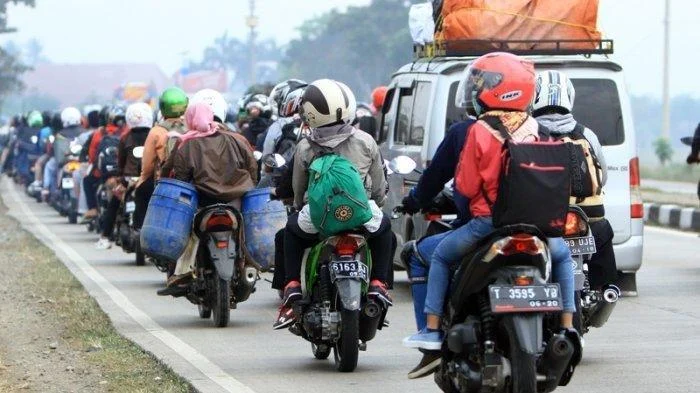
The annual Indonesian tradition of returning to one’s hometown, known as mudik, received the official green light from the central government for the Idul Fitri 1442 Hijri celebrations in 2021. This policy marked a distinct departure from the strict nationwide travel bans enforced during the onset of the COVID-19 pandemic in 2020. However, the decision immediately sparked intense national debate, pitting the government’s economic and psychological recovery objectives against severe epidemiological warnings regarding the persistent risks of viral transmission in rural communities.
The Policy Announcement and Legislative Context
The announcement regarding the permission to travel was formally delivered by the Minister of Transportation, Budi Karya Sumadi, during a working session with Commission V of the House of Representatives (DPR RI) on Tuesday, March 16, 2021. During the hearing, the Minister clarified that while the government would not explicitly encourage mass mobilization—noting that the Ministry of Transportation lacks the administrative authority to issue such directives—it would not implement an outright prohibition as seen in the previous year.
Instead of a blanket ban, the Ministry of Transportation committed to formulating a tightly regulated travel framework in close coordination with the national COVID-19 Handling Task Force. The overarching objective of this collaborative approach was to facilitate familial reunions while proactively preventing the mass migration of urban populations from acting as a vector for introducing or accelerating the spread of the coronavirus into vulnerable rural areas and secondary cities across the archipelago.
Chronology of Policy Shifts: From Total Ban to Managed Mobility
To fully understand the weight of the 2021 decision, it is necessary to examine the trajectory of Indonesian travel regulations following the declaration of COVID-19 as a global pandemic in March 2020.
- March – May 2020: As infection rates climbed, the central government initially issued strong discouragements against mudik before enacting a legally binding, comprehensive ban on domestic passenger travel via land, sea, and air ahead of Idul Fitri 1442 H (2020). This historical restriction mirrored emergency measures last implemented on a similar national scale during post-independence conflicts in 1946.
- June – December 2020: Indonesia entered phased transitional periods of Large-Scale Social Restrictions (PSBB), wherein inter-city travel gradually resumed under strict testing mandates and health certifications.
- January – February 2021: The national vaccination rollout commenced on January 13, 2021, prioritizing healthcare workers and public service personnel. This initial immunization drive fueled early optimism within administrative circles regarding the containment of the virus.
- March 16, 2021: Minister Budi Karya Sumadi officially announced during the DPR RI hearing that mudik would be permitted for the upcoming festive season, provided that stringent health protocols and screening mechanisms were established.
- March – May 2021: Government agencies mobilized to integrate rapid diagnostic technologies, such as the homegrown GeNose C19 breathalyzer and expanded antigen testing facilities, across major transportation hubs to prepare for the influx of travelers.
Regulatory Framework: Conditions for Travel in 2021
In anticipation of millions of citizens crossing provincial boundaries, the Ministry of Transportation outlined a multi-layered containment and oversight strategy centered on three core pillars: comprehensive health compliance, heightened contact tracing, and the shortening of validity periods for medical screening certificates.
Under the stipulated guidelines, travelers were legally required to adhere strictly to health protocols—commonly referred to in Indonesia as the 3M framework (wearing masks, maintaining physical distance, and washing hands)—at points of departure, throughout transit, and upon arrival at their final destinations. Furthermore, transportation operators were mandated to enforce strict capacity limits, implement thorough and regular disinfection procedures for all public vehicles, and optimize scheduling to avoid severe bottleneck congestion at terminals, ports, and railway stations.
To mitigate the risk of asymptomatic carriers slipping through checkpoints, authorities significantly compressed the permissible time window for pre-travel health screenings. Rapid antigen tests, polymerase chain reaction (PCR) swabs, and authorized breathalyzer tests had to be conducted closer to the actual departure time. Additionally, the government emphasized the expansion of digital contact-tracing applications to monitor movement patterns and facilitate rapid containment should an outbreak cluster emerge in a destination regency.
Epidemiological Concerns and Public Health Warnings
Despite the administrative assurances provided by the Ministry of Transportation, the decision to permit unrestricted inter-city movement was met with skepticism and grave concern from public health experts and epidemiologists.
Prominent among the critics was Riris Andono Ahmad, an epidemiologist from Universitas Gadjah Mada (UGM), who publicly cautioned that the policy appeared to rely prematurely on the assumption that early vaccination coverage would sufficiently shield the population from new waves of infection. Dr. Riris argued that while immunization successfully reduces the severity of illness and mortality rates among vaccinated cohorts, it does not completely eliminate the capacity of individuals to contract and transmit the SARS-CoV-2 virus, particularly in crowded public environments where baseline mitigation behaviors lapse.
The primary epidemiological hazard, according to public health specialists, lay not in the existence of vaccines, but in the potential breakdown of public adherence to basic health protocols during long-distance transit and family gatherings. The risk profile was further exacerbated by the choice of transit modes. Experts pointed out that while commercial public transport systems—such as commercial buses, trains, and scheduled domestic flights—were subjected to institutional oversight, thermal scanning, and mandatory testing protocols, private motor vehicles presented an acute monitoring blind spot.
Travelers utilizing private cars and motorcycles often bypass official checkpoints and screening facilities. Without rigorous external oversight, private vehicle transit risked becoming an unmonitored channel for viral transmission from metropolitan epicenters into rural hinterlands, where healthcare infrastructure is traditionally less equipped to manage sudden surges in critical COVID-19 cases. Consequently, public health advocates continuously urged citizens to utilize regulated public transit networks specifically to ensure they remained within the administrative tracking and tracing umbrella of the state.
Implications and Broader Societal Impact
The 2021 mudik policy served as a critical testing ground for balancing public health mandates with socio-cultural imperatives in a protracted pandemic environment. The decision underscored the profound economic and psychological pressures faced by the government, as millions of citizens sought to reclaim a semblance of normalcy after enduring months of isolation and economic contraction.
However, the policy also exposed the persistent tension between centralized administrative decision-making and localized epidemiological realities. While the introduction of innovative screening tools like GeNose represented an effort to modernize transit security, the fundamental success of the initiative depended almost entirely on individual civic discipline. The widespread debate surrounding the 2021 policy highlighted that vaccination campaigns alone, while vital, could not immediately replace comprehensive non-pharmaceutical interventions during periods of mass human migration.
As public health officials repeatedly emphasized throughout the preparatory period, possessing a vaccination certificate did not grant immunity from public safety obligations. The overarching consensus from the scientific community underscored that until herd immunity reached statistically robust thresholds globally and nationally, maintaining rigorous behavioral protocols during high-mobility events remained the single most effective defense against recurrent epidemiological surges.