Nila Kartika Wati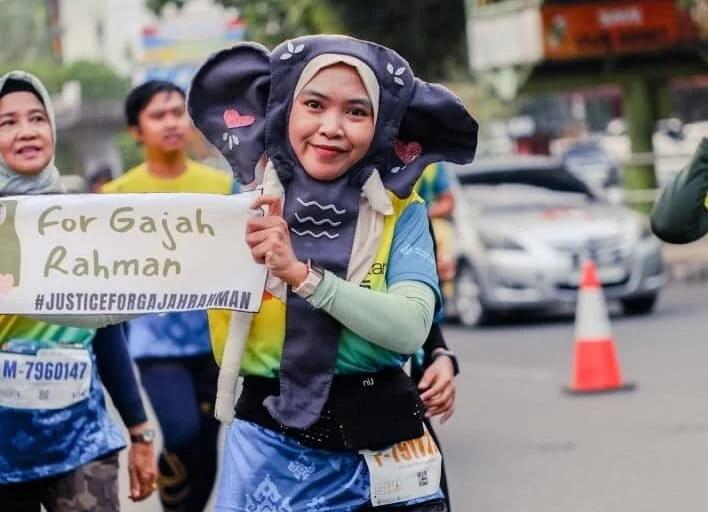
In front of the Riau Governor’s Office, a solemn scene unfolded as activists distributed white chrysanthemums to passersby. There were no chants, no loudspeakers, and no signs of aggressive protest. Instead, the silent demonstration served as a poignant reminder of a two-year-old open wound: the unsolved killing of Rahman, a beloved bull elephant from the Flying Squad of Tesso Nilo National Park. For Fitriani Dwi Kurniasari, the woman spearheading this movement, the silence is not an expression of resignation but a calculated effort to keep the memory of a fallen "captain" alive in the eyes of the law and the public.
The Tragedy of Rahman: A Chronology of a Crime
The demise of Rahman remains one of the most chilling cases of wildlife crime in Indonesia’s recent history. On January 10, 2024, the 46-year-old elephant was found in a state of severe distress within the Tesso Nilo National Park, a critical habitat for the critically endangered Sumatran elephant. Veterinarians and park rangers who reached the site discovered that Rahman had been poisoned.
The circumstances surrounding his death were filled with unsettling anomalies that suggest a calculated motive. While his left tusk had been removed, it was not extracted in its entirety—a departure from typical professional poaching patterns. Furthermore, the absence of significant blood trails indicated that the perpetrators might have been operating with a sense of security or specific intent beyond simple ivory harvesting. Despite the debilitating effects of the poison, Rahman displayed a remarkable will to live, fighting for his life for eight hours before succumbing to the toxic substance. This struggle left a lasting trauma on those who worked with him, particularly Fitriani Dwi Kurniasari, who had spent years observing the intelligence and gentle nature of the elephant through her professional role with the WWF Wildlife Crime Team.
From Grief to Advocacy: The Campaign for Justice
The death of Rahman catalyzed a transition from personal grief to public advocacy. Recognizing that wildlife crimes in Riau often fade into obscurity due to administrative stagnation, Ani—as she is affectionately known—launched the "For Gajah Rahman" Instagram account. The digital campaign was designed to be more than a memorial; it served as a repository for evidence, personal accounts, and a platform to apply pressure on law enforcement agencies.
Within less than a week, the account garnered over 1,000 followers, proving that the public’s appetite for wildlife protection remained strong despite the lack of official updates. Ani’s strategy evolved over the next two years to include traditional and unconventional advocacy methods. She organized public discussions and collaborated with various environmental NGOs to maintain visibility. Her efforts eventually drew the attention of high-profile figures, including actor Chicco Jerikho, who had previously encountered Rahman during his own visits to the park. Together, they visited the Riau Regional Police’s Special Crimes Directorate to formally urge investigators to treat the case with the urgency it deserved.
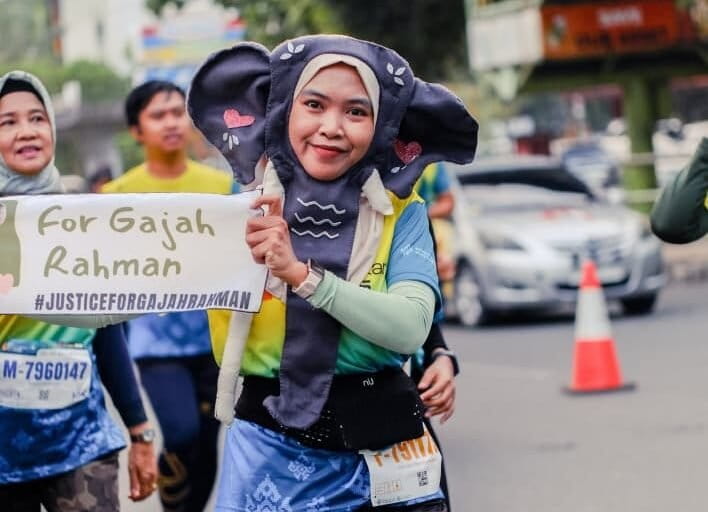
The campaign’s most visual moment occurred when Ani, having trained for two months, participated in the 2025 Riau Bhayangkara Run. She completed the 10-kilometer race wearing a full elephant costume. The spectacle was not merely a feat of endurance but a calculated public relations move to bring the image of the victim directly to the attention of law enforcement officials present at the event, including the provincial police leadership.
Official Responses and the Stagnation of Justice
Following persistent lobbying, Ani finally secured an audience with the Riau Regional Police Chief in August 2025. During this meeting, authorities reiterated their commitment to reopening the investigation and pursuing the perpetrators. However, as the calendar crosses the two-year mark since Rahman’s death, the case remains unresolved.
The lack of progress highlights a chronic systemic issue within the regional law enforcement apparatus regarding wildlife crime. While the police have periodically promised transparency, the transition of leadership and the prioritization of other criminal cases often lead to the "cold case" status of elephant poisonings. Analysts suggest that the lack of specialized forensic units dedicated to wildlife crime in the region hampers the ability of investigators to trace the source of the poison or link specific poaching syndicates to the crime scene.
The Broader Context: A Crisis of Biodiversity
The death of Rahman is not an isolated incident; it is a symptom of a much larger, darker trend in Sumatra’s biodiversity loss. Data compiled by wildlife advocates indicate that between 2004 and 2025, approximately 167 elephants have died in Riau alone. A staggering majority of these fatalities are attributed to human-elephant conflict, which is frequently exacerbated by the deliberate use of poison to protect palm oil plantations or for illicit trade.
The statistical reality is grim: despite 167 recorded deaths, only three cases of poaching have successfully reached the courtroom and resulted in convictions. This represents a conviction rate of less than 2%, a figure that environmentalists argue emboldens criminal syndicates. The implications of this are profound. As the habitat of the Sumatran elephant continues to shrink due to industrial expansion and illegal encroachment, the contact points between humans and these massive mammals increase. Without a robust deterrent—namely, the certain apprehension and prosecution of those who kill them—the population of Sumatran elephants, already on the brink of extinction, faces an existential threat.
Beyond the Individual: Protecting the Species
For activists like Ani, the fight for justice for Rahman has evolved into a broader crusade to protect the remaining Sumatran elephant population. The struggle is multifaceted, involving:
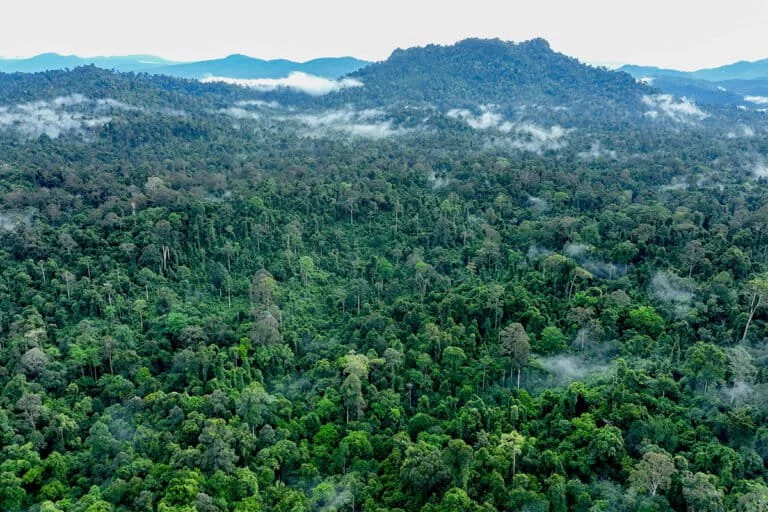
- Habitat Preservation: Addressing the fragmentation of Tesso Nilo, which forces elephants into populated areas, increasing the risk of poisoning.
- Resource Management: Ensuring that the Flying Squad, which serves as a protective barrier and research unit, is adequately funded and staffed to monitor the movements of the herd.
- Legal Reform: Pushing for the classification of wildlife crimes as "extraordinary crimes" that mandate higher levels of investigation and stiffer penalties, moving beyond the current framework that often treats them as minor offenses.
- Community Engagement: Bridging the gap between rural communities and wildlife conservationists to reduce the reliance on poison as a means of "conflict mitigation."
The Legacy of the Captain
Rahman was known as the "Captain" by those who worked with him, recognized for his calm temperament and his role in helping park rangers manage wild elephant herds. His death represents more than the loss of a sentient being; it represents the loss of a cultural and ecological asset.
The silence maintained by the protesters at the Riau Governor’s Office is a reflection of the patience required to fight a long-term battle against apathy. Each white chrysanthemum laid on the pavement serves as a reminder that while the perpetrators may have escaped immediate justice, the collective memory of the public remains an active investigator.
As the investigation enters its third year, the pressure remains on the Riau police to demonstrate that the rule of law applies as much to the protection of the forest’s inhabitants as it does to the citizens of the province. For Ani and her peers, the case will not be closed until there is a name, a trial, and a verdict. Until then, the story of Rahman remains an open book—one that continues to be written in the fields of Tesso Nilo and the halls of the regional police headquarters. The objective remains clear: to ensure that the death of Rahman does not merely become another data point in a tragic list, but a turning point that forces a structural overhaul of how Indonesia handles the preservation of its most iconic and vulnerable species.
In the final analysis, the pursuit of justice for Rahman is a litmus test for the integrity of Riau’s environmental law enforcement. If a high-profile case involving a well-known, protected animal cannot be solved with the full weight of the state’s resources, it raises troubling questions about the fate of the lesser-known, anonymous animals falling victim to the same forces of greed and habitat destruction every year. The silence of the activists may be quiet, but the message is loud: justice for the natural world cannot be delayed indefinitely.