Eko Sulistyo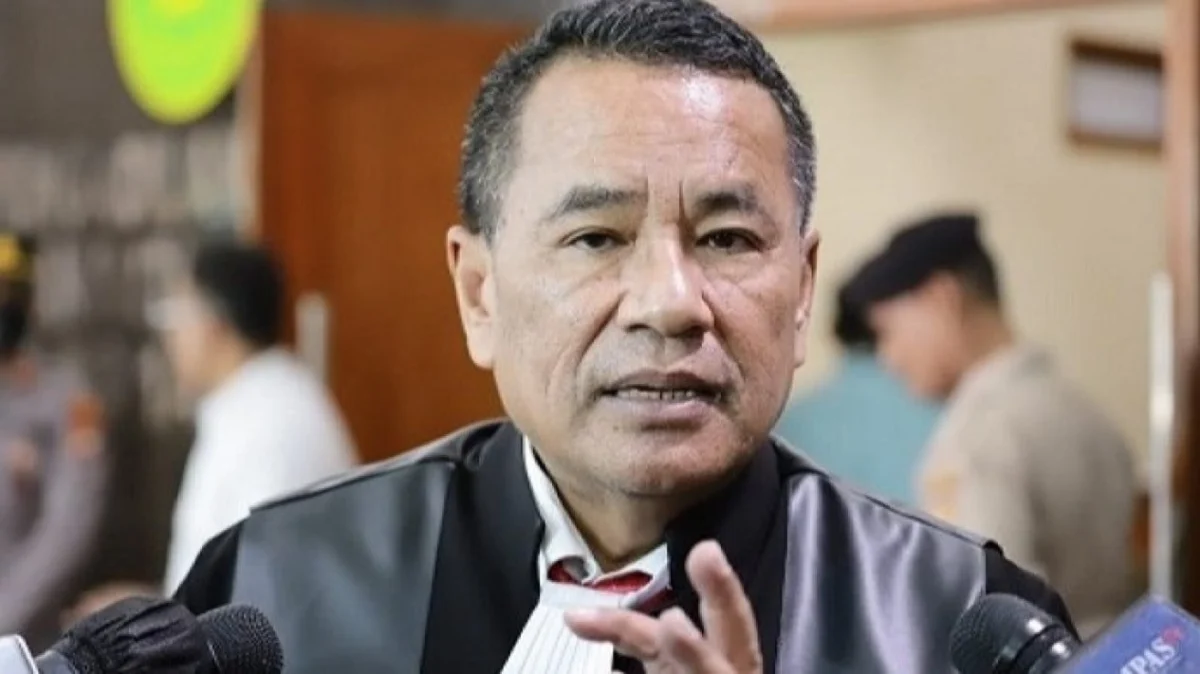
The public discourse surrounding Indonesia’s most flamboyant legal figure, Hotman Paris Hutapea, has taken a sharp and deeply personal turn as his own children have begun to publicly criticize his professional choices and personal conduct. On Sunday, July 19, 2026, the digital landscape was ignited by a series of pointed comments from Frank Alexander Hutapea, the eldest son and a partner in the family’s legal practice, directed at his father’s recent decision to represent Febrie Adriansyah, the former Junior Attorney General for Special Crimes (Jampidsus). This internal family rift has transcended private disagreement, spilling into the public domain and raising significant questions about the intersection of legal ethics, celebrity branding, and the authenticity of "pro bono" activism in the modern era.
The controversy was sparked by Hotman Paris’s high-profile announcement that he would be joining the legal defense team for Febrie Adriansyah. Adriansyah, a figure who has long been at the center of Indonesia’s most complex and high-stakes corruption investigations, represents a client profile that is both prestigious and polarizing. When Hotman Paris took to social media to declare that his involvement in the case was motivated by a sense of justice rather than financial gain—claiming he would not be seeking his usual premium fees—the response from his eldest son was swift and uncharacteristically cynical. Frank Alexander’s public rebuttal suggested a deep-seated frustration with what he perceives as his father’s penchant for "pencitraan," or image cultivation, at the expense of sincerity.
The Catalyst: The Febrie Adriansyah Appointment
The decision to defend Febrie Adriansyah is significant within the Indonesian legal context. As the former Jampidsus, Adriansyah was a pivotal figure in the Attorney General’s Office, overseeing massive investigations into state-level corruption, including the multi-trillion rupiah tin mining scandals and various insurance fraud cases. For a private lawyer of Hotman Paris’s stature to step in as counsel suggests a complex legal battle ahead, likely involving intricate nuances of administrative law and criminal procedure.
However, it was not the legal merit of the case that drew Frank Alexander’s ire, but rather the narrative Hotman Paris constructed around it. By framing the defense as a selfless act, Hotman Paris leaned into his established persona as a "lawyer of the people." Frank’s response on social media directly challenged this narrative. "Halah, mostly just image-building. Even at Fritz’s wedding, you took the ‘angpao’ (gift money) while acting like you didn’t want the money," Frank wrote, referencing the 2023 wedding of his younger brother, Fritz Hutapea. This comment hit a nerve with the public, as it suggested that the elder Hutapea’s public displays of financial indifference were inconsistent with his private actions.
Deconstructing the "Marketing Weapon" Allegation
Frank Alexander’s critique went beyond personal grievances, touching upon the very core of Hotman Paris’s professional brand. For years, Hotman Paris has operated "Hotman 911," a legal aid initiative that provides free consultations to the underprivileged, often conducted at Kopi Johny or via viral social media appeals. While the program has helped dozens of individuals find legal recourse in a system often stacked against them, Frank offered a much darker interpretation of the initiative’s purpose.
"Poor people are just used as a marketing weapon," Frank asserted in a follow-up post. "He never really cares; he only cares about being the center of attention." This statement strikes at the heart of the "Lawyer-Celebrity" phenomenon. In Frank’s view, the plight of the marginalized is leveraged to build social capital, which in turn attracts high-paying corporate clients and maintains Hotman’s status as a media powerhouse. This analysis suggests a strategic use of "viral justice," where the lawyer selects cases not based on legal necessity alone, but on their potential to dominate the news cycle.
A Pattern of Familial Discontent: Fritz Hutapea’s Call for Repentance
This is not the first time the Hutapea children have expressed discomfort with their father’s lifestyle and public persona. The recent comments by Frank echo a sentiment shared by his younger brother, Fritz Hutapea. In a 2025 appearance on a popular podcast hosted by Melaney Ricardo, Fritz was asked about his wishes for his father. His response was both somber and revealing.
"If I could give a message to Papa, it would be: repent (bertaubat). Because that is the prayer of our entire family for him," Fritz stated during the interview. The term "repentance" in this context is widely understood to refer to Hotman Paris’s flamboyant lifestyle, which frequently features him surrounded by young women—his so-called "Aspri" or personal assistants—in nightclubs and luxury resorts. While Hotman maintains that this is merely "entertainment" and part of his branding as a "Bling-Bling Lawyer," his children have increasingly signaled that this behavior is a source of strain within the family unit.
The contrast between the father and his sons is stark. Frank, Fritz, and their sister Felicia are all trained lawyers, many with education from prestigious international institutions. While they benefit from the family name, they have often projected a more reserved, professional image, focusing on the technicalities of law rather than the spectacle of celebrity.
The Business of Being Hotman Paris
To understand the weight of these criticisms, one must analyze the unique position Hotman Paris holds in Indonesian society. He is not merely a lawyer; he is a multi-platform brand. With millions of followers on Instagram and a constant presence on television, he possesses the power to influence public opinion in ways that traditional legal experts cannot.
Supporting data from social media analytics indicates that Hotman’s engagement rates spike significantly when he takes on "David vs. Goliath" cases—situations where a common citizen is oppressed by a large corporation or a corrupt official. By positioning himself as the protector of the weak, he builds a shield of public goodwill. Frank Alexander’s intervention suggests that this shield may be thinning, as those closest to the operation begin to question the motives behind the altruism.
Professional and Ethical Implications
From a journalistic and legal ethics perspective, the public spat raises several points of concern:
- Conflict of Interest: Frank Alexander is a partner in his father’s firm. Publicly criticizing the firm’s clients or the lead partner’s strategy could be seen as a breach of professional solidarity, potentially complicating the representation of Febrie Adriansyah.
- The Ethics of "Pro Bono" Branding: If a lawyer uses pro bono work primarily for commercial gain through increased visibility, does it diminish the ethical value of the legal aid? Frank’s "marketing weapon" comment forces a re-evaluation of how legal charity is perceived.
- Client Perception: High-profile clients like Febrie Adriansyah require discretion and a unified legal front. Internal family discord, played out on social media, may jeopardize the perceived stability of the legal team.
Timeline of Public Friction (2023–2026)
- September 2023: Fritz Hutapea’s lavish wedding takes place. While portrayed as a joyous family event, Frank later alleges that financial disputes regarding gift money occurred behind the scenes.
- Early 2025: Fritz Hutapea appears on Melaney Ricardo’s podcast, publicly calling for his father to "repent" and change his lifestyle for the sake of the family.
- Late 2025: Hotman Paris increases the frequency of his "Hotman 911" interventions, coinciding with several high-profile corporate appointments.
- June 2026: Hotman Paris announces he will represent Febrie Adriansyah, emphasizing that he is doing so without a fee.
- July 19, 2026: Frank Alexander Hutapea launches a social media critique, accusing his father of using the poor for marketing and faking his disinterestedness in money.
Broader Impact on the Legal Profession
The Hutapea family drama is a microcosm of a larger trend in the global legal profession: the rise of the "Influencer Attorney." In an era where "Trial by TikTok" can be as influential as a court ruling, the boundaries of professional conduct are being redrawn. Hotman Paris has been a pioneer in this regard, using his personality to bypass traditional media gatekeepers.
However, the backlash from his sons suggests a generational shift. Younger lawyers, even those born into wealth and fame, may be seeking a return to a more traditional form of legal authority—one based on institutional respect rather than viral reach. The public’s reaction to Frank’s comments has been divided; some applaud his "honesty" and "bravery" in calling out a powerful figure, while others view it as an inappropriate family matter that should have remained private.
Analysis: The Future of the Hutapea Dynasty
The current friction places the future of the Hutapea legal empire in a precarious position. Hotman Paris has spent decades building a name that is synonymous with both legal victory and extravagant wealth. If his heirs—the very people meant to carry that legacy forward—publicly distance themselves from his methods, the brand’s longevity may be at risk.
Frank Alexander’s comments suggest a desire to separate the "Hutapea" legal practice from the "Hotman Paris" celebrity circus. Whether this is a strategic move to pivot the firm toward a more corporate, sober image or a genuine expression of moral fatigue remains to be seen. What is clear, however, is that the "Bling-Bling Lawyer" is facing his most difficult cross-examination yet—not from a rival prosecutor or a judge, but from the children who have watched his career from the front row.
As the Febrie Adriansyah case moves forward, the legal community will be watching closely. Will Hotman Paris double down on his flamboyant persona, or will the public pressure from his sons force a moderation of his public image? For now, the rift serves as a stark reminder that even the most successful public figures are not immune to the scrutiny of their own homes. The "repentance" Fritz called for and the "authenticity" Frank demands may become the ultimate benchmarks by which the legacy of Hotman Paris is eventually judged.