
 Paryono Ramadhan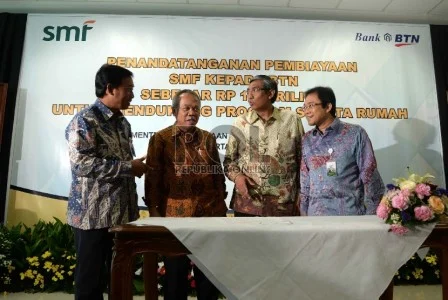
The Indonesian government is mobilizing all available resources to ensure the success of the ambitious One Million Houses Program, a flagship initiative designed to address the nation’s significant housing deficit, particularly for low-income communities (MBR). This commitment was underscored by Minister of Public Works and Housing (PUPR), Basuki Hadimuljono, during the signing of a crucial cooperation agreement between PT Sarana Multigriya Finansial (SMF) and Bank Tabungan Negara (BTN) in Jakarta in mid-May 2015. The partnership saw SMF provide a significant loan of Rp 1.5 trillion to BTN, specifically earmarked to bolster the financing capabilities for the program and facilitate easier home ownership for eligible citizens. This strategic financial injection is part of a broader, multi-pronged funding approach that includes contributions from social security funds, direct government allocations, and a vital liquidity facility, demonstrating a concerted effort to overcome the longstanding housing challenges facing the archipelago.
Addressing Indonesia’s Persistent Housing Backlog
Indonesia has long grappled with a substantial housing backlog, a challenge exacerbated by rapid urbanization, population growth, and income disparities. Millions of families, particularly those in the low-income bracket, struggle to access affordable and decent housing. Estimates in the years leading up to the program’s launch indicated a housing deficit ranging from 11 million to 13 million units, a figure that continued to grow annually. This acute shortage not only impacts the quality of life for countless citizens but also poses broader socio-economic challenges, including the proliferation of informal settlements and reduced productivity. Recognizing the urgency and scale of this issue, the government launched the One Million Houses Program in 2015, immediately positioning it as a national strategic priority. The program’s primary objective was to accelerate the provision of affordable housing by stimulating both supply and demand, with a strong emphasis on empowering MBR to become homeowners through various financial schemes and simplified processes. The target of one million units per year was an unprecedented commitment, signaling a robust intent to significantly reduce the housing gap within a measurable timeframe.
SMF-BTN Collaboration: A Cornerstone of Program Financing
The Rp 1.5 trillion loan from PT Sarana Multigriya Finansial (SMF) to Bank Tabungan Negara (BTN) represents a critical financial pillar for the One Million Houses Program. SMF, a state-owned enterprise operating in the secondary mortgage market, plays a pivotal role in enhancing the liquidity of primary mortgage lenders like BTN. By securitizing mortgage assets and providing refinancing facilities, SMF enables banks to free up capital, which can then be reinvested into new mortgage disbursements. This mechanism is crucial for sustainable housing finance, as it reduces the reliance on short-term deposits and allows banks to extend more long-term housing loans without constraining their balance sheets. For BTN, often dubbed the "Housing Bank," this partnership is particularly significant. BTN has historically been at the forefront of providing housing finance to MBR, benefiting from its extensive network and deep understanding of the segment. The Rp 1.5 trillion loan empowers BTN to significantly increase its mortgage portfolio for the One Million Houses Program, ensuring that more low-income families can access the necessary financing to purchase homes. This collaboration is designed to create a more robust and efficient housing finance ecosystem, ensuring that the ambitious targets of the program are met through stable and accessible funding channels.
Diverse Funding Streams Powering the Initiative
Minister Basuki Hadimuljono’s announcement highlighted the diverse array of funding sources mobilized for the One Million Houses Program, reflecting a comprehensive strategy to secure the vast capital required. Beyond the SMF-BTN collaboration, several other key institutions and mechanisms are contributing substantial financial resources:
-
BPJS Ketenagakerjaan (Manpower Social Security Agency): A remarkable Rp 48.5 trillion was allocated from BPJS Ketenagakerjaan. As a social security provider for workers, BPJS Ketenagakerjaan is mandated to invest its funds for the benefit of its participants. This includes providing housing benefits, such as housing loans, down payment assistance, and affordable housing schemes for its members. This substantial contribution leverages workers’ own social security contributions to directly address their housing needs, creating a self-sustaining model where social welfare directly translates into tangible assets for participants. It also broadens the reach of the program beyond conventional banking channels, tapping into a vast pool of potential homeowners.
-
Fasilitas Likuiditas Pembiayaan Perumahan (FLPP – Housing Finance Liquidity Facility): The government committed Rp 5.1 trillion through the FLPP scheme. FLPP is a crucial government-backed liquidity facility designed to make housing loans more affordable for MBR. Under FLPP, the government provides liquidity to participating banks, enabling them to offer mortgages at significantly subsidized interest rates (often fixed for the entire loan term) and with lower down payment requirements. This mechanism directly tackles the affordability barrier, which is often the biggest hurdle for low-income families seeking home ownership. The FLPP funds act as a catalyst, making market-rate mortgages accessible and sustainable for those who would otherwise be excluded.
-
Daftar Isian Pelaksanaan Anggaran (DIPA) APBN (State Budget Implementation List): An allocation of Rp 8.1 trillion directly from the State Budget (APBN) through DIPA signifies the government’s direct financial commitment to the program. These funds are typically utilized for various components that support housing development, including infrastructure development (roads, water, electricity to housing sites), land acquisition for public housing projects, and potentially direct construction of basic housing units. This direct budgetary support ensures that critical enabling factors for housing development are in place, complementing the financing provided through other channels and demonstrating the government’s holistic approach to the program.
The combination of these funding sources—secondary mortgage market liquidity, social security investments, subsidized finance facilities, and direct budgetary allocations—creates a robust and diversified financial framework. This multi-faceted approach mitigates risks associated with over-reliance on a single funding stream and ensures a broader financial inclusion for different segments of MBR.
Expert Insights: Overcoming Key Hurdles for Program Success

While financial commitments are crucial, experts from Indonesia Property Watch (IPW) highlighted five critical areas that the government must effectively address to ensure the long-term success and sustainability of the One Million Houses Program. These insights, articulated prior to the SMF-BTN agreement, serve as a roadmap for comprehensive policy implementation:
-
Land Availability through a National Land Bank: The escalating cost of land, driven by market speculation and rapid development, remains a formidable barrier to affordable housing. IPW emphasized the urgent need for a "land bank" mechanism. A national land bank would involve the government proactively acquiring and consolidating land, particularly in strategic locations, and holding it for future public housing development. This would insulate housing projects from market-driven land price inflation, ensuring that land costs do not render affordable housing projects unviable. The challenges in establishing such a bank include significant initial capital investment, complex land acquisition processes, and potential conflicts with existing land ownership rights.
-
Dedicated Institution for Public Housing: IPW advocated for the establishment of a specialized institution solely focused on managing and executing public housing programs. While the Ministry of Public Works and Housing oversees the broader policy, a dedicated agency with clear mandates, streamlined processes, and focused expertise could significantly enhance efficiency. Such an institution would be responsible for planning, project execution, regulatory oversight, data management, and coordinating various stakeholders, ensuring a cohesive and targeted approach to housing provision for low-income segments. This would prevent fragmentation of efforts and provide a single point of accountability.
-
Sustainable Funding Mechanisms: While the current diverse funding streams are commendable, IPW stressed the importance of ensuring their long-term sustainability and adequacy. This involves not only maintaining and potentially increasing allocations for FLPP and BPJS Ketenagakerjaan but also exploring innovative financing models, such as public-private partnerships, green bonds for affordable housing, and leveraging international development funds. The goal is to create a predictable and stable funding environment that can support continuous housing development beyond short-term budgetary cycles.
-
Accurate Data and Information on Housing Needs: Effective policy formulation and resource allocation depend heavily on accurate, up-to-date data. IPW pointed out the need for comprehensive and reliable data on the actual housing backlog, demographic trends, income levels of MBR, and the geographic distribution of housing demand. Such data would enable the government to precisely target interventions, identify areas of greatest need, and prevent the misallocation of resources, thereby maximizing the impact of the One Million Houses Program. Establishing a robust national housing data system is paramount.
-
Streamlining Costs and Bureaucracy: The cumulative effect of various administrative costs significantly inflates the final price of a home. IPW specifically highlighted the need to trim expenses related to:
- Permitting Processes: Complex, multi-layered, and time-consuming permitting procedures add both cost and delay to housing projects. Streamlining these processes through digitalization, single-window services, and clear regulatory guidelines is essential.
- Certification Costs: The costs associated with land certificates and building permits can be prohibitive for MBR. Government subsidies or waivers for these fees, particularly for affordable housing projects, could significantly reduce the burden.
- Utility Connection Fees (PLN, Water): Connecting new housing units to essential utilities like electricity (PLN) and water often involves substantial fees. Reducing or subsidizing these connection costs for MBR housing would further enhance affordability.
Addressing these five critical areas requires sustained political will, inter-ministerial coordination, and continuous engagement with stakeholders from both the public and private sectors.
Broader Impact and Long-Term Implications
The One Million Houses Program, supported by initiatives like the SMF-BTN loan and diverse funding, carries profound socio-economic implications for Indonesia. Successfully reducing the housing backlog can lead to:
- Improved Quality of Life: Access to safe, decent, and affordable housing is a fundamental human right and a cornerstone of human dignity. It provides stability, improves health outcomes, and enhances overall well-being for families.
- Poverty Reduction: Housing costs are often the largest expenditure for low-income families. By making housing more affordable, the program indirectly frees up household income for other essential needs, contributing to poverty alleviation.
- Economic Stimulus: The construction sector is a significant driver of economic growth. Large-scale housing development generates substantial employment opportunities, from skilled labor to construction material suppliers, stimulating various ancillary industries.
- Social Stability and Equity: Addressing housing inequality fosters greater social cohesion and reduces the potential for social unrest stemming from disparities in living standards. It demonstrates the government’s commitment to inclusive growth.
- Sustainable Urban Development: By planning and developing integrated housing estates, the program can contribute to more organized urban expansion, reducing the pressure on existing infrastructure and preventing the haphazard growth of informal settlements.
- Financial Inclusion: The program, through mechanisms like FLPP and BPJS Ketenagakerjaan, extends financial services to segments of the population traditionally underserved by conventional banking, fostering greater financial inclusion.
However, the program is not without its challenges. Sustaining the momentum requires continuous innovation in financing, adaptive policy responses to economic fluctuations, effective land management strategies, and robust oversight to ensure construction quality and timely delivery. The government’s long-term vision extends beyond simply building houses; it aims to create livable communities with access to essential services, infrastructure, and livelihood opportunities. This requires ongoing collaboration between central and regional governments, the private sector, and community organizations.
Conclusion
The Indonesian government’s concerted effort to mobilize all available resources for the One Million Houses Program, epitomized by the strategic Rp 1.5 trillion loan from SMF to BTN and the diverse funding streams from BPJS Ketenagakerjaan, FLPP, and the State Budget, underscores its unwavering commitment to tackling the nation’s housing crisis. While significant financial backing is in place, the insights from Indonesia Property Watch highlight critical non-financial challenges, including land availability, institutional effectiveness, data accuracy, and cost streamlining. Addressing these multifaceted issues through integrated policy, robust governance, and sustained collaboration will be paramount. The program represents not just a housing initiative but a comprehensive national endeavor aimed at improving the quality of life for millions, stimulating economic growth, and fostering greater social equity across the archipelago. Its ultimate success hinges on the continued dedication to overcoming both financial and structural obstacles, ensuring that the promise of affordable home ownership becomes a reality for Indonesia’s low-income communities.








