
 Chalifah Fatihah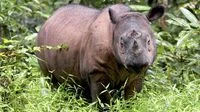
Conservation efforts in Indonesia have received a monumental boost as wildlife authorities announce that two female Sumatran rhinos residing at the Sumatran Rhino Sanctuary (SRS) within Way Kambas National Park (TNWK), Lampung, are currently pregnant. The impending births represent a critical milestone in global mammal conservation, offering renewed hope for the survival of one of the planet’s most endangered large mammals. The announcement was officially made public during the World Rhino Day 2026 commemorations held at Taman Safari Indonesia in Bogor.
The two expectant mothers, Ratu and Delilah, are being subjected to round-the-clock intensive monitoring by dedicated teams of wildlife veterinarians, animal keepers, and conservation managers. This meticulous oversight will continue uninterrupted through their respective gestation periods and culminate in the anticipated births. As the global population of Sumatran rhinos hovers dangerously close to extinction, every successful pregnancy is treated as a matter of international ecological urgency, carrying the weight of preserving an entire species’ genetic lineage.
Detailed Gestation Timelines and Family Lineages
According to official medical logs recorded up to October 3, 2026, the pregnancies are progressing steadily. Ratu, an experienced mother, is currently carrying her fourth calf, sired by the resident bull Andalas. As of the early October milestone, Ratu’s gestational age has reached an impressive 238 days, translating to approximately 7.9 months. Given that the typical gestation period for a Sumatran rhino spans an extensive 15 to 16 months, Ratu is approaching the halfway mark of her pregnancy, with delivery expected sometime in mid-2027.
Meanwhile, her female counterpart, Delilah, is expecting her second calf, sired by the breeding bull Harapan. As of the same October assessment, Delilah’s pregnancy has progressed to 251 days, or roughly 8.3 months. Delilah’s case holds special emotional and scientific significance for the sanctuary staff; Delilah herself is the offspring of Ratu and Andalas, born at the SRS facility in 2016. She successfully gave birth to her first calf, a male named Indra, in November 2023, marking a successful generational transition within the captive-breeding program.
The fathers, Andalas and Harapan, represent vital genetic pillars within the sanctuary. Andalas was famously repatriated to Indonesia from the Cincinnati Zoo in the United States in 2007, marking a groundbreaking international cooperative effort to save the species. Harapan followed a similar path, arriving at Way Kambas from the Cincinnati Zoo in 2015 to bolster the genetic diversity of the captive population in its native homeland.
The Strategic Role of the Sumatran Rhino Sanctuary (SRS)
The Sumatran Rhino Sanctuary operates as a specialized semi-in-situ breeding and research facility. Spanning a protected forested area within Way Kambas National Park, the SRS is designed to mimic the natural rainforest habitat of the rhinos as closely as possible. Within this secure environment, human interaction is kept to a strict minimum to preserve the animals’ natural behaviors, foraging instincts, and wild temperaments. However, this naturalistic approach is seamlessly integrated with advanced veterinary medicine, nutritional oversight, and cutting-edge reproductive monitoring.
The facility is managed collaboratively by the Ministry of Forestry, the Way Kambas National Park Authority, and the Indonesian Rhino Foundation (Yayasan Badak Indonesia, or YABI). Over the years, this institutional partnership has refined its breeding protocols, shifting from a cautious experimental phase to a standardized, highly successful conservation model.
Prior to the current dual pregnancies, the SRS breeding program had successfully produced five healthy Sumatran rhino calves. The historic lineage began with the birth of Andatu in 2012—the first Sumatran rhino born in an Asian facility in over 120 years. This was followed by Delilah in 2016, Sedah Mirah in 2022, and a pair of calves, Anggi and Indra, born in quick succession in 2023. The addition of Ratu and Delilah’s upcoming calves will expand the SRS population further, demonstrating the viability of managed breeding as a tangible defense against extinction.
Global Reactions and Ministerial Perspectives
Ahmad Munawir, the Director of Species and Genetic Conservation at the Ministry of Forestry, highlighted the profound global significance of the twin pregnancies. Speaking at the World Rhino Day event, Munawir emphasized that the successful conceptions are a testament to Indonesia’s steadfast commitment to biodiversity preservation.
"The pregnancy of these two Sumatran rhinos is not only good news for Indonesia, but for the entire world," Ahmad stated. He explained that these developing fetos are components of a long-term strategic framework aimed at securing the long-term survival of the species through meticulously planned breeding, advanced reproductive health management, and continuous individual tracking.
Echoing these sentiments, Jansen Manansang, the Chairman of the Executive Board of YABI, underscored the unwavering dedication of the field teams currently stationed at Way Kambas. Manansang confirmed that operational protocols have been elevated to ensure that both Ratu and Delilah receive optimal care, dietary supplementation, and stress reduction measures throughout the remainder of their long pregnancies.
"Our organization, alongside the Way Kambas National Park Authority, remains deeply committed to maintaining continuous surveillance of the mothers’ health," Manansang noted. He added that the intensive monitoring protocols are specifically designed to help Ratu and Delilah navigate the demanding physiological challenges of gestation, ultimately leading to the safe delivery of healthy calves.
The Dire Conservation Status of the Sumatran Rhino
Despite these localized triumphs, the broader ecological outlook for Dicerorhinus sumatrensis remains precarious. Listed as Critically Endangered on the International Union for Conservation of Nature (IUCN) Red List, the Sumatran rhino is confronting an existential crisis. Current scientific estimates suggest that the total remaining global population in the wild does not exceed 80 individuals.
Once roaming widely across the tropical rainforests of Southeast Asia—ranging from the foothills of the Himalayas in Bhutan and eastern India through Myanmar, Thailand, Malaysia, and the Indonesian archipelago—the species has suffered catastrophic population fragmentation. Today, the surviving wild populations are restricted to isolated pockets in Indonesia, primarily confined to the Leuser Ecosystem in Aceh and North Sumatra, Way Kambas National Park and Bukit Barisan Selatan National Park in Lampung, and a small, highly vulnerable population in East Kalimantan.
The rapid decline of the species has been driven by decades of historical habitat loss due to large-scale deforestation, agricultural conversion, and historical poaching driven by the illicit international trade in rhino horn. Because wild populations have become so severely fragmented, individuals often live miles apart and struggle to find mates naturally. This demographic isolation makes natural reproduction in the wild increasingly rare, elevating the strategic importance of managed breeding facilities like the SRS.
The Long Road Ahead: Gestation, Calving, and Post-Natal Care
The journey from conception to a fully integrated, independent rhino is a prolonged and delicate undertaking. Following a gestation period that stretches across 15 to 16 months, a newborn Sumatran rhino calf weighs approximately 20 to 25 kilograms. Despite their eventual massive adult size, newborn calves are exceptionally fragile and require constant maternal protection.
Maternal care extends well beyond birth; a young Sumatran rhino typically relies on its mother’s milk for the first several months of life and remains dependent on her for guidance, protection, and social learning for up to two years before being fully weaned. Consequently, the veterinary teams at Way Kambas must maintain their vigilant oversight long after the birth dates, monitoring the lactation health of the mothers and the developmental milestones of the newborns.
Implications for Biodiversity and Future Conservation Frameworks
The dual pregnancies at Way Kambas represent more than just numerical additions to a census sheet; they are crucial victories for genetic diversity. In populations facing severe bottlenecks, every single lineage contributes unique genetic material that can help stave off inbreeding depression and preserve the adaptive resilience of the species.
As the international conservation community watches the progress at the Sumatran Rhino Sanctuary, the events in Lampung serve as a powerful reminder of what targeted, science-driven conservation can achieve. While captive breeding alone cannot replace the need to protect and restore wild habitats, the success at Way Kambas provides a vital safety net. It buys precious time for a magnificent prehistoric species pulling back from the precipice of oblivion, ensuring that future generations may still witness the quiet footsteps of the Asian rhinoceros roaming the Sumatran rainforests.








