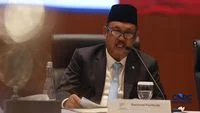
Bambang Pamungkas
Indonesia is poised to significantly advance its position in the global electric vehicle (EV) battery supply chain, with the Indonesia Battery Corporation (IBC) revealing a comprehensive human capital development program and the imminent commercial operation of a major EV battery production facility. The initiative underscores the nation’s ambitious drive to leverage its vast nickel reserves and establish a fully integrated upstream-to-downstream EV battery ecosystem, solidifying its role as a key player in the burgeoning global EV market.
Human Capital Development: A Cornerstone of Industrial Ambition
A critical component of Indonesia’s EV battery strategy is the development of a highly skilled local workforce. IBC, a state-owned enterprise formed to spearhead the nation’s battery industry, recently disclosed that it has dispatched hundreds of Indonesian workers to China for intensive, hands-on training. Aditya Farhan Arif, President Director of IBC, emphasized the paramount importance of nurturing qualified human resources as a short-term priority for the company. He detailed that approximately 600 Indonesian professionals have undergone rigorous six-month training programs directly within industrial settings in China.
This extensive overseas training program is strategically aligned with the operational readiness of PT CATIB, a joint venture between IBC and China’s battery giant Contemporary Amperex Technology Co. Ltd. (CATL), located in Karawang, West Java. The training regimen is designed to bridge existing skill gaps between theoretical research and the practical demands of large-scale battery production. Participants are immersed in all technical facets of battery manufacturing, from intricate material management processes to the complex assembly of battery cells.
"For example, at CATIB, 600 Indonesian employees were sent to China to receive six months of education directly in the industry," Arif stated during a segment on CNBC Indonesia’s Mining Zone, as quoted on Tuesday, June 23, 2026. "We observed that the learning process there was very in-depth; it wasn’t just classroom training but extended to enabling them to develop their own Standard Operating Procedures (SOPs)." This hands-on approach ensures that the returning workforce possesses not only theoretical knowledge but also the practical expertise necessary to operate and optimize advanced battery manufacturing facilities.
The comprehensive nature of the training, which includes developing proprietary SOPs, signifies a deep transfer of knowledge and technology, crucial for fostering local capabilities and reducing reliance on foreign expertise in the long term. Arif further elaborated, "This is a very important knowledge transfer, and we will accompany it with other efforts related to increasing technological capacity." The program is viewed as a vital step in ensuring that the local workforce can independently manage and innovate within the high-tech EV battery sector.
PT CATIB Karawang Plant: A Major Milestone for Indonesia
The deployment of a highly trained workforce directly correlates with the anticipated commercial production launch of the PT CATIB plant in Karawang, West Java, slated for July 2026. This facility represents a cornerstone of Indonesia’s integrated EV battery ecosystem, a collaborative effort between IBC and CATL, the world’s largest EV battery manufacturer. The Karawang plant is projected to become a pivotal production hub for nickel-based batteries, catering to both domestic and international markets.
The strategic rationale behind establishing such a sophisticated manufacturing base in Indonesia is multifaceted. With the global automotive industry rapidly transitioning towards electrification, the demand for high-performance, cost-effective EV batteries is skyrocketing. By securing a robust local production capability, Indonesia aims to not only satisfy its own burgeoning EV market but also to become a critical supplier in the global battery supply chain, thereby capturing a significant share of the value chain currently dominated by a few East Asian nations.
Aditya Farhan Arif highlighted the practical necessity of this approach: "How do you form human resources at an industrial scale? They must directly engage in the industry. When the industry is not available, it will be difficult. So, we finally use every collaboration with global partners as a platform for human resource development." This statement underscores the symbiotic relationship between industrial development and human capital formation, where global partnerships serve as conduits for accelerating both technological and skill advancements within the country.
Government’s Strong Support and Downstreaming Drive
The national significance of this project is further underscored by high-level government involvement. Minister of Energy and Mineral Resources (ESDM), Bahlil Lahadalia, confirmed that the construction of the EV battery ecosystem project in Karawang is on track for completion by the end of July 2026. Minister Lahadalia reported this progress to President Prabowo Subianto during a recent meeting at the Presidential Palace, emphasizing its status as a strategic national downstreaming program.
"Yes, we just had a meeting with Mr. President. The first was to evaluate the downstreaming program. Because several of them are already running, we also reported to Mr. President that our downstreaming program for the car battery ecosystem, which is a collaboration between CATL and Antam, has been completed and, God willing, will be inaugurated at the end of July," Lahadalia stated, as quoted on Tuesday, June 23, 2026. This official endorsement from the highest levels of government signals the unwavering commitment to realizing Indonesia’s industrial ambitions.
The concept of "hilirisasi" or downstreaming has been a central pillar of Indonesia’s economic policy under successive administrations, particularly championed by former President Joko Widodo and now continued under President Prabowo Subianto. This policy aims to transform Indonesia from a mere exporter of raw commodities into a producer of higher value-added goods, thereby boosting national income, creating jobs, and fostering industrial independence. The EV battery ecosystem project, leveraging Indonesia’s vast nickel resources, serves as a prime example of this strategic economic transformation.
Beyond the EV battery project, Minister Lahadalia also briefed President Subianto on the nation’s energy resilience, affirming that Indonesia’s energy reserves are currently at a safe level, averaging above a minimum of 20 days. This broader discussion on national energy security highlights the comprehensive approach the government is taking to ensure stable resources for its industrial growth, including the energy-intensive battery manufacturing sector.
Indonesia’s Ambition: A Global Nickel Powerhouse
Indonesia possesses the world’s largest nickel reserves, estimated at approximately 21 million metric tons, accounting for over 22% of global proven reserves. This geological endowment positions the archipelago nation uniquely to become a dominant force in the EV battery supply chain. Nickel is a critical component in the cathodes of high-energy-density lithium-ion batteries, which power most modern EVs. Recognizing this strategic advantage, the Indonesian government has implemented policies to restrict the export of raw nickel ore, compelling companies to invest in domestic processing and refining facilities.
This policy has attracted significant foreign direct investment, particularly from Chinese companies, which possess advanced processing technologies and substantial capital. The partnership between Indonesian state-owned entities (Antam, IBC) and global giants like CATL and its affiliates (Brunp, Lygend) is a direct outcome of this policy, aiming to establish an integrated ecosystem that spans the entire value chain from mining to battery cell production.
The global EV market is experiencing exponential growth, with sales projected to continue their upward trajectory for the foreseeable future. Industry forecasts predict a compound annual growth rate (CAGR) of 15-20% for global EV sales in the coming years, translating into a massive increase in demand for EV batteries. By developing a robust domestic battery manufacturing capability, Indonesia is positioning itself to capitalize on this global demand, transforming its raw material wealth into manufactured products and securing a strategic foothold in the future of mobility.
A Comprehensive Upstream-Downstream Integrated Ecosystem
The integrated EV battery ecosystem being developed in Indonesia is touted as the largest in Asia, encompassing both upstream and downstream processes. The project is a collaboration between PT Aneka Tambang (Antam), Indonesia Battery Corporation (IBC), and Ningbo Contemporary Brunp Lygend Co. Ltd. (CBL), a joint venture formed by CATL, Brunp, and Lygend. The total initial investment for this ambitious upstream-to-downstream endeavor is estimated at US$5.9 billion, equivalent to approximately Rp 96.04 trillion (based on an assumed exchange rate of Rp 16,278 per US$).
This mega-project is structured into a total of six joint ventures (JVs), meticulously designed to cover every stage of the battery production process:
- Upstream Industry Projects (JV one to three): These JVs focus on the initial stages, including nickel mining, refining of nickel ore into battery-grade precursor materials (e.g., nickel sulfate, cobalt sulfate), and potentially the production of cathode active materials (CAM). This segment is crucial for securing a stable and high-quality supply of raw materials for battery manufacturing. By controlling the upstream, Indonesia aims to ensure self-sufficiency and cost-effectiveness in material sourcing.
- Downstream Industry Projects (JV four to six): These JVs concentrate on the manufacturing end, encompassing precursor production, cathode active material production, battery cell manufacturing (as is the case with PT CATIB), and potentially battery module and pack assembly. The Karawang plant, specifically, falls into this category, representing the crucial step of transforming processed materials into functional battery cells ready for EV integration. These downstream processes add significant value, moving beyond simple material extraction to sophisticated manufacturing.
The phased development through multiple JVs allows for specialized focus at each stage, optimizing efficiency and leveraging the unique expertise of each partner. For instance, CATL’s profound experience in battery cell design and manufacturing complements Antam’s expertise in mining and resource management, and IBC’s role in coordinating national battery industry development.
Economic and Geopolitical Implications
The successful implementation of Indonesia’s EV battery ecosystem project carries profound economic and geopolitical implications.
Economic Impact:
- Value Addition: By processing raw nickel into battery components and then into finished battery cells, Indonesia moves up the value chain, significantly increasing export revenues and reducing reliance on raw commodity exports.
- Job Creation: Such a large-scale industrial project, spanning mining, processing, and manufacturing, is expected to generate thousands of direct and indirect jobs, stimulating local economies and improving living standards.
- Foreign Direct Investment (FDI): The project has already attracted substantial FDI, and its success could pave the way for further investments in related industries, including EV manufacturing itself, charging infrastructure, and battery recycling.
- Economic Diversification: It contributes to diversifying Indonesia’s economy away from traditional sectors, fostering a high-tech manufacturing base.
- Technology Transfer: The partnerships facilitate the transfer of advanced manufacturing technologies and expertise, enhancing Indonesia’s industrial capabilities.
Geopolitical Significance:
- Global Supply Chain Resilience: As the world seeks to de-risk and diversify critical mineral and battery supply chains, Indonesia’s emergence as a major battery producer offers an alternative source, reducing global reliance on a few concentrated regions.
- Strategic Resource Control: By controlling a significant portion of the nickel supply and integrating it into battery production, Indonesia gains considerable leverage in global energy and technology markets.
- Strengthening Bilateral Ties: The collaboration with major Chinese firms like CATL reinforces economic ties and cooperation with key trading partners, while also potentially attracting investment from other global players.
- Regional Leadership: Success in this sector could solidify Indonesia’s leadership role in Southeast Asia’s industrial landscape and its aspirations to be a hub for future technologies.
Challenges and Future Outlook
Despite the significant progress and ambitious plans, the journey to becoming a global EV battery powerhouse is not without its challenges. Environmental concerns related to nickel mining and processing, particularly the management of waste products like tailing, require stringent oversight and sustainable practices. Indonesia has been working on developing environmentally responsible processing methods, such as High-Pressure Acid Leaching (HPAL), to extract nickel from limonite ore while managing environmental footprints.
Furthermore, ensuring a stable and competitive energy supply for energy-intensive battery manufacturing facilities is crucial. The quality and availability of supporting infrastructure, including logistics and transportation networks, will also play a vital role in the long-term success of the integrated ecosystem.
Looking ahead, the successful launch of the PT CATIB plant in July 2026 will be a pivotal moment, marking the transition from development to commercial operation for a significant segment of Indonesia’s EV battery ambition. This milestone, combined with the continuous investment in human capital and the strategic development of an integrated upstream-downstream value chain, positions Indonesia on a trajectory to not only fulfill its domestic EV goals but also to emerge as a critical and influential player in the global electric vehicle and clean energy transition. The comprehensive strategy, from raw material extraction to high-tech manufacturing and skilled workforce development, illustrates Indonesia’s determination to convert its natural endowments into sustainable economic growth and technological leadership.