Paryono Ramadhan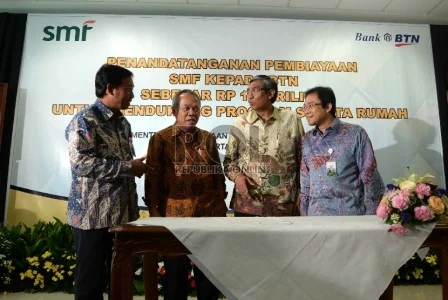
The Indonesian government is mobilizing all available resources to accelerate the success of its ambitious One Million Houses Program, a flagship initiative aimed at significantly reducing the nation’s persistent housing backlog, particularly for low-income communities. This renewed commitment was underscored by Minister of Public Works and Public Housing, Basuki Hadimuljono, during a recent signing ceremony in Jakarta between PT Sarana Multigriya Finansial (SMF) and Bank Tabungan Negara (BTN), where a substantial financial injection was formalized to bolster the program’s implementation.
Government Rallies Resources to Address Housing Deficit
Minister Hadimuljono articulated the government’s unwavering dedication, stating, "We are mobilizing all our resources for the One Million Houses Program, especially for low-income communities." This statement highlights the program’s core objective: to ensure access to affordable and decent housing for a demographic segment that has historically struggled with homeownership due to financial constraints. The program, initiated under President Joko Widodo’s administration, seeks to construct one million housing units annually across the archipelago, a monumental undertaking designed to address a national housing deficit estimated to be in the millions. This deficit is not merely a statistical figure; it represents a profound social challenge, impacting the quality of life, economic stability, and overall well-being of countless Indonesian families. The government views adequate housing as a fundamental right and a crucial component of national development, contributing to public health, education, and economic productivity.
The collaborative effort between PT Sarana Multigriya Finansial (SMF) and Bank Tabungan Negara (BTN) forms a critical pillar of this strategy. SMF, a state-owned enterprise operating in the secondary mortgage market, extended a significant loan of IDR 1.5 trillion (approximately USD 96 million at current exchange rates) to BTN. This funding is specifically earmarked to support the execution of the One Million Houses Program, facilitating easier access to homeownership for low-income citizens. The partnership is designed to enhance the liquidity of primary mortgage lenders like BTN, enabling them to disburse more housing loans and, in turn, accelerate the construction and acquisition of affordable housing units. This mechanism allows SMF to play its role as a facilitator in the housing finance ecosystem, transforming long-term mortgage assets into more liquid instruments, thereby strengthening the financial foundation of the housing sector.
Diverse Funding Mechanisms Powering the Program
Beyond the SMF-BTN collaboration, Minister Basuki outlined a multi-faceted approach to financing the One Million Houses Program, drawing from various robust sources. One of the most significant potential contributors is BPJS Ketenagakerjaan (Workers Social Security Agency), which has earmarked a substantial IDR 48.5 trillion for housing-related investments. This represents a strategic leverage of social security funds, aligning the agency’s mandate for worker welfare with national housing goals. BPJS Ketenagakerjaan’s participation allows its members, who are often from the working and middle classes, to access more favorable housing loan terms, thereby expanding the program’s reach.
Further reinforcing the financial backbone of the initiative are direct government subsidies and budget allocations. The Fasilitas Likuiditas Pembiayaan Perumahan (FLPP) or Housing Finance Liquidity Facility, a long-standing government program designed to provide subsidized interest rates for housing loans, is contributing IDR 5.1 trillion. FLPP is crucial for making homeownership affordable for eligible low-income individuals by reducing their monthly mortgage payments significantly. Additionally, the Daftar Isian Pelaksanaan Anggaran (DIPA) APBN, which represents direct budget allocations from the state budget, is injecting another IDR 8.1 trillion into the program. This combination of state-owned enterprise funding, social security funds, and direct government subsidies demonstrates a comprehensive and integrated strategy to ensure financial sustainability and broad accessibility for the One Million Houses Program.
A Program Born from Urgent Need: Background and Evolution
The One Million Houses Program was officially launched by President Joko Widodo in April 2015 in Ungaran, Central Java. Its inception was a direct response to Indonesia’s escalating housing backlog, which at the time was estimated to be around 13.5 million units and growing by approximately 800,000 units annually. The program was designed not only to build physical structures but also to stimulate economic growth through the construction sector, create jobs, and improve public welfare.
Initially, the program aimed to deliver 700,000 units for low-income communities (Masyarakat Berpenghasilan Rendah/MBR) and 300,000 units for non-MBR segments. Over the years, the program has seen varying levels of success and faced numerous challenges, including land acquisition issues, bureaucratic hurdles, and fluctuating economic conditions. Despite these obstacles, it has consistently remained a priority for the government, adapting its strategies and funding mechanisms to maintain momentum. The program’s implementation involves multiple stakeholders, including central government agencies, local governments, state-owned developers (like Perumnas), private developers, and financial institutions. Its evolution has seen an increasing emphasis on leveraging non-state budget funding and fostering public-private partnerships to diversify resources and enhance efficiency.
Key Challenges and Expert Recommendations for Success
While the government’s commitment and financial mobilization are strong, the path to achieving the One Million Houses Program’s ambitious targets is fraught with complexities. Indonesia Property Watch, a prominent independent research and consultancy firm specializing in the property sector, has consistently highlighted five critical areas that require diligent attention from the government to ensure the program’s long-term success and sustainability. These recommendations, reiterated over time, form a crucial framework for policy improvement:
-
Land Availability and Land Bank: The firm stresses the paramount importance of establishing a robust land bank. In a rapidly urbanizing country like Indonesia, land prices are often subject to speculative market forces, making affordable land for housing development scarce and expensive. A government-controlled land bank would allow for strategic land acquisition and management, ensuring that land is allocated for housing projects, particularly for MBR, at controlled prices, rather than being dictated solely by market mechanisms. This requires proactive land procurement, often through eminent domain or long-term leases, and a clear regulatory framework to prevent misuse.
-
Dedicated Institution for Public Housing: Indonesia Property Watch advocates for the creation or strengthening of a specialized institution solely focused on managing and overseeing public housing initiatives. While the Ministry of PUPR plays a significant role, a dedicated agency with specific mandates, streamlined bureaucracy, and adequate resources could enhance efficiency, coordination, and accountability in the planning, development, and delivery of affordable housing. Such an entity could consolidate expertise, optimize resource allocation, and act as a central hub for data and policy implementation.
-
Sustainable and Diverse Funding: The consistent availability of diverse and sustainable funding sources is vital. While government subsidies through FLPP and budget allocations are crucial, the program’s long-term viability heavily relies on leveraging non-state budget funds, such as those from BPJS Ketenagakerjaan, pension funds, and private sector investments. Expanding the role of the secondary mortgage market, innovative financing instruments, and public-private partnerships can significantly broaden the financial base and reduce reliance on annual state budgets, which can be subject to economic fluctuations.

-
Accurate Data and Information on Housing Backlog: Effective planning and resource allocation depend on precise and up-to-date data regarding the housing backlog, demand, and demographic needs across different regions. Indonesia Property Watch emphasizes the need for a comprehensive national housing database that can track supply, demand, affordability gaps, and target beneficiaries. This data-driven approach would enable the government to tailor programs to specific regional needs, identify critical areas for intervention, and measure the program’s impact accurately.
-
Streamlining Costs and Bureaucracy: High transaction costs, lengthy permitting processes, and complex regulatory requirements significantly inflate housing prices and deter developers from engaging in affordable housing projects. The firm calls for a drastic reduction in costs associated with various stages of housing development, including land acquisition, zoning and building permits, certification fees (e.g., for land titles and building permits), and utility connection charges (electricity from PLN, water, sanitation). Simplifying the bureaucratic process through initiatives like the Online Single Submission (OSS) system and reducing unnecessary levies can substantially lower the final cost of homes, making them more accessible to MBR.
Official Responses and Stakeholder Perspectives
The latest agreement between SMF and BTN has been met with positive reactions from all involved parties, signaling a strong collaborative spirit.
Minister Basuki Hadimuljono further elaborated on the government’s holistic approach: "This program is not just about building houses; it’s about building communities and improving the quality of life for our citizens. The synergy between government agencies, state-owned enterprises, and financial institutions is paramount. We are committed to addressing the structural issues that have historically hindered housing development, from land availability to bureaucratic inefficiencies." He also highlighted the economic multiplier effect of the program, noting that the construction sector is a significant employer and drives demand for various related industries.
An official from PT Sarana Multigriya Finansial (SMF), speaking at the signing event, emphasized the strategic importance of their partnership with BTN. "SMF’s role is to provide liquidity and stability to the housing finance market. Our IDR 1.5 trillion loan to BTN is a testament to our commitment to the One Million Houses Program. By strengthening BTN’s capacity, we are directly enabling more families to secure affordable home loans, thus accelerating the realization of their homeownership dreams. This collaboration exemplifies how financial innovation can serve national development goals."
A representative from Bank Tabungan Negara (BTN), widely recognized as Indonesia’s primary housing bank, expressed optimism about the increased funding. "BTN has always been at the forefront of providing housing finance for Indonesians, particularly through government-subsidized programs. This fresh capital injection from SMF will significantly enhance our ability to disburse more KPR (Kredit Pemilikan Rumah – Home Ownership Loans) and reach a wider segment of low-income families. We are committed to leveraging this fund efficiently and transparently to contribute meaningfully to the One Million Houses Program’s targets."
While not directly quoted in the original article, BPJS Ketenagakerjaan has consistently affirmed its commitment to supporting member welfare, including housing. Their potential IDR 48.5 trillion contribution signifies a major shift towards utilizing long-term social security funds for productive investments that directly benefit their members, often through housing benefit programs or direct financing for affordable housing projects.
Implications and Broader Impact
The sustained focus and intensified efforts on the One Million Houses Program carry significant broader implications for Indonesia.
Economic Impact: The program acts as a powerful economic stimulus. The construction of one million homes annually generates substantial demand for building materials (cement, steel, timber), labor (construction workers, architects, engineers), and related services (transportation, logistics). This creates millions of direct and indirect jobs, contributing to employment rates and stimulating local economies across various regions. The multiplier effect extends to financial services, real estate agencies, and home furnishing industries.
Social Impact: Providing decent and affordable housing has profound social benefits. It improves public health outcomes by offering safer and more sanitary living conditions, particularly reducing the prevalence of slum areas. It contributes to educational attainment by providing stable environments for children to study. Homeownership fosters a sense of stability, community, and economic empowerment among low-income families, reducing social inequality and enhancing overall social cohesion. It also helps in formalizing informal settlements, leading to better urban planning and infrastructure development.
Urban Development and Sustainability: The program influences urban planning and development. As new housing units are constructed, there is an opportunity to integrate them with sustainable urban design principles, including access to public transport, green spaces, and essential social infrastructure like schools and healthcare facilities. However, without careful planning, rapid housing development could also lead to urban sprawl, necessitating robust regional planning and infrastructure investment.
Challenges Ahead: Despite the momentum, several challenges persist. Macroeconomic fluctuations, such as inflation or interest rate hikes, can impact housing affordability and the viability of development projects. Land speculation remains a significant hurdle, requiring continuous government intervention and effective land banking strategies. Ensuring the quality and sustainability of the housing units, particularly those built rapidly and on a large scale, is also crucial. Furthermore, the coordination among numerous central and local government agencies, private developers, and financial institutions needs constant monitoring and improvement to prevent bottlenecks and ensure efficient execution.
Future Outlook: The Indonesian government’s continued emphasis on the One Million Houses Program, backed by diverse funding sources and a commitment to addressing systemic challenges, signals a positive outlook for bridging the nation’s housing gap. The strategic partnerships, such as the SMF-BTN collaboration, exemplify an evolving approach that leverages financial innovation and inter-agency synergy. As Indonesia continues its development trajectory, providing adequate and affordable housing remains a cornerstone of its national agenda, promising a more equitable and prosperous future for its citizens. The journey is complex, but the sustained political will and collaborative efforts underscore the nation’s determination to ensure every Indonesian has a place to call home.