Bambang Pamungkas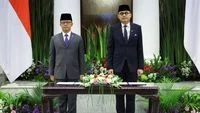
Jakarta sets a transformative course for its international diplomacy as newly appointed Minister of Foreign Affairs, Arrmanatha Christiawan Nasir, officially takes the helm of the Ministry of Foreign Affairs. Stepping into the role following a strategic early October 2026 Cabinet reshuffle by President Prabowo Subianto—where predecessor Sugiono transitioned to the role of Coordinating Minister for Human Development and Cultural Affairs—Arrmanatha has wasted no time outlining an ambitious foreign policy agenda. In his inaugural statements, delivered during the formal handover ceremony at the historic Gedung Pancasila in Jakarta on Monday, October 12, 2026, the veteran diplomat emphasized that Indonesia’s overarching strategy centers on reforming the United Nations from within. Rather than remaining an external critic of a global governance system that frequently sidelines developing nations, Jakarta intends to roll up its sleeves and reshape multilateral institutions to ensure they are equitable, transparent, and reflective of modern geopolitical realities.
The core philosophy guiding Arrmanatha’s tenure is rooted in active engagement and institutional overhaul. Addressing diplomats, ministry officials, and media personnel, the minister underscored that Indonesia’s diplomatic corps will adopt a hands-on approach to international systemic reform. "We do not just knock on the door from the outside; we help fix the house from the inside," remarked Arrmanatha, who is widely known by his nickname, Tata. This pragmatic yet assertive stance captures the nation’s growing confidence on the world stage, particularly as a leading voice for the Global South—a vast coalition of developing and emerging economies that have long argued for a more inclusive international order.
A Legacy of Institutional Commitment to Global Accountability
Indonesia’s push for structural reform within the United Nations is neither sudden nor superficial; it represents the culmination of years of calculated diplomatic maneuvering. A cornerstone of this strategy involves Indonesia’s active participation in the UN Board of Auditors. This crucial body is tasked with maintaining financial oversight, transparency, and accountability across the sprawling UN bureaucracy and its numerous peacekeeping missions and specialized agencies.
The groundwork for Indonesia’s current stature within the board was systematically laid out during the tenure of former Foreign Minister Retno Marsudi, beginning around 2022. That foundational effort was subsequently championed and advanced by Sugiono during his brief yet impactful stint leading the ministry. These cumulative diplomatic efforts bore fruit when Indonesia successfully secured a prestigious seat on the UN Board of Auditors, slated for the 2025 term. As the newly installed foreign minister, Arrmanatha’s immediate mandate is to ensure that Indonesia’s presence on the board translates into tangible governance improvements. By leveraging its technical expertise and commitment to clean administration, Jakarta aims to push for rigorous financial audits that prevent waste and ensure UN resources are directed where they are most urgently needed.
This institutional footprint is further complemented by Indonesia’s official bid for a non-permanent seat on the United Nations Security Council (UNSC) for the 2029-2030 term. The Security Council, as the primary organ responsible for the maintenance of international peace and security, has faced persistent criticism for paralysis resulting from great-power rivalries and the controversial use of the veto power by its permanent members. By seeking election to the council, Indonesia aims to act as a bridge-builder, advocating for a UNSC that is fundamentally more effective, representative, transparent, and democratic. If successful, this tenure will grant Jakarta a direct platform to influence global crisis management, peacekeeping operations, and conflict resolution frameworks in strict alignment with international law and the UN Charter.
The Pillars of Free and Active Foreign Policy in a Multipole World
Amid these global ambitions, Arrmanatha was careful to reassure the international community that Indonesia’s foundational diplomatic doctrine remains entirely intact. The nation’s foreign policy will continue to be anchored by the constitutional mandate of a "free and active" (bebas-aktif) foreign policy. In an era marked by escalating geopolitical friction, technological decoupling, and strategic competition between major superpowers, Indonesia insists on maintaining strategic autonomy.
"We do not choose blocs, we choose principles," Arrmanatha stated firmly, encapsulating Jakarta’s refusal to be drawn into zero-sum games dictated by external powers. This principle dictates that Indonesia will actively maintain friendly, mutually beneficial diplomatic and economic relations with all nations across the globe. However, this openness does not equate to passivity. The ministry made it unequivocally clear that Indonesia will not hesitate to take a sharp, unyielding stance whenever its national sovereignty, territorial integrity, or core economic interests are threatened.
This calibrated approach allows Jakarta to navigate complex multilateral spaces, engaging constructively with traditional Western partners while simultaneously expanding cooperation with emerging economies in Asia, Africa, and Latin America. By refusing to align with exclusive geopolitical camps, Indonesia preserves its valuable status as an honest broker and an indispensable voice in regional and global dialogues.
Domestic Resilience as the Foundation of International Credibility
While high-level multilateral diplomacy and peacekeeping campaigns command global headlines, the restructuring of Indonesia’s foreign policy under Arrmanatha places an unprecedented, parallel emphasis on domestic resilience. In an interdependent world, foreign policy can no longer be decoupled from internal economic strength and security. Consequently, the Ministry of Foreign Affairs is synchronizing its diplomatic missions abroad with the national development goals set by President Prabowo Subianto’s administration.
Under this synchronized framework, Indonesian diplomats are now expected to function concurrently as economic envoys tasked with securing national interests across several critical sectors. Priority areas identified for aggressive diplomatic support include national food security, energy security, the domestic downstream processing of critical minerals (hilirisasi), digital transformation, the development of a robust domestic defense industry, and the expansion of international trade and investment partnerships. Furthermore, public health security and maritime sovereignty have been elevated to frontline diplomatic priorities.
By actively fostering international partnerships that facilitate technology transfer, foreign direct investment, and resilient supply chains, the ministry aims to fortify Indonesia against external economic shocks. The logic is straightforward: a nation that is economically self-reliant and technologically proficient commands greater respect and exerts more meaningful influence at the negotiating tables of the United Nations and other international forums.
Strengthening Regional Stability Through ASEAN
Regionally, Indonesia remains deeply committed to the centrality and institutional efficacy of the Association of Southeast Asian Nations (ASEAN). As the largest nation in Southeast Asia, Indonesia views regional stability as an indispensable prerequisite for broader national development. Under Arrmanatha’s leadership, the Ministry of Foreign Affairs will continue to push ASEAN to transcend its traditional bureaucratic inertia, demanding a more proactive posture in maintaining regional peace, rebuilding institutional trust, and mediating complex territorial and political disputes within the region.
The ongoing challenges in Southeast Asia—ranging from maritime disputes in the South China Sea to the protracted political and humanitarian crisis in Myanmar—require a unified, principled ASEAN response. Indonesia’s diplomatic machinery will work tirelessly to ensure that the regional bloc remains cohesive, preventing external powers from turning Southeast Asia into a theater of proxy competition. By reinforcing the ASEAN Outlook on the Indo-Pacific (AOIP), Jakarta aims to champion an inclusive regional architecture that guarantees open maritime trade routes and respects international law, specifically the United Nations Convention on the Law of the Sea (UNCLOS).
Uncompromising Protection of Indonesian Citizens Abroad
Beyond high politics and economic statecraft, the most immediate and tangible measure of a government’s competence lies in its capacity to protect its citizens. In this regard, the Ministry of Foreign Affairs under Arrmanatha has reaffirmed that the safety, welfare, and legal protection of Indonesian citizens (WNI) abroad remain an absolute, non-negotiable priority.
The scale of this logistical and consular challenge is immense. Recent internal evaluations from the ministry highlight a massive operational undertaking: since 2024, the Indonesian diplomatic network has successfully managed, processed, and resolved approximately 124,000 consular cases involving citizens overseas. These operations span a wide spectrum of crises, ranging from labor disputes and human trafficking rescue missions to emergency evacuations from active conflict zones and natural disasters.
To underscore the gravity of this commitment, Arrmanatha delivered a powerful message regarding the intrinsic value of national documentation and consular backing. "Indonesian passports must be valuable wherever you go; there must be a state standing behind you," he asserted. To realize this vision, the ministry is systematically upgrading its digital consular response mechanisms, expanding the reach of overseas protection task forces, and fostering closer legal cooperation with destination countries, particularly in regions with high concentrations of Indonesian migrant workers.
Steadfast Solidarity with the Palestinian Cause
In alignment with Indonesia’s constitutional mandate to oppose all forms of colonialism and support universal human rights, the nation’s unwavering solidarity with the Palestinian people remains a permanent fixture of its foreign policy. The transition in ministerial leadership will result in no deviation from this moral and diplomatic compass.
Indonesia continues to utilize every available multilateral and bilateral channel to advocate for Palestinian self-determination, statehood, and full UN membership. Practically, this diplomatic backing translates into sustained humanitarian assistance, active participation in post-conflict recovery and reconstruction initiatives in Gaza, and relentless advocacy within international judicial and political bodies against illegal occupations and human rights violations. For Jakarta, the pursuit of global justice is fundamentally incomplete as long as the Palestinian people are denied their sovereign right to an independent and viable state.
Implications of the New Leadership Transition
The appointment of Arrmanatha Christiawan Nasir as Minister of Foreign Affairs marks a period of profound continuity coupled with renewed strategic vigor. Having previously served in critical diplomatic postings—including as Indonesia’s Permanent Representative to the United Nations in New York and Ambassador to the United Kingdom—Arrmanatha brings a wealth of institutional memory and multilateral acumen to the executive office.
This depth of experience is expected to streamline Indonesia’s transition into its upcoming international engagements, ensuring that institutional goals established during previous administrations are not merely maintained, but aggressively accelerated. The strategic alignment between President Prabowo’s domestic nation-building agenda and Arrmanatha’s sophisticated multilateral diplomacy creates a cohesive front. By simultaneously pursuing structural reforms within the UN, championing the legitimate grievances of the Global South, fortifying domestic economic resilience, and maintaining an unyielding stance on citizen protection and international justice, Indonesia is positioning itself as an increasingly pivotal actor in shaping the 21st-century global order.
As the geopolitical landscape grows increasingly fractured, Jakarta’s insistence on dialogue, structural equity, and strategic autonomy offers a compelling blueprint for middle powers navigating a multipolar world. The coming years will rigorously test whether this renewed diplomatic machinery can successfully bend the arc of global governance toward greater inclusivity and fairness, but the initial trajectory under Arrmanatha’s watch signals a nation ready and willing to lead from within.