Azin Asro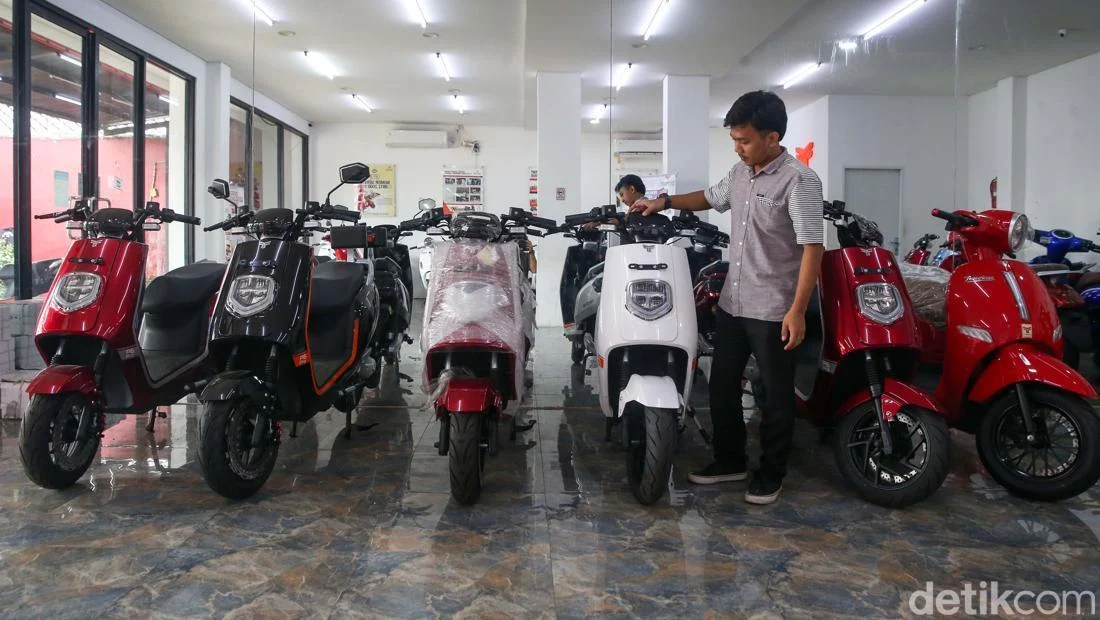
The Indonesian government has officially announced a further delay in the implementation of the highly anticipated electric motorcycle incentive program, pushing the timeline back to at least August. This decision comes as the Coordinating Ministry for Economic Affairs continues a comprehensive review of the policy framework, aimed at ensuring the fiscal sustainability and effectiveness of the subsidy in stimulating a domestic market that has recently shown signs of cooling. Coordinating Minister for Economic Affairs Airlangga Hartarto confirmed that the delay is necessary to refine the technical aspects of the program, marking yet another shift in a policy landscape that has seen several adjustments over the past two years.
The announcement adds a layer of complexity to Indonesia’s ambitious goals of becoming a regional hub for electric vehicle (EV) production and adoption. While the government remains committed to the transition from internal combustion engines to electric propulsion, the repeated delays have created a "wait and see" atmosphere among both consumers and manufacturers. According to Airlangga, the primary reason for the postponement is the ongoing evaluation process, though he did not provide specific details on which technicalities are currently under scrutiny. This move follows a period of significant uncertainty that industry experts believe contributed to a sharp decline in electric motorcycle sales throughout 2025.
A Shifting Subsidy Landscape: From Rp 7 Million to Rp 5 Million
The financial architecture of the proposed incentive has undergone significant revisions. Earlier in the year, Purbaya Yudhi Sadewa, a key figure in the financial regulatory space and Chairman of the Indonesia Deposit Insurance Corporation (LPS), indicated that the government was preparing a subsidy package of Rp 5 million per unit. This figure represents a notable decrease from the Rp 7 million subsidy offered during the 2024 fiscal year. Despite the reduction in the per-unit amount, the government has expressed a willingness to be flexible with the total volume of supported units.
The initial plan for the 2026 rollout targets the first 100,000 units of electric motorcycles sold. Purbaya noted that if the initial quota of 100,000 units is exhausted quickly, the government is prepared to replenish the fund to maintain market momentum. This "rolling quota" approach is designed to prevent the abrupt stops in funding that characterized previous iterations of the program. However, the reduction from Rp 7 million to Rp 5 million has raised questions among industry analysts regarding whether the lower amount will be sufficient to bridge the price gap between electric models and their well-established gasoline-powered counterparts.
Statistical Analysis: The 2025 Sales Slump and Market Sentiment
The necessity of a clear and consistent incentive policy is underscored by the performance of the electric motorcycle sector in 2025. Data from the Ministry of Transportation, specifically compiled through the Type Test Registration System (SRUT), reveals a troubling trend. Sales of electric motorcycles in 2025 plummeted to 55,059 units, representing a 28.6 percent decrease compared to the 77,078 units recorded in 2024. This contraction occurred despite an increase in the number of brands and models available in the Indonesian market.
Industry observers attribute this decline directly to the lack of policy clarity. Throughout 2025, the government had hinted at various incentive schemes, but none were fully implemented by the end of the year. This created a paradoxical situation where potential buyers, expecting a price drop via government subsidies, deferred their purchases indefinitely. The data suggests that while the underlying interest in green technology remains—evidenced by the 55,000 people who purchased vehicles even without subsidies—the mass market remains highly price-sensitive and dependent on government intervention to offset the higher upfront costs of lithium-ion battery technology.
Manufacturer Adaptations: The Rise of Battery Leasing Models
In the absence of consistent government support, original equipment manufacturers (OEMs) in Indonesia have had to innovate their business models to remain competitive. One of the most successful strategies has been the introduction of battery-as-a-service (BaaS) or battery leasing programs. By decoupling the cost of the battery—which can account for up to 40-50 percent of the total vehicle cost—from the purchase price of the motorcycle, manufacturers have been able to offer "On The Road" (OTR) prices that are comparable to traditional 110cc or 125cc gasoline scooters.
Several local and international brands operating in Indonesia, such as Polytron, Alva, and United E-Motor, have leveraged these models to lower the barrier to entry. Under a leasing arrangement, the consumer pays a lower initial price for the vehicle and then pays a monthly subscription fee for the battery or a fee per battery swap. While this has helped sustain some level of sales, manufacturers argue that these are "stop-gap" measures. They contend that a robust, direct-to-consumer subsidy is still the most effective tool for achieving the economies of scale necessary to lower production costs in the long run.
The Chronology of Indonesian EV Policy (2024–2026)
To understand the current state of the market, it is essential to look at the timeline of events that have shaped the Indonesian EV landscape over the last 24 months:
- Early 2024: The government implements a broad Rp 7 million subsidy for electric motorcycles with at least 40 percent local content (TKDN). Sales see a significant uptick as the "Sisapira" platform is streamlined to allow more citizens to qualify.
- Mid-2024: Budgetary allocations for the subsidy begin to dwindle, and discussions about "refining" the criteria for the following year begin to circulate in the Ministry of Industry and the Ministry of Finance.
- Late 2024: Total sales for the year reach a record high of 77,078 units, buoyed by the consistent application of the Rp 7 million incentive.
- January–December 2025: The government enters a period of protracted policy review. No new subsidies are officially activated for the 2025 calendar year. Consequently, sales drop by nearly 30 percent as consumers wait for a new policy.
- May 2026: Officials signal a return of the incentive at a reduced rate of Rp 5 million, targeting 100,000 units.
- July 2026: Menko Airlangga Hartarto announces that the planned rollout is delayed by another month to August 2026 to allow for further "study."
Official Responses and Stakeholder Concerns
The delay has met with mixed reactions from stakeholders. While government officials emphasize the need for "fiscal prudence" and "targeted delivery," industry groups have expressed concerns over the impact of continued uncertainty. The Association of Indonesian Electric Vehicle Industries (AESPINA) has previously noted that for manufacturers to invest in local assembly plants and component manufacturing, they require a predictable regulatory environment.
"Every month of delay is a month of lost momentum," noted an industry representative who requested anonymity. "The supply chain for electric vehicles is complex. Manufacturers need to plan their inventory, their workforce, and their marketing strategies months in advance. When the start date of a subsidy keeps moving, it disrupts the entire ecosystem, from the factory floor to the dealership."
On the other hand, the Ministry of Finance remains focused on ensuring that the subsidies do not become a permanent fiscal burden. The transition from Rp 7 million to Rp 5 million is seen by some as a move toward a "market-driven" equilibrium where the government provides a "nudge" rather than a permanent crutch. The ongoing review mentioned by Airlangga likely involves balancing these fiscal constraints with the national target of having 13 million electric motorcycles on the road by 2030.
Broader Implications: Infrastructure and Global Targets
The delay in motorcycle incentives does not exist in a vacuum; it impacts Indonesia’s broader environmental and economic goals. As the world’s fourth most populous nation and a signatory to the Paris Agreement, Indonesia has committed to achieving Net Zero Emissions (NZE) by 2060 or sooner. The transport sector is a major contributor to urban air pollution and carbon emissions, making the electrification of the country’s nearly 130 million two-wheelers a top priority.
Furthermore, Indonesia is positioning itself as a global leader in the EV battery supply chain, leveraging its massive nickel reserves. However, a weak domestic market for finished EVs could undermine this strategy. International investors looking to build battery plants in Indonesia often look at the local adoption rate as a gauge of the market’s maturity. A stagnant or declining domestic sales figure, caused by policy delays, could potentially slow down foreign direct investment (FDI) in the upstream nickel processing and battery cell manufacturing sectors.
The infrastructure for EVs also remains a critical piece of the puzzle. While the government and state-owned electricity company PLN have been aggressively installing Public Electric Vehicle Charging Stations (SPKLU) and Battery Swapping Stations (SPBKLU), the utilization rates of these stations are directly tied to the number of vehicles on the road. A delay in vehicle incentives indirectly slows the ROI (Return on Investment) for infrastructure providers, creating a secondary bottleneck in the transition.
Conclusion: The Road to August and Beyond
As August approaches, the Indonesian automotive industry and prospective EV owners remain in a state of watchful anticipation. The success of the upcoming incentive program will depend not just on the Rp 5 million figure, but on the clarity of the application process and the government’s ability to maintain the policy without further interruptions.
The 2025 sales data serves as a stark reminder that the transition to green mobility is not self-sustaining in its current stage. It requires a delicate balance of government support, manufacturer innovation, and consumer trust. If the government can successfully launch the program in August and demonstrate a long-term commitment to the 100,000-unit quota, it may be able to reverse the downward trend of 2025 and put Indonesia back on track toward its electrified future. For now, the "August promise" remains the focal point for an industry eager to move past the uncertainty and into a period of renewed growth.