Paryono Ramadhan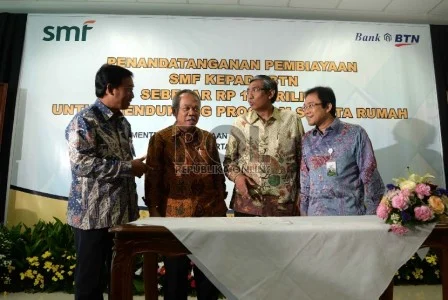
The Indonesian government is mobilizing all available resources to accelerate and ensure the successful execution of its ambitious One Million Houses Program, a flagship initiative designed to address the nation’s significant housing deficit, particularly for low-income communities. Minister of Public Works and Public Housing (PUPR), Basuki Hadimuljono, underscored this comprehensive approach during the signing of a crucial cooperation agreement between PT Sarana Multigriya Finansial (SMF) and PT Bank Tabungan Negara (BTN) in Jakarta recently. The collaboration saw SMF extend a substantial loan facility of Rp 1.5 trillion to BTN, earmarked specifically to bolster the implementation of the One Million Houses Program and facilitate easier homeownership for Masyarakat Berpenghasilan Rendah (MBR), or low-income individuals. This financial injection is a testament to the government’s multi-pronged strategy, combining state-owned enterprises’ financial prowess with direct budgetary allocations and leveraging social security funds to achieve its housing targets.
The Genesis and Ambition of the One Million Houses Program
The One Million Houses Program (Program Sejuta Rumah) was officially launched by President Joko Widodo in April 2015, born out of an urgent need to tackle Indonesia’s persistent housing backlog, which at the time stood at an estimated 11.4 million units. The program set an ambitious target of constructing one million new homes annually, a scale unprecedented in the nation’s history, primarily focusing on providing affordable and decent housing for low-income families and workers. The rationale behind such an expansive initiative was multifaceted: to improve the quality of life for millions, stimulate economic growth through the construction sector, create jobs, and ensure social equity by making homeownership accessible. The program represents a holistic approach to housing provision, encompassing not only the physical construction of units but also the development of supportive infrastructure, access to financing, and regulatory streamlining.
Crucial Financial Partnerships: SMF and BTN Lead the Way
The recently signed cooperation agreement between PT Sarana Multigriya Finansial (SMF) and PT Bank Tabungan Negara (BTN) represents a significant milestone in the program’s funding diversification efforts. SMF, a state-owned enterprise operating under the Ministry of Finance, is mandated to develop and deepen Indonesia’s secondary mortgage market. Its role involves providing long-term funding to mortgage lenders, thereby increasing their capacity to disburse housing loans. BTN, on the other hand, is a state-owned commercial bank with a historical focus and expertise in housing finance, often serving as the primary executor for government housing subsidy programs.
The Rp 1.5 trillion loan from SMF to BTN is designed to provide crucial liquidity to BTN, enabling the bank to extend more housing credits, particularly those under the subsidized schemes catering to MBR. This partnership is vital because it allows BTN to refinance its existing mortgage portfolios or issue new loans, ensuring a continuous flow of funds for housing development. By tapping into the capital markets through SMF, the program reduces its sole reliance on the state budget, promoting a more sustainable and robust financing ecosystem for housing. Minister Basuki highlighted that such collaborations are integral to meeting the colossal funding requirements of the program, ensuring that financial access does not become a bottleneck for potential homeowners.
Diversifying Funding Avenues: A Multi-Source Strategy
Beyond the SMF-BTN collaboration, the government is actively pursuing a strategy of diversified funding sources to support the One Million Houses Program. This multi-source approach acknowledges the immense capital needed and seeks to harness various financial instruments and institutions. Minister Basuki outlined several key avenues:
BPJS Ketenagakerjaan: Leveraging Worker Social Security Funds
A significant potential source of financing is BPJS Ketenagakerjaan, Indonesia’s national social security agency for workers. Basuki indicated a potential contribution of up to Rp 48.5 trillion from BPJS Ketenagakerjaan. These funds, accumulated from workers’ contributions, are strategically invested, and a portion is channeled into housing finance schemes for participants. BPJS Ketenagakerjaan offers various housing-related benefits, including Housing Ownership Loans (KPR), Housing Down Payment Assistance (PUMP), and Housing Renovation Loans (PRP), all designed to assist workers in acquiring or improving their homes. By integrating these social security funds, the government ensures that workers, who often fall into the MBR category, have direct access to affordable housing finance linked to their long-term savings.
FLPP: Government’s Direct Subsidy Mechanism
The Fasilitas Likuiditas Pembiayaan Perumahan (FLPP), or Housing Finance Liquidity Facility, remains a cornerstone of the government’s strategy to provide affordable housing. This program involves interest rate subsidies, making mortgages significantly more affordable for MBR. The government allocates funds annually for FLPP, managed by entities like the Public Service Agency for Housing Finance Fund Management (PPDPP), now under BP Tapera. For the program, an allocation of Rp 5.1 trillion from the government’s budget (APBN) has been earmarked for FLPP. This direct subsidy mechanism is critical for bridging the affordability gap, ensuring that monthly mortgage payments are within reach for low-income families. The FLPP scheme typically offers a fixed, low-interest rate for the entire loan tenure, providing financial certainty and stability to homeowners.
DIPA APBN: Direct State Budget Allocation
In addition to FLPP, the Daftar Isian Pelaksanaan Anggaran (DIPA) APBN, which represents the detailed budget allocation documents for government agencies, contributes another Rp 8.1 trillion. This allocation signifies direct government spending on housing-related initiatives, which can include the construction of public housing units, development of basic infrastructure for new housing estates (roads, water, electricity), land acquisition for housing projects, or direct assistance programs. This direct budgetary support is essential for projects that may not be fully viable through commercial financing alone or for providing public housing solutions in specific strategic areas.
Addressing Critical Challenges: Insights from Indonesia Property Watch
Despite the robust financial commitments and strategic partnerships, the successful implementation of the One Million Houses Program is not without its challenges. Indonesia Property Watch, a prominent independent research and consulting firm specializing in the property sector, has identified five critical areas that the government must effectively address to ensure the program’s long-term success. These recommendations highlight systemic issues that transcend mere funding and delve into policy, administration, and market mechanisms.

1. Land Availability through a National Land Bank
One of the most significant impediments to affordable housing development in Indonesia is the escalating cost and scarcity of land, particularly in urban and peri-urban areas. Indonesia Property Watch emphasizes the urgent need for a national land bank. Such an institution would acquire and manage land reserves, ensuring their availability for public interest projects, including affordable housing, without being subject to speculative market forces. By decoupling land prices from pure market mechanisms for these specific developments, the government could significantly reduce the overall cost of housing units, making them more accessible to MBR. A land bank would also prevent land hoarding and facilitate planned urban development.
2. A Focused Institution for People’s Housing
The complexity and multi-sectoral nature of housing development often lead to fragmentation of efforts across various government agencies. Indonesia Property Watch recommends establishing a dedicated institution or agency with the sole focus of managing and overseeing people’s housing programs. This specialized body would streamline coordination among different ministries, local governments, developers, and financial institutions. A focused institution could enhance efficiency, reduce bureaucratic hurdles, ensure consistent policy implementation, and provide a single point of accountability for the program’s progress and outcomes.
3. Diversified and Sustainable Funding Mechanisms
Echoing the government’s own strategy, Indonesia Property Watch reiterates the importance of diverse funding. While FLPP and BPJS contributions are crucial, the recommendation underscores the need for continuous exploration and development of other sustainable financing models. This could include further developing the secondary mortgage market, encouraging greater private sector investment through various incentives, exploring municipal bonds for infrastructure, or even innovative financing tools like social impact bonds. A robust and varied financial ecosystem is essential to sustain the program’s momentum beyond short-term budget cycles.
4. Comprehensive Data and Information on Housing Needs
Effective planning and resource allocation require accurate and up-to-date data. Indonesia Property Watch points out the necessity of comprehensive data and information regarding housing shortages, demand patterns, and demographic shifts. This includes granular data on the housing backlog in different regions, the income profiles of MBR, the types of housing needed (apartments, landed houses), and infrastructure requirements. Reliable data would enable the government to target interventions more effectively, avoid mismatches between supply and demand, and monitor the program’s impact with greater precision. It would also inform policy adjustments and resource allocation decisions, ensuring optimal outcomes.
5. Streamlining Costs: Permits, Certification, and Utilities
Finally, administrative and regulatory burdens significantly add to the final cost of housing. Indonesia Property Watch calls for a substantial reduction in costs associated with the permitting process, land certification, and utility connections (such as electricity from PLN). Cumbersome and lengthy permit procedures often lead to delays and increased administrative fees, which are eventually passed on to homebuyers. Simplifying and expediting these processes, along with reducing associated fees, can directly lower the selling price of homes. Furthermore, ensuring efficient and affordable utility connections (water, electricity, sanitation) is vital, as these are fundamental components of habitable housing and can represent a substantial portion of initial homeowner expenses.
Government’s Commitment and Broader Implications
Minister Basuki Hadimuljono’s statement about mobilizing "all our resources" is not merely rhetorical; it reflects a deep-seated commitment from the highest levels of government to address the housing crisis. The One Million Houses Program is viewed as a critical component of national development, contributing to both economic stability and social welfare.
Economic Impact
The program has a significant multiplier effect on the economy. The construction sector is a major employer, and the continuous demand for housing stimulates related industries such as building materials, logistics, and skilled labor. Investment in housing also drives infrastructure development, leading to job creation and economic activity in regions where new housing estates are built. Moreover, increased homeownership fosters greater household wealth and stability, potentially boosting consumer spending in other sectors.
Social and Welfare Benefits
For low-income families, owning a home represents more than just shelter; it provides stability, security, and a foundation for improved quality of life. Access to decent housing is linked to better health outcomes, educational opportunities for children, and stronger community ties. The program aims to reduce urban slums and improve living conditions for millions, thereby contributing to social equity and reducing disparities.
Regulatory and Policy Evolution
The challenges identified by Indonesia Property Watch are prompting the government to continuously refine its regulatory framework. Efforts are underway to simplify licensing, improve land management, and enhance inter-agency coordination. The establishment of BP Tapera (Badan Pengelola Tabungan Perumahan Rakyat – Public Housing Savings Management Agency) is another strategic move, aiming to consolidate housing finance management and tap into long-term public savings for sustainable housing provision.
Outlook and Future Trajectory
The One Million Houses Program remains a cornerstone of Indonesia’s national development agenda. While significant progress has been made, the task of providing affordable housing for a rapidly growing population, especially within the low-income bracket, is ongoing. The collaboration between SMF and BTN, coupled with contributions from BPJS Ketenagakerjaan, FLPP, and DIPA APBN, exemplifies a strategic shift towards diversified and sustainable funding. The government’s proactive stance in addressing structural issues like land availability, institutional efficiency, data management, and cost reduction, as highlighted by expert recommendations, will be crucial in determining the program’s ultimate success. As Indonesia continues its development trajectory, ensuring that every citizen has access to a decent and affordable home remains a paramount objective, shaping both the economic landscape and the social fabric of the nation. The continued mobilization of resources and unwavering commitment will be key to transforming this ambitious vision into a tangible reality for millions of Indonesian families.