Azin Asro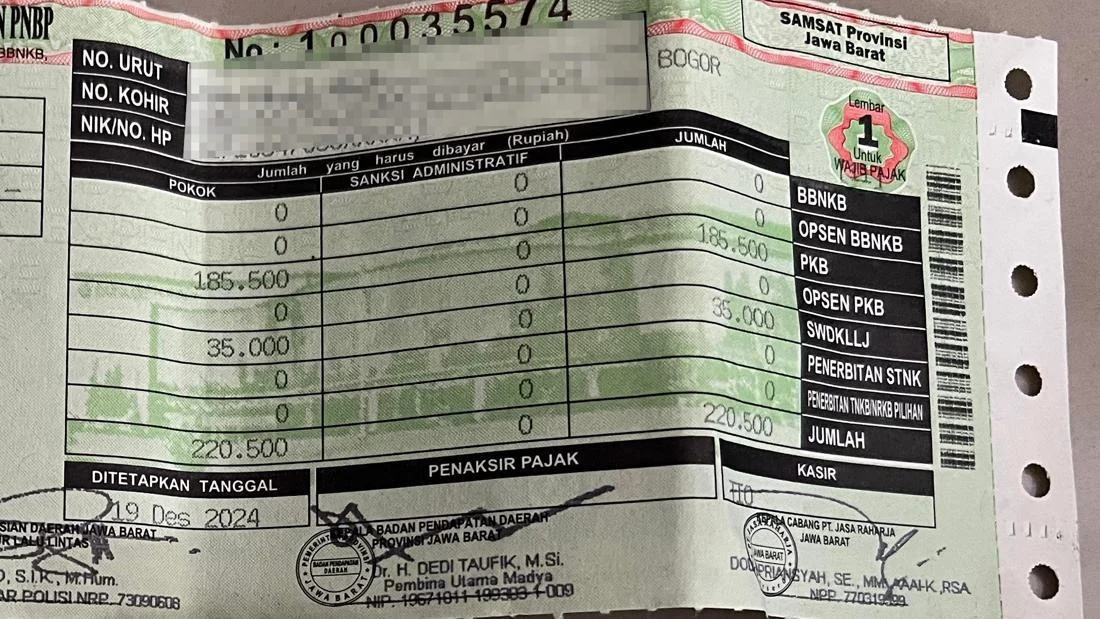
The Traffic Corps of the Indonesian National Police, commonly known as Korlantas Polri, has officially announced a significant streamlining of the administrative process for annual vehicle registration renewals, specifically targeting owners of second-hand vehicles. Under the new directive, individuals seeking to renew their annual Surat Tanda Nomor Kendaraan (STNK) are no longer required to present the original Kartu Tanda Penduduk (KTP) or National Identity Card of the vehicle’s previous owner. This policy represents a major shift in Indonesian traffic administration, aiming to eliminate one of the most persistent hurdles for citizens who purchase used cars or motorcycles but have not yet completed a formal transfer of title.
Brigadier General Pol. Wibowo, the Director of Registration and Identification (Dirregident) at Korlantas Polri, confirmed that this initiative is a direct response to public concerns regarding the logistical difficulties of tracking down former owners to borrow their identity documents. While the annual renewal process has been made more flexible, the authorities have clarified that the five-year renewal—which involves the replacement of the physical license plates (TNKB)—still requires the identity of the current legal owner to match the registration data, thereby necessitating a formal transfer of ownership (Balik Nama) if the original owner’s ID is unavailable.
A Strategic Shift Toward Public Service Flexibility
The decision to relax the requirements for annual STNK renewals is rooted in the Indonesian National Police’s broader mission to modernize public services and improve tax compliance. For decades, the requirement to provide the original KTP of the person named on the registration document acted as a deterrent for many second-hand vehicle owners. Often, these owners would postpone paying their annual vehicle tax (Pajak Kendaraan Bermotor or PKB) because they had lost contact with the seller or the seller was unwilling to provide their private identification documents.
Brigjen Pol. Wibowo emphasized that the police force is currently formulating concrete steps to ensure that these administrative relaxations do not compromise data integrity while simultaneously reducing the burden on the populace. "The National Police understands the growing concerns within the community," Wibowo stated during a press briefing. "We are ensuring that we will immediately formulate concrete steps so that services continue to run without weighing down the community."
By allowing owners to use their own KTP alongside the original STNK and a proof of purchase, such as a bill of sale (kuitansi), the police are bridging the gap between current possession and legal registration. This flexibility is viewed as a temporary but essential solution to encourage millions of vehicle owners to settle their tax obligations.
Procedural Requirements for Annual and Five-Year Renewals
To benefit from this simplified process, second-hand vehicle owners must adhere to a specific set of requirements. For the annual tax payment and STNK validation, the applicant must present the original STNK and their own KTP. Additionally, providing a transaction receipt or a sales-purchase agreement is recommended to verify the legitimacy of the vehicle’s possession. This allows the Samsat (Sistem Administrasi Manunggal Satu Atap) offices to process the payment and issue the annual validation sticker without the presence of the previous owner’s documentation.
However, a clear distinction remains for the five-year administrative cycle. Every five years, vehicles in Indonesia must undergo a physical inspection (cek fisik) and receive new license plates. For this specific process, Korlantas Polri maintains a stricter stance. "For the five-year STNK renewal or the replacement of license plates, the public is still encouraged to perform a transfer of ownership (balik nama)," Wibowo explained. This requirement ensures that the national vehicle database remains accurate and that the identity of the person currently operating and responsible for the vehicle is legally recorded.
The rationale behind this distinction is twofold: security and accountability. In an era where Electronic Traffic Law Enforcement (ETLE) is being expanded nationwide, having the correct owner’s name and address linked to the vehicle’s license plate is crucial for the delivery of traffic violation notices and the management of legal liabilities in the event of accidents or criminal activity involving the vehicle.
Legislative Background: Law Number 1 of 2022
The administrative changes introduced by Korlantas Polri are closely tied to a significant shift in Indonesia’s fiscal legislation. The legal foundation for these changes is Law Number 1 of 2022 concerning Financial Relations between the Central Government and Regional Governments (UU HKPD). This law introduced a transformative policy regarding the Transfer of Title Fee for Motor Vehicles (Bea Balik Nama Kendaraan Bermotor or BBNKB).
Specifically, Article 12, Paragraph (1) of Law No. 1 of 2022 stipulates that the BBNKB is only applicable to the first delivery of a motor vehicle (new vehicles). Consequently, the transfer of ownership for second-hand vehicles—historically referred to as BBNKB II—is now effectively exempted from this specific tax across all provinces in Indonesia. This legislative move was designed to stimulate the secondary automotive market and, more importantly, to clean up the national vehicle registry by removing the financial barrier that previously discouraged people from registering vehicles in their own names.
While the BBNKB II fee has been abolished, it is important for the public to understand that "free" does not mean "zero cost." When processing a transfer of ownership, vehicle owners are still responsible for several other mandatory payments. These include the Annual Vehicle Tax (PKB), the Mandatory Contribution to the Road Traffic Accident Fund (SWDKLLJ) managed by Jasa Raharja, and administrative fees for the issuance of a new STNK, new license plates, and the update of the Vehicle Ownership Book (BPKB).
Economic and Administrative Implications
The simplification of the renewal process and the abolition of the BBNKB II are expected to have a profound impact on Indonesia’s regional revenues. Historically, many regional governments struggled with a high percentage of "sleeping" or unregistered vehicles—those that are active on the road but whose taxes have not been paid for years. By removing the "KTP obstacle" and the title transfer fee, the government anticipates a surge in tax compliance.
From a data management perspective, the push for title transfers during the five-year renewal cycle is a critical component of the "Single Identity Number" initiative. When vehicle data is synchronized with the owner’s current KTP and the NIK (National Identification Number), it creates a more transparent and efficient ecosystem for both the police and the Ministry of Finance.
Furthermore, this policy aligns with the directives of the Chief of the Indonesian National Police (Kapolri) and the Head of the Traffic Corps (Kakorlantas) to pursue a "Grand Strategy of Public Service Transformation." This involves transitioning away from rigid, bureaucratic hurdles toward a more citizen-centric approach that utilizes digital integration. Many of these renewal processes are now being integrated into the "Signal" (Samsat Digital Nasional) application, allowing for remote payments and reducing the need for physical visits to police stations.
Chronology of Policy Implementation
The journey toward this simplified system has been gradual.
- January 2022: The enactment of Law No. 1 of 2022 laid the groundwork for the abolition of BBNKB II.
- 2023: Several provinces, including Jakarta, West Java, and East Java, began implementing temporary "tax amnesties" or "bleaching programs" (pemutihan) to waive fines and BBNKB II fees, testing the public’s response to reduced administrative costs.
- Early 2024: Korlantas Polri began evaluating the difficulties faced by ETLE systems in identifying current owners of vehicles involved in violations.
- Late 2024: Official statements from Brigjen Pol. Wibowo confirmed the permanent flexibility for annual renewals without the previous owner’s KTP, signaling a standardized national policy.
Analysis: Balancing Convenience and Legal Accuracy
The move by Korlantas Polri is a pragmatic acknowledgement of the reality of the Indonesian used-vehicle market. For many low-to-middle-income citizens, a used motorcycle is a primary tool for livelihood. The "KTP hurdle" often forced these citizens into a cycle of non-compliance, which in turn made them vulnerable to police stops and complicated the recovery of stolen vehicles.
By allowing annual renewals with the current owner’s KTP, the police are prioritizing the collection of the PKB (Vehicle Tax) and SWDKLLJ (Insurance), which fund regional infrastructure and victim compensation funds, respectively. However, by maintaining the requirement for title transfer every five years, the state ensures that the "reset button" is pushed periodically, forcing the legal record to eventually catch up with the physical reality of ownership.
Industry analysts suggest that this policy will also stabilize the resale value of vehicles. A vehicle with a "clear" tax history and an easy path to renewal is significantly more attractive to buyers than one with years of back-taxes and a missing original owner.
Conclusion and Future Outlook
The Indonesian National Police’s commitment to simplifying STNK renewals marks a new chapter in the relationship between the state and vehicle owners. By removing the requirement for a previous owner’s KTP for annual renewals and supporting the nationwide abolition of BBNKB II fees, the government is making a clear statement: it prefers a compliant public over a restricted one.
As Indonesia continues to expand its digital infrastructure, it is likely that the need for physical documents will further diminish. The ultimate goal, as hinted at by Korlantas leadership, is a fully integrated system where vehicle ownership, insurance, and taxation are handled seamlessly through a single digital identity. For now, the current easing of requirements serves as a vital bridge, ensuring that the wheels of the economy and the administration continue to turn without unnecessary friction. Owners of second-hand vehicles are encouraged to take advantage of these relaxations to ensure their vehicles are legally documented and their tax obligations are met, contributing to safer and more organized Indonesian roads.