Azin Asro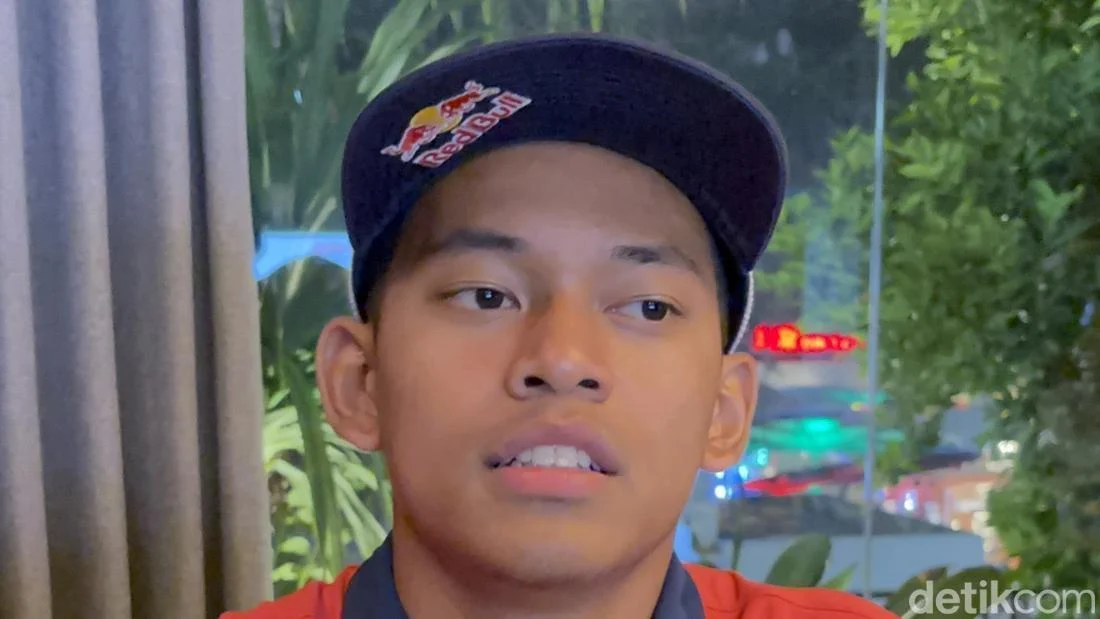
The life of a professional motorcycle racer is often defined by a grueling schedule of international travel, intense physical training, and the high-stakes pressure of the paddock. For Veda Ega Pratama, one of Indonesia’s most promising young talents in the Moto3 World Championship, this lifestyle is further complicated by the responsibilities of a typical teenager. At just 17 years of age, Veda is currently navigating two worlds: the high-speed pursuit of podiums in the European racing circuit and the completion of his final year of high school. As he competes under the banner of Honda Team Asia, Veda’s journey offers a unique look into the discipline required to balance professional sports at the highest level with a formal education.
Currently residing primarily in Europe to facilitate his training and race weekends, Veda has had to adapt his lifestyle significantly. While his peers in Indonesia attend daily classes in a traditional classroom setting, Veda’s "classroom" is often a digital one, accessed from hotel rooms in Spain, Italy, or the Netherlands. Despite the physical distance from his school in Indonesia, the young rider remains committed to his academic goals, currently enrolled as a third-year senior high school student (Kelas 3 SMA). This commitment is not merely a personal choice but a reflection of the holistic development strategy often encouraged by his sponsors and family, ensuring that he has a solid foundation beyond the racetrack.
The Logistics of a Dual-Continent Education
Managing an Indonesian curriculum while living in the heart of the European racing scene requires meticulous planning and a flexible educational structure. Veda utilizes an online learning platform provided by his school in Indonesia, which allows him to keep pace with his studies during his downtime between practice sessions and races. According to Veda, the synchronization between his racing schedule and his schoolwork is a matter of disciplined time management. He typically dedicates his "free days"—those without scheduled track time or technical briefings—to completing assignments and studying for upcoming assessments.
"If I’m at school in Indonesia, I’m still a student; I’m in my third year of high school," Veda explained during a recent media session in Jakarta. He noted that the school provides him with assignments that he completes online. The flexibility of the digital curriculum is essential, as the time zone differences and the physical exhaustion of a Grand Prix weekend make a traditional schedule impossible. Even major examinations are conducted through online portals, ensuring that his academic progress is documented and verified despite his absence from the physical campus.
In addition to his Indonesian studies, Veda has recognized the importance of cultural and linguistic integration while living in Europe. To better communicate with his technical crew, fellow riders, and local residents in Spain—the global hub of motorcycle racing—he has enrolled in a language school. Every Monday, provided there is no immediate travel conflict, Veda attends language classes to sharpen his Spanish skills. This linguistic pursuit is more than a hobby; it is a strategic professional move. In the world of MotoGP and its feeder series, Spanish is often the lingua franca of the paddock, and proficiency in the language allows a rider to provide more nuanced feedback to mechanics and build stronger relationships within the team.
Performance Analysis: A Stellar Rookie Campaign
Veda’s academic discipline appears to mirror his performance on the track. In what is his debut year in the Moto3 class, the Honda Team Asia rider has quickly established himself as a force to be reckoned with. Transitioning from the Asia Talent Cup (ATC) and the Red Bull MotoGP Rookies Cup to the World Championship is a notoriously difficult leap, yet Veda has managed the transition with remarkable poise. As of the current standings, he occupies the sixth position in the Moto3 World Championship classification, having amassed a total of 90 points.
His debut season has been punctuated by several standout performances where he was able to challenge veteran riders for positions at the front of the pack. His ability to secure points consistently is a testament to his adaptability. Unlike many rookies who struggle with the technical complexity of Moto3 machinery—which features highly specialized 250cc four-stroke engines and sophisticated suspension setups—Veda has shown a rapid learning curve. His presence in the top ten of the standings is a significant achievement for an Indonesian rider, a nation that has long sought a permanent and competitive fixture in the Grand Prix ranks.
The battle for the "Rookie of the Year" title remains one of the primary narratives of Veda’s season. He is currently locked in a tight competition with other emerging talents, most notably Brian Uriarte and Hakim Danish. With ten rounds remaining in the current championship cycle, the mathematical possibility for Veda to climb even higher in the standings is high. The "Rookie of the Year" award is highly coveted, as it often serves as a springboard for riders looking to secure factory contracts or promotions to the Moto2 class in subsequent seasons.
Chronology of an Ascending Career
Veda Ega Pratama’s rise to the world stage was not an overnight occurrence but the result of a structured development program facilitated by Astra Honda Racing Team (AHRT).
- 2021-2022: The Foundation: Veda began making waves in the Asia Talent Cup, a developmental series designed to identify the best young talent across Asia and Oceania. During this period, he demonstrated an innate ability to manage tires and execute late-race overtakes, finishing his 2022 campaign with several podiums.
- 2023: Record-Breaking Dominance: The 2023 season was Veda’s breakout year. He dominated the Asia Talent Cup, winning nine out of twelve races. This record-breaking performance made him the most successful rider in the history of the ATC in a single season, effectively punching his ticket to the European scene.
- 2024: The Global Leap: Transitioning to the Moto3 World Championship with Honda Team Asia, Veda moved his base of operations to Spain. This move required him to adjust to new tracks, a higher level of competition, and the aforementioned online schooling system.
- Current Phase: Now in the latter half of the season, Veda is focused on maintaining his top-six standing while preparing for his final high school examinations in 2025.
Supporting Systems and Official Responses
The success of a rider like Veda is rarely a solo effort. It is the result of a synergy between the athlete, the team, and the supporting sponsors. Astra Honda Motor (AHM) has been instrumental in ensuring that Veda has the resources necessary to compete in Europe while maintaining his education. Officials from AHM have frequently emphasized that while they aim to produce world-class racers, they also prioritize the personal development and education of their athletes.
While Honda Team Asia, led by former racer Hiroshi Aoyama, focuses on the technical aspects of Veda’s racing—such as data analysis, throttle control, and racing lines—there is an underlying understanding that a mentally balanced rider is a faster rider. Inferred statements from team management suggest that having the "distraction" of schoolwork can sometimes help young riders manage the intense psychological pressure of the paddock. By having a life outside of racing, Veda is less likely to suffer from the burnout that often plagues young athletes who focus exclusively on their sport.
The Indonesian Ministry of Youth and Sports has also kept a close watch on Veda’s progress. His journey serves as a blueprint for other young Indonesian athletes, proving that international sporting success does not have to come at the total expense of academic achievement. The government’s recent push for more flexible "Merdeka Belajar" (Freedom to Learn) policies has paved the way for students like Veda to represent the nation on the global stage without being penalized by the traditional education system.
Broader Impact and Implications for Indonesian Motorsports
Veda Ega Pratama’s presence in the Moto3 top ten has profound implications for the future of motorsports in Indonesia. Indonesia is one of the world’s largest markets for motorcycles, with a massive and passionate fanbase for MotoGP. However, the country has historically struggled to see its riders consistently compete for podiums in the World Championship. Veda represents a new generation of riders who are not only fast but are also products of a professionalized development pipeline.
His success validates the investment made by Astra Honda in their racing school programs. It proves that with the right coaching, technical support, and logistical management, Indonesian riders can compete on equal footing with the traditional powerhouses of the sport, such as Spain and Italy. Furthermore, his commitment to education sets a positive example for millions of young fans in Indonesia. He demonstrates that "racing talent" and "academic responsibility" are not mutually exclusive.
Looking ahead, the next few years will be critical for Veda. As he completes his high school education, the pressure to perform on the track will only increase. If he continues his current trajectory, a move to Moto2—the intermediate class—seems like a logical next step. For now, however, Veda remains focused on the immediate task at hand: studying for his Monday language classes, submitting his high school assignments online, and fighting for every point on the world’s most famous racetracks.
The remainder of the Moto3 season will test Veda’s endurance and mental fortitude. With ten rounds left, the battle for the Rookie of the Year title will intensify. Each race weekend represents a chance to bridge the gap to the leaders and solidify his reputation as Indonesia’s premier racing prospect. Whether he is analyzing telemetry data in the team garage or solving mathematical equations in his hotel room, Veda Ega Pratama is proving that the path to the top is paved with both speed and study.