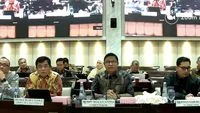
Bambang Pamungkas
Energy, far from being a mere utility or commodity, is increasingly recognized as the indispensable bedrock of national sovereignty, industrial prowess, defense capabilities, food security, educational advancement, public health, and overall societal well-being. Nations that possess abundant energy resources but fail to manage them with strategic discipline risk remaining passive observers in a rapidly transforming global landscape. Conversely, those that adeptly interpret global energy trends and translate them into coherent national agendas are poised to build stronger resilience against geopolitical uncertainties, technological disruptions, and economic pressures worldwide.
The world is currently navigating an unprecedented era marked by escalating geopolitical conflicts, fragmenting supply chains, intensified competition for critical minerals, urgent demands for energy transition, and a fervent race in green technology innovation. These dynamics have collectively elevated energy to a pivotal strategic arena. Traditional energy sources like oil, gas, and coal, alongside emerging critical minerals such as nickel, copper, and bauxite, and renewable forms like geothermal, hydro, wind, solar, and bioenergy, are no longer isolated sectoral portfolios. Instead, they must be understood and managed as integral components of a nation’s overarching strategic framework. It is at this critical juncture that Indonesia is compelled to adopt a more comprehensive perspective, viewing energy not just as a resource, but as a potent instrument of national development, a bulwark of sovereignty, and a direct pathway to collective prosperity for its citizens.
President Prabowo’s Vision for Energy Self-Sufficiency
President Prabowo Subianto has emphatically positioned food and energy self-sufficiency as fundamental pillars for Indonesia’s national transformation. This strategic direction is paramount, as robust independence in these two sectors is a prerequisite for maintaining social stability, fortifying domestic industries, and significantly reducing vulnerability to external shocks. When energy assumes its rightful place as a top-tier national agenda item, the discourse must transcend simple questions of resource availability. The more profound and urgent inquiry centers on whether these resources can be effectively regulated, mobilized, and consistently directed toward serving national interests.
In the realm of public policy, even the most well-conceived doctrines do not automatically translate into tangible change. The energy sector demands not only a visionary outlook but also unwavering discipline in implementation. It necessitates political courage coupled with technocratic precision. Furthermore, while requiring substantial investment, it also calls for world-class governance capable of providing certainty to the state, the business community, and the wider society.
Key Pillars of Indonesia’s National Energy Strategy
Indonesia’s strategic energy framework, as articulated by various government and industry stakeholders, is built upon several interconnected pillars designed to ensure long-term stability and growth. These pillars represent a concerted effort to move beyond theoretical policy to practical, impactful execution.
Strengthening Energy Supply Security
A paramount objective for Indonesia is the fortification of its energy supply security. This entails the integrated management of diverse energy sources—oil, gas, LPG, electricity, domestic coal, and renewable energy—within a unified national energy security framework. The nation’s reliance on energy imports, particularly for oil and LPG, must not become a permanent vulnerability. Indonesia, once a net oil exporter, now imports a significant portion of its crude oil and almost all of its LPG. In 2023, Indonesia’s crude oil production averaged around 612,000 barrels per day (bpd), while consumption hovered around 1.6 million bpd, necessitating substantial imports. Similarly, LPG consumption, largely driven by household demand, reached approximately 7-8 million metric tons annually, with over 70% met through imports.
To address this, domestic production across all energy sectors must be vigorously strengthened. Strategic reserves, including crude oil, refined products, and gas, need to be expanded and diversified to buffer against supply disruptions. Moreover, the utilization of national resources must be prioritized to safeguard the immediate needs of the populace and domestic industries. This approach not only enhances resilience but also retains economic value within the country. Initiatives like increasing upstream oil and gas exploration and production, optimizing domestic coal utilization for power generation and industrial feedstock, and accelerating gas infrastructure development are critical components of this strategy.
Navigating a Realistic Energy Transition
Indonesia is committed to playing its part in global climate action, including achieving its Nationally Determined Contribution (NDC) targets and ultimately reaching Net Zero Emissions by 2060 or sooner. However, the transition to cleaner energy must be executed realistically, acknowledging Indonesia’s unique economic structure, fiscal capacity, power system reliability requirements, and the affordability threshold for its citizens. The energy transition, therefore, is not merely a symbolic race to appear "green" on the international stage. Instead, it is a pragmatic and incremental process aimed at constructing an energy system that is genuinely cleaner, more reliable, more affordable, and ultimately more sovereign.
This pragmatic approach dictates that all energy sources—coal, gas, geothermal, hydro, solar, wind, bioenergy, and energy storage solutions—must be honestly evaluated and deployed according to their optimal function within the national energy system. While the government has set ambitious targets to increase the share of New and Renewable Energy (NRE) in the energy mix to 23% by 2025 (from around 13% in 2023), it recognizes the continued role of fossil fuels, particularly gas, as a transition fuel and coal for base-load power where necessary. This nuanced strategy seeks to avoid abrupt shifts that could destabilize the economy or compromise energy access. Analysts suggest that a "just and affordable" transition pathway for Indonesia will likely involve a phased approach, leveraging its vast geothermal and hydropower potential while carefully integrating intermittent renewables like solar and wind with advanced grid infrastructure and storage solutions.
Accelerating Downstream Industrialization (Hilirisasi)
The strategy of downstream industrialization, or "hilirisasi," is deemed an integral component of national energy security and economic resilience. Strategic minerals, such as nickel, copper, bauxite, and tin, should no longer be viewed merely as export commodities or raw materials for nascent industries. Instead, they must be integrated into a broader, long-term industrialization agenda. This includes developing domestic manufacturing capabilities for products like electric vehicle batteries, cables, solar panels, wind turbines, electric vehicles themselves, data centers, advanced energy storage technologies, and other clean energy manufacturing components.
Indonesia possesses the world’s largest nickel reserves, and its policy of banning raw nickel ore exports since 2020 has demonstrably boosted domestic processing. This has led to a significant increase in the value of nickel exports, transforming Indonesia into a major global player in the electric vehicle battery supply chain. For example, the value of nickel product exports surged from around US$1.1 billion in 2014 to over US$30 billion in 2022, demonstrating the immense potential of hilirisasi. Without a robust industrial strategy, Indonesia’s mineral wealth would only yield short-term revenues. With a well-executed industrial strategy, these minerals can become the bedrock of technological sovereignty and enhanced national economic competitiveness, creating jobs, attracting high-value investment, and fostering technology transfer.
Enhancing Public Communication and Engagement
Effective public communication of energy policies is crucial for securing societal support and ensuring successful implementation. Many energy policies, despite having sound objectives, often fail to gain traction because they are not translated into language that resonates with the daily lives of ordinary citizens. Issues such as energy subsidies, electricity tariffs, compensation schemes, biodiesel mandates, electric vehicle incentives, solar power installations, and hilirisasi are frequently perceived as disparate, isolated topics.
The public needs to understand that energy is not solely the purview of government ministries or state-owned enterprises (BUMNs). Energy directly influences the price of goods, logistics costs, job creation, regional industrial development, air quality, rural electrification, and the future prospects of succeeding generations. When this intricate interconnectedness is clearly communicated and understood by the public, support for essential energy reforms will be substantially strengthened. This requires transparent dialogue, accessible information campaigns, and active engagement with various community stakeholders to build consensus and address concerns.
Fostering Cross-Sectoral Coordination
Energy management cannot be effectively siloed within a single institution. Its tentacles extend across numerous policy domains, directly intersecting with fiscal policy, state-owned enterprises, industrial development, trade, investment, environmental protection, agriculture, transportation, vocational education, research and development, regional governance, and international diplomacy. Consequently, a comprehensive national energy agenda demands meticulous orchestration across all these sectors. What is needed is not merely a robust regulatory framework, but also the agility to make timely decisions. It requires not just meticulous planning, but also the capacity to bridge the implementation gap between central policy directives and on-the-ground execution. This horizontal and vertical coordination is vital for streamlining processes, overcoming bureaucratic hurdles, and ensuring that energy initiatives align with broader national development goals.
The RUPTL 2025-2034: A Blueprint for Electrification
The recently unveiled Electricity Supply Business Plan (RUPTL) 2025-2034 of PT Perusahaan Listrik Negara (PLN), Indonesia’s state-owned electricity company, signals a crucial new direction for national electricity development. The government has positioned the construction of a reliable, sustainable, and progressively cleaner electricity system as a core component of its decade-long development agenda. The RUPTL is meticulously designed to bolster economic growth, generate employment opportunities, and provide investment certainty within the power sector. A significant feature of this plan is the expanded share allocated to new and renewable energy (NRE) sources, coupled with the imperative to strengthen transmission and distribution networks, enhance energy storage capabilities, and generally improve the readiness of the national electricity system.
According to preliminary details of the RUPTL, NRE sources are projected to account for a substantial portion of new generation capacity additions over the next decade. This includes ambitious plans for large-scale hydro, geothermal, solar, and biomass projects. For instance, Indonesia boasts immense untapped geothermal potential, estimated at over 28 GW, with only around 2.4 GW currently utilized. The RUPTL aims to accelerate its development. The strategic challenge now lies in ensuring that these ambitious projects are not merely planned but are effectively integrated into the system, delivering tangible positive impacts. Key areas of focus for the state include: strengthening the national transmission and distribution grid to accommodate distributed and intermittent NRE; streamlining and enhancing the transparency and competitiveness of electricity procurement processes; ensuring project financing remains viable and attractive; fostering the growth of national industries through local content requirements; and leveraging renewable energy as a catalyst for new job creation, manufacturing industry stimulation, and more equitable regional development.
Challenges and Opportunities on the Path to Energy Self-Sufficiency
Indonesia, despite its immense potential, faces considerable challenges in transitioning its energy sector. Securing the massive investments required for NRE projects and infrastructure upgrades (estimated at hundreds of billions of dollars over the coming decades) remains a key hurdle. Policy consistency, regulatory certainty, and attractive investment frameworks are essential to draw in both domestic and international capital. Technological readiness, particularly for advanced storage solutions and smart grid technologies, also needs to be continually enhanced. Furthermore, socio-economic factors such as land acquisition issues, community engagement, and ensuring energy affordability for all segments of society must be carefully managed.
However, the opportunities are equally vast. Indonesia possesses abundant natural resources, including a diverse array of conventional and renewable energy sources. Its large and growing domestic market offers significant demand-side potential. Its strategic geographical position in Southeast Asia positions it as a potential hub for regional energy trade and innovation. The renewed national priority on industrialization, particularly in critical minerals, creates a powerful synergy with the energy transition agenda.
Broader Implications for National Development
In this transition from doctrine to execution, the state must assert its role as the primary architect of the nation’s development trajectory. It must provide certainty to investors while simultaneously ensuring that added value, technology transfer, job creation, and broader economic benefits accrue within the country. This necessitates the implementation of world-class governance across the energy sector. It is not sufficient merely to increase power generation capacity; a holistic system must be built, designed to enhance national sovereignty and deliver tangible economic benefits to the populace. The national energy agenda cannot solely rely on the concept of energy transition; it must demonstrably create economic impacts that directly improve the welfare of Indonesian citizens.
Ultimately, the journey towards energy self-sufficiency is fundamentally about the courage to make long-term decisions. Indonesia possesses the capacity to develop clean energy without sacrificing economic rationality. It can attract foreign investment without relinquishing strategic control over its resources. The nation can utilize its coal and gas resources more judiciously while simultaneously accelerating the deployment of renewable energy technologies. And critically, Indonesia can pursue economic growth without compromising social justice. This delicate balance forms the essence of an energy transition that is authentically aligned with the unique character and pressing needs of the Indonesian nation.
From the realm of strategic doctrine to the crucible of practical execution, Indonesia’s most significant undertaking is to ensure that energy genuinely becomes an instrument of economic independence. Energy self-sufficiency must transcend mere slogans; it must manifest as a reliable and equitable electricity supply, secure fuel availability, a rapidly expanding industrial base, illuminated villages, sustainable investment growth, and a tangible improvement in the welfare of its people. Indonesia now stands at a pivotal juncture, with a clear opportunity to transform energy security from a mere planning document into a dynamic engine of national growth. By rigorously strengthening energy supply security, accelerating downstream industrialization, fostering a robust clean energy industry, and maintaining consistent, world-class governance, Indonesia can unlock broader employment opportunities, attract high-quality investment, and solidify its long-term economic competitiveness. If this momentum is sustained with unwavering discipline, energy security will not only serve as the foundation for national self-sufficiency but will also illuminate the path toward a more sovereign, resilient, and prosperous Indonesia.