Nila Kartika Wati
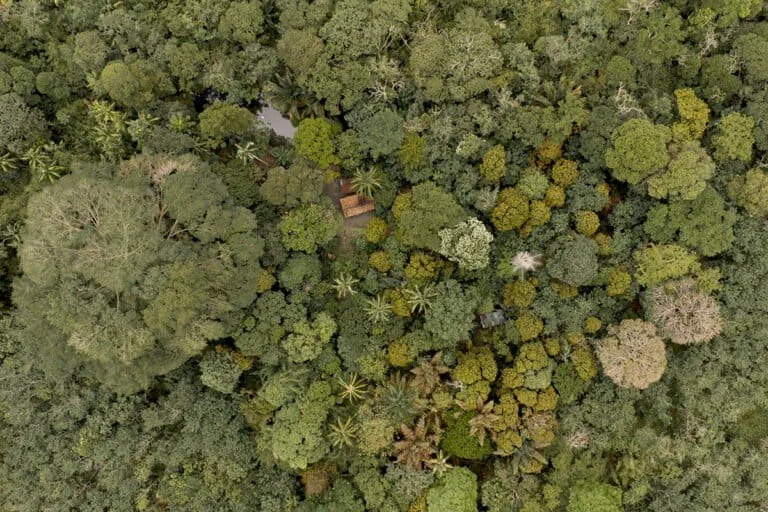
The persistent scourge of forest and land fires, exacerbated by severe peatland degradation, continues to ravage the landscape of South Sumatra, leaving major cities like Palembang shrouded in thick, toxic smog. While vast swathes of industrial plantations and community-managed lands have succumbed to the flames, a beacon of ecological resilience has emerged from the heart of the Penukal Abab Lematang Ilir (PALI) Regency. In the village of Tempirai, a traditional forest system known as "Jongot"—preserved for generations by the Musi people—has miraculously remained unscathed by the wildfires, offering a compelling case study for climate change adaptation and indigenous land management.
The Anatomy of a Climate-Induced Crisis
Since early October 2026, the four villages comprising the Tempirai region—Tempirai, Tempirai Utara, Tempirai Timur, and Tempirai Selatan—have been locked in a struggle against aggressive wildfires. The fires originated in the peatland ecosystems surrounding Danau Burung and quickly encroached upon migrant settlements, ultimately consuming significant portions of local community assets, particularly rubber and palm oil plantations.
The human cost of this disaster is profound. Residents have reported a sharp rise in Acute Respiratory Infection (ARI) cases, with the persistent haze creating a public health emergency. Beyond the immediate physical harm, the environmental degradation has triggered a socioeconomic collapse. With local waterways and the Danau Burung lake system drying up, traditional fishing livelihoods have been decimated. Simultaneously, the heat and prolonged drought have rendered rubber trees unproductive, forcing many families into cycles of debt or dependency on external remittances to survive the famine-like conditions.
Jongot: A Time-Tested Defense Against Aridity
Amidst this landscape of scorched earth, the Jongot stands as an anomaly. These are small, sacred indigenous forests, ranging from half a hectare to one hectare in size. In Tempirai alone, there are approximately one hundred such pockets of biodiversity, many of which have been protected for over a century.
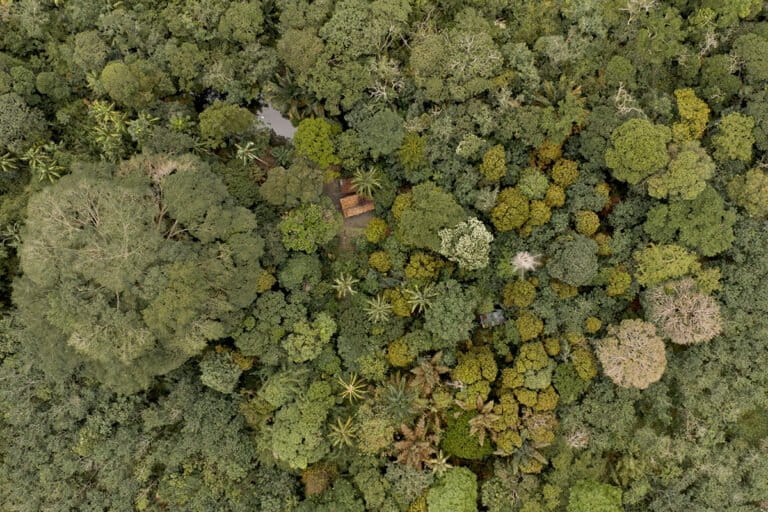
Toni Caye, a 57-year-old custodian of a Jongot in Talang Lebung Jauh, explains that the secret to the forest’s survival lies in its biodiversity. Unlike the monoculture plantations that dominate the surrounding region, the Jongot maintains a diverse canopy and a complex understory. "Even if there is a drought, the vegetation in the Jongot retains its moisture," Caye notes. "While the leaves might wither slightly, the plants themselves do not become tinder-dry like the rubber or palm oil trees that easily ignite."
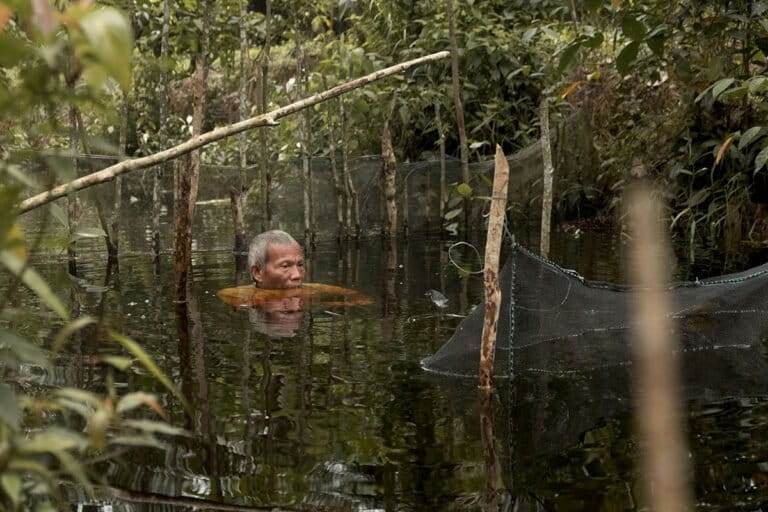
Furthermore, the Jongot system is intrinsically linked to the paye—small, natural wetlands that serve as vital water reservoirs. Even during the peak of the 2026 drought, these pockets provided essential water for basic human needs. The microclimate within these forests is demonstrably cooler and less saturated with smoke than the surrounding agricultural plots, acting as a natural buffer for the local ecosystem.
The Erosion of Traditional Ecological Knowledge
The crisis in South Sumatra is not merely a failure of weather patterns, but a failure of land management philosophy. According to Zaki Faddad Syarif Zain, a researcher specializing in religion, philosophy, and culture at UIN Raden Fatah Palembang, the current disaster is a direct consequence of the systematic abandonment of traditional knowledge regarding peatland management.
Historically, the peatlands of the Musi river basin were treated as sacred, wild spaces that served as natural sponges for the landscape. However, the introduction of intensive, large-scale monoculture plantations has necessitated the drainage of these lands, destroying the natural hydrology and rendering the peat highly combustible. "We have seen the replacement of ancestral wisdom with modern agricultural practices that are fundamentally incompatible with the ecological reality of the region," Zain stated during a recent academic discussion.
The shift is particularly concerning as it is no longer restricted to large-scale industrial players. Local communities, often incentivized by short-term economic gains, have increasingly adopted these high-risk methods, inadvertently contributing to their own environmental undoing. The Jongot, therefore, represents a "forgotten" technology—a model of sustainable land use that integrates human habitation with functional forest fragments.
Implications for Future Policy and Climate Resilience
The survival of the Jongot provides a clear, actionable model for policy reform. Ainur Rofik, an academic at UIN Raden Fatah whose doctoral research focuses on these sacred forests, argues that the success of the Jongot proves the effectiveness of local environmental governance in the face of the global climate crisis.
"The Jongot should not be viewed as a relic of the past, but as a blueprint for the future," Rofik argues. "We must move toward a model of spatial planning that treats the landscape as a mosaic of residential, agricultural, and protected forest areas. Every large-scale plantation should be buffered by zones of natural biodiversity, similar to how the Jongot exists alongside traditional farm plots."
The implications for regional government are clear: disaster mitigation must involve the institutional protection of indigenous conservation areas. If the PALI Regency and the wider South Sumatra administration are to prevent a repeat of the 2026 fire disaster, they must prioritize the rehabilitation of the local hydrology and the formal recognition of indigenous land rights that support biodiversity.
A Chronology of the 2026 Disaster
- Mid-September 2026: Initial reports of localized hot spots emerge in the peatland areas near Danau Burung, following an unusually prolonged dry season.
- Late September 2026: Fires begin to spread from deep peatlands toward the periphery of agricultural lands, causing the first instances of thick smog in Tempirai.
- Early October 2026: Large-scale loss of rubber and palm oil assets is reported by local farmers. Health centers report a 40% spike in ARI cases among children and the elderly.
- October 16, 2026: Academics and environmentalists convene in Palembang to discuss the failure of modern land management and the potential of indigenous "Jongot" systems.
- October 21, 2026: Field reports confirm that while 13,904 hectares of wetland in Tempirai are experiencing extreme stress and fire damage, the hundred-plus Jongot sites remain intact, serving as the only green pockets in an otherwise devastated landscape.
Broader Economic and Environmental Context
The total area of wetlands in Tempirai, which includes rivers, swamps, and paye, covers approximately 13,904 hectares. This entire region has been under severe pressure due to the conversion of native scrub and peat-forest into commercial crops. Data from previous fire seasons indicates that the cost of suppressing fires in such environments is exponentially higher than the cost of prevention through sustainable landscape management.
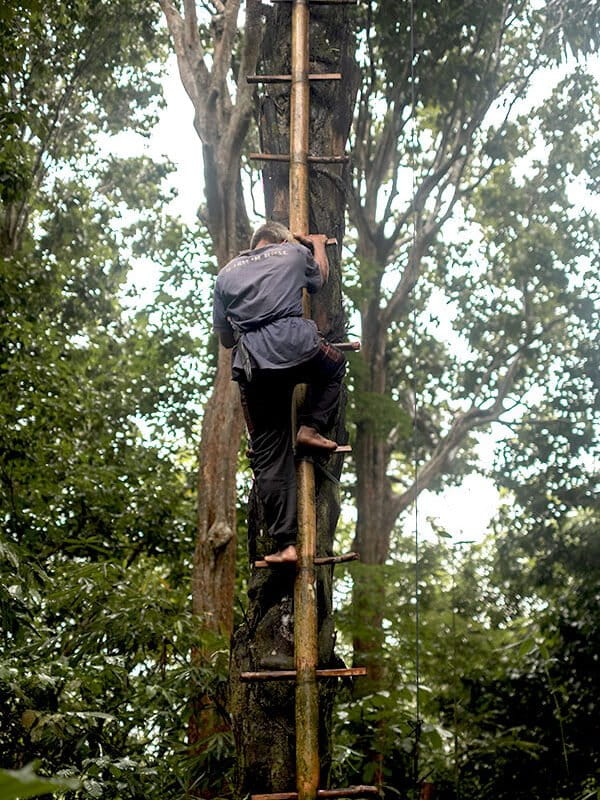
The reliance on short-term fixes—such as fire-fighting aircraft and temporary water bombing—has proven insufficient to address the root cause of the regional drought. The local community’s current reliance on debt and outside aid highlights the fragility of an economy based on non-resilient crops. The Jongot, by contrast, provides a sustainable source of non-timber forest products, nira (palm sugar sap), and reliable water access, offering a degree of self-sufficiency that commercial monoculture cannot match.
Conclusion: Reclaiming the Wisdom of the Land
The struggle of the residents of Tempirai is a microcosm of a global challenge: how to reconcile human development with the limits of a fragile biosphere. As the haze clears, the focus must shift from reactive crisis management to the long-term restoration of the landscape.
The survival of the Jongot serves as a stark reminder that the solutions to the most complex modern problems are often found in the knowledge of the past. By integrating these indigenous conservation practices into provincial development plans, the authorities in South Sumatra have the opportunity to transform their approach to land use. Failing to do so will not only risk the further loss of biodiversity but will continue to endanger the lives and livelihoods of those who call these wetlands home. The message from the Musi people is clear: for the land to survive, it must be allowed to remain diverse, and its natural water systems must be honored above all else.