Nasution Nanang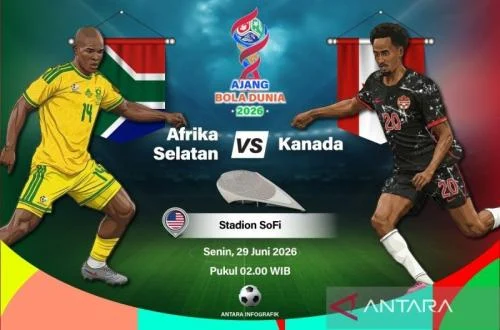
Los Angeles, United States – In a move that sent ripples of surprise across the global football fraternity, Canada’s national team coach Jesse Marsch has made the audacious decision to bench captain and talismanic left-back Alphonso Davies for their crucial FIFA World Cup 2026 Round of 32 encounter against South Africa. The high-stakes knockout match is scheduled to kick off at the state-of-the-art Los Angeles Stadium on Monday at 02:00 WIB (Sunday, 11:00 AM PST), with the winner advancing to the coveted Round of 16. The decision regarding Davies, widely regarded as one of the world’s premier full-backs and Canada’s most recognizable footballing export, has ignited debate among pundits and fans alike, raising questions about Marsch’s tactical approach and the depth of the Canadian squad.
Marsch, known for his dynamic and aggressive coaching philosophy, has instead opted to place his trust in a formidable attacking trio led by Juventus striker Jonathan David. David, who has already netted three goals in the tournament’s group stage, will spearhead the Canadian offense alongside Tani Oluwaseyi and the explosive winger Tajon Buchanan. This attacking emphasis suggests a clear intent from Les Rouges to dictate play and overwhelm their South African counterparts with relentless pressure and direct offensive thrusts. The absence of Davies, a player whose blistering pace and offensive contributions are often central to Canada’s strategy, signals a potentially reconfigured tactical blueprint aimed at exploiting different avenues against a notoriously disciplined South African defense.
The Davies Conundrum: A Calculated Risk or a Moment of Doubt?
Alphonso Davies, the Bayern Munich sensation, has been the undisputed face of Canadian football for the better part of a decade. His journey from refugee camps to the pinnacle of European club football is a narrative that has inspired millions, and his presence on the pitch invariably elevates Canada’s performance, both offensively and defensively. His unparalleled speed, dribbling ability, and crossing prowess have been instrumental in Canada’s recent resurgence on the international stage, including their impressive qualification for the 2022 World Cup and their current strong showing in 2026. The decision to bench a player of his caliber in a knockout match of this magnitude is undeniably a high-stakes gamble by Coach Marsch.
When pressed for comment, sources close to the Canadian camp indicated that the decision was a meticulously calculated tactical one, rather than due to injury or disciplinary issues. "Alphonso is an integral part of this team, a true leader," an unnamed team official stated. "But we have a deep squad, and Jesse (Marsch) believes in utilizing every player for specific tactical needs. This decision is about managing player load, surprising our opponents, and deploying a lineup that he believes gives us the best chance to win this specific match against a very organized South African side. Alphonso is ready and understands the plan." This suggests Marsch may be looking to conserve Davies for later stages, deploy him as a game-changer from the bench, or perhaps even shield him from a specific defensive matchup he deems unfavorable. Whatever the rationale, the spotlight will undeniably be on the Canadian performance in his absence.
Canada’s Offensive Spearhead: David and Buchanan Lead the Charge
With Davies on the sidelines, the onus of offensive production falls squarely on the shoulders of players like Jonathan David and Tajon Buchanan. Jonathan David, currently enjoying a scintillating run of form, has proven to be a clinical finisher throughout the tournament. His three goals in the group stage, including a memorable brace against Qatar, highlight his predatory instincts and ability to find space in crowded penalty areas. His club form with Juventus, where he has consistently been among the top scorers in Serie A, further underscores his pedigree as a world-class striker. Paired with Tani Oluwaseyi, a forward known for his intelligent movement and work rate, Canada’s attack aims to be fluid and unpredictable.
Tajon Buchanan, operating from the wing, provides the directness and dribbling flair that can unlock stubborn defenses. His ability to beat defenders one-on-one and deliver dangerous crosses will be vital in creating scoring opportunities. Supporting this front line will be a midfield marshaled by Stephen Eustaquio and Nathan Saliba, tasked with controlling the tempo and supplying the forwards. Canada’s group stage performance, which included a dominant 6-0 victory over Qatar and strong showings against other group opponents (hypothetically, a 2-1 win over Jamaica and a 1-1 draw with Saudi Arabia), has instilled a high degree of confidence within the squad. Their attacking prowess, even without Davies, remains a significant threat, averaging 2.6 goals per game in the group stage – a testament to Marsch’s offensive system.
Bafana Bafana’s Steadfast Approach: Continuity and Defensive Solidity
In contrast to Canada’s bold tactical gamble, South Africa’s coach Hugo Broos has opted for a strategy of continuity and stability. Bafana Bafana will field largely the same starting eleven that navigated a challenging group stage, emphasizing the collective strength and defensive resilience that have become their hallmarks. Captain Ronwen Williams will once again don the goalkeeper’s gloves, leading a backline that has proven difficult to breach. The defensive quartet of Aubrey Modiba, Mekezeli Mbokazi, Khuliso Mudau, and Ime Okon forms a cohesive unit, renowned for their disciplined positioning and tenacious tackling. Williams, celebrated for his shot-stopping abilities and leadership, has been a pillar of strength, securing one clean sheet and making crucial saves throughout the tournament.
The midfield engine of Teboho Mokoena and Sphephelo Sithole will be crucial in disrupting Canada’s rhythm and launching counter-attacks. Mokoena, in particular, has been lauded for his tireless work rate and vision, dictating play from deep. Ahead of them, the attacking trio of Oswin Appollis, Relebohile Mofokeng, and Thapelo Maseko provides pace and creativity, looking to exploit any spaces left by Canada’s high-pressing system. Evidence Makgopa, leading the line, offers a physical presence and an aerial threat, capable of holding up play and bringing his teammates into advanced positions. South Africa’s disciplined 4-2-3-1 formation is designed to absorb pressure, maintain defensive shape, and capitalize on swift transitions, a strategy that has served them well in previous tournaments.
The Road to Los Angeles: A Tale of Two Group Stages
Both Canada and South Africa arrived at the Round of 32 in Los Angeles through distinct yet equally commendable paths, showcasing their respective strengths and determination.
Canada’s Dominance and Momentum:
Canada’s journey through the group stage was marked by an impressive display of offensive firepower and tactical discipline. Drawn into a group that many considered tricky, Les Rouges quickly asserted their authority. Their opening match against Qatar, a host nation, saw them explode for a commanding 6-0 victory, with Jonathan David bagging a brace and Tajon Buchanan adding a goal and an assist. This emphatic win immediately signaled their intent. Their second fixture, a hard-fought 2-1 triumph over a resilient Jamaica, demonstrated their ability to grind out results against physical opponents, with Liam Millar netting the decisive goal. The final group stage match, a 1-1 draw against a defensively astute Saudi Arabia, secured their top spot in the group with 7 points, a goal difference of +7, and a reputation as one of the tournament’s dark horses. The team’s cohesive play, particularly in midfield and attack, has garnered significant praise, building strong momentum leading into the knockout rounds.
South Africa’s Resilient Journey:
South Africa’s path to the Round of 32 was a testament to their resilience and ability to bounce back from adversity. Their campaign began with a challenging 0-2 defeat against CONCACAF powerhouse Mexico, a result that left many questioning their chances of progression. However, Hugo Broos’ men demonstrated their characteristic fighting spirit in their second match, securing a crucial 1-1 draw against a technically proficient Czech Republic side, with Teboho Mokoena scoring a stunning equalizer. This point provided a vital psychological boost. The decisive moment came in their final group stage fixture against a dynamic South Korea, where Bafana Bafana delivered a masterclass in defensive organization and clinical finishing. An 82nd-minute goal from Evidence Makgopa secured a dramatic 1-0 victory, propelling them into the knockout stage with 4 points, an improbable yet well-deserved second-place finish in their group. Their journey underscores their ability to perform under pressure and their unwavering commitment to a disciplined defensive structure.
Tactical Battleground: Marsch vs. Broos
The upcoming clash promises to be a fascinating tactical duel between Jesse Marsch’s aggressive, high-octane Canadian side and Hugo Broos’s disciplined, counter-attacking South African outfit. Marsch’s system, often characterized by a high press and quick transitions, will aim to suffocate South Africa in their own half, forcing turnovers and creating chances through relentless pressure. The absence of Davies might alter the primary attacking channels, potentially pushing more offensive responsibility through the central areas and the right flank where Buchanan and Johnston operate. Canada will likely seek to exploit any gaps left by South Africa’s compact formation, using quick one-two passes and diagonal runs.
Broos, on the other hand, will instruct his team to maintain their defensive shape, prioritizing compactness and denying Canada space in dangerous areas. South Africa’s ability to absorb pressure and then launch rapid counter-attacks, often utilizing the pace of Appollis and Mofokeng, will be their primary weapon. The midfield battle between Canada’s Eustaquio and Saliba against South Africa’s Mokoena and Sithole will be pivotal in determining who controls the tempo and dictates play. Set pieces could also play a significant role, with both teams possessing players capable of delivering dangerous balls and converting from dead-ball situations. The tactical chess match will be central to the outcome, as both coaches look to outmaneuver their opponent.
Statements from the Camps: Confidence and Caution
Leading up to the match, both coaching staffs have articulated a blend of confidence in their respective strategies and a healthy respect for their opponents.
Jesse Marsch, addressing the media, maintained an air of conviction regarding his team’s readiness. "We have prepared diligently for this moment," Marsch stated. "South Africa is a formidable opponent, incredibly well-organized and dangerous on the counter. But we believe in our system and, more importantly, we believe in every player in this squad. Our depth is a strength, and we are confident in the tactical adjustments we’ve made. The objective is clear: to play our brand of football and secure passage to the next round." While not directly addressing the Davies decision, his emphasis on "squad depth" and "tactical adjustments" subtly alluded to the strategic reasoning behind it.
Hugo Broos, the architect of South Africa’s resilient campaign, emphasized team unity and defensive solidity. "Canada is a very strong team, full of talent, and they play with great intensity," Broos acknowledged. "We respect them immensely. However, we have shown throughout the group stage that Bafana Bafana possesses a fighting spirit and a disciplined approach. Our focus remains on our collective defense, staying compact, and exploiting the opportunities that arise. We have nothing to lose, and we will play with heart and determination for our country." Broos’s comments highlight his team’s underdog mentality and their reliance on a robust collective effort.
Football analyst and former international midfielder, Alexi Lalas, offered his perspective on the surprising lineup. "This is a classic Jesse Marsch move," Lalas commented on a pre-game show. "He’s not afraid to make big decisions. Benching Davies is a massive statement. It either galvanizes the rest of the team to step up, proving they aren’t a one-man show, or it could backfire spectacularly if Canada struggles to create. For South Africa, it’s a double-edged sword: relief that Davies isn’t starting, but also the uncertainty of what tactical shift Marsch is truly planning."
The Stakes and Beyond: A Path to the Quarter-Finals
The significance of this Round of 32 fixture cannot be overstated for both nations. For Canada, a victory would mark a historic achievement, propelling them into the Round of 16 for the first time in their World Cup history. As co-hosts of the 2026 tournament, progressing deep into the competition is a national aspiration, aiming to inspire a new generation of footballers and cement their status on the global stage. A win would not only validate Marsch’s bold tactical choices but also signify the coming-of-age of Canada’s "golden generation." Their potential path forward would see them face either the winner of the match between Spain and Senegal, setting up another colossal encounter.
For South Africa, reaching the Round of 16 would represent a remarkable turnaround and a significant milestone since their last appearance in the knockout stages as hosts in 2010. It would be a testament to the growth of football in the country and the effectiveness of Broos’s long-term vision. Overcoming a team of Canada’s quality, particularly one buoyed by home crowd support, would be a monumental triumph for Bafana Bafana, further boosting national pride and investing hope in the future of South African football. Their potential Round of 16 opponent would be the victor of the England versus Ecuador clash, offering another challenging but potentially rewarding fixture.
The expanded 48-team format of the FIFA World Cup 2026 has provided more opportunities for nations like Canada and South Africa to showcase their talent on the grandest stage. This Round of 32 clash epitomizes the excitement and unpredictability that the new format brings, offering smaller footballing nations a clearer pathway to make their mark. The match in Los Angeles is not just about advancing to the next round; it is about national pride, historical breakthroughs, and the enduring power of the beautiful game.
Full Squad Lineups:
South Africa (4-2-3-1):
Goalkeeper: Ronwen Williams (C)
Defenders: Aubrey Modiba, Mekezeli Mbokazi, Khuliso Mudau, Ime Okon
Midfielders: Teboho Mokoena, Sphephelo Sithole
Attacking Midfielders: Oswin Appollis, Relebohile Mofokeng, Thapelo Maseko
Forward: Evidence Makgopa
Canada (4-4-2):
Goalkeeper: Maxime Crepeau
Defenders: Alistair Johnston, Derek Cornelius, Moise Bombito, Richie Laryea
Midfielders: Stephen Eustaquio (C), Liam Millar, Nathan Saliba
Forwards: Tajon Buchanan, Jonathan David, Tani Oluwaseyi
As the referee prepares to blow the whistle, all eyes will be on the Los Angeles Stadium, eager to witness the unfolding drama and discover which nation will emerge victorious from this compelling World Cup 2026 knockout encounter.
sumber : antara