
 Azin Asro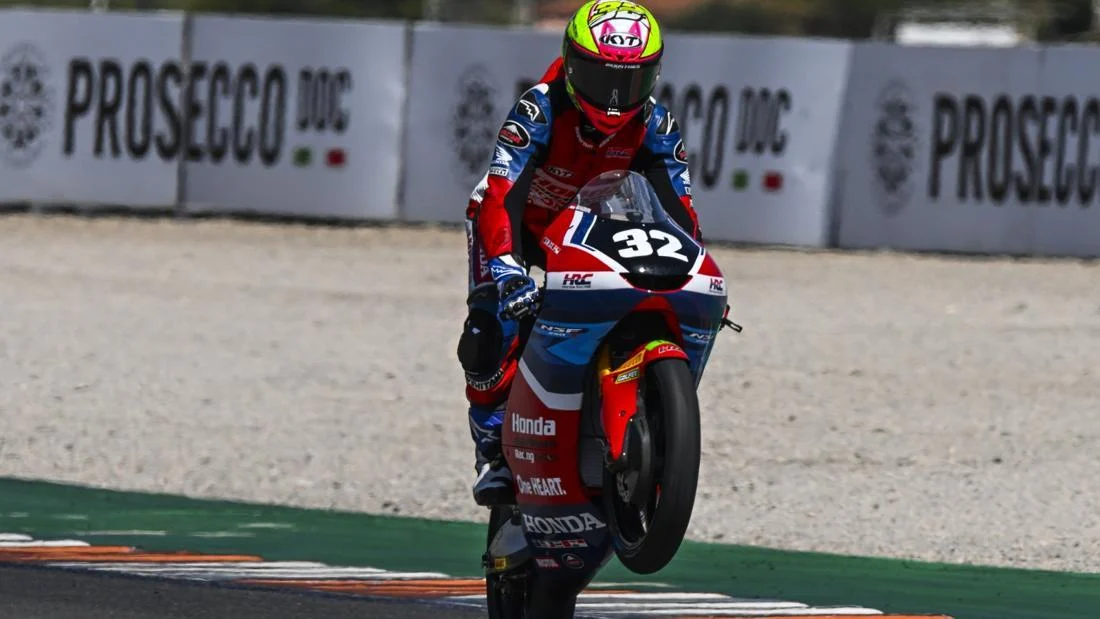
Indonesian racing prodigy Kiandra Ramadhipa delivered a phenomenal performance during Race 2 of the Moto3 Junior World Championship at the iconic Motorland Aragon circuit, showcasing elite racecraft, fearless overtaking maneuvers, and exceptional pace against some of Europe’s finest young motorcycle talents. Although a fiercely contested final lap ultimately pushed him just outside the podium positions in a photo finish, Ramadhipa’s display of skill and tactical maturity commanded global attention. The race ultimately culminated in a brilliant victory for Fernando Bujosa, who navigated a chaotic leading group in the closing stages to claim the top step of the podium.
The event at Motorland Aragon, located in Alcañiz, Spain, serves as one of the definitive proving grounds for international motorcycle racing hopefuls. As a vital stepping stone toward the FIM Moto3 World Championship, the Junior World Championship attracts the most promising prospects from Asia, Europe, and the Americas, all vying for factory attention and career-defining breakthroughs. Ramadhipa’s weekend in Aragon proved that Indonesian motorsport talent is increasingly capable of competing at the absolute highest level of junior grand prix racing, matching the intensity, technical proficiency, and mental fortitude required to succeed on the demanding European racing calendar.
Main Facts and Race Dynamics
The second race of the weekend at Motorland Aragon unfolded under optimal track conditions, with high ambient temperatures testing tire degradation and machine durability over the race distance. Ramadhipa, starting from a promising fifth position on the grid, executed a clean start to remain in touch with the lead group from the opening meter. Throughout the race, the Indonesian rider demonstrated superior cornering speeds and defensive positioning, frequently trading paint and slipstreaming rivals down the circuit’s long straights.
The victory was ultimately secured by Fernando Bujosa, who managed his tires and track position expertly through a breathless final lap. However, the margins at the checkered flag were razor-thin. The battle for the remaining podium spots and top-five placings was decided by mere fractions of a second, resulting in a tightly packed group featuring Giulio Pugliese, Maxim Karpushin, Kiandra Ramadhipa, and Carlos Cano crossing the line almost simultaneously. Despite missing out on the silverware, Ramadhipa’s lap-times and sustained presence at the front of the field underscored a weekend of immense developmental progress.
Chronological Breakdown of the Race
The narrative of Race 2 was defined by shifting momentum, dramatic lead changes, and high-stakes tactical chess among the championship’s premier youngsters.
As the starting lights extinguished, Carlos Cano launched forward with exceptional reaction times, immediately seizing the holeshot and dictating the pace into the sweeping opening complex. Cano’s early dominance forced the trailing pack to organize quickly, with Bujosa and Ramadhipa initiating early diagnostic laps to understand tire wear and identify potential overtaking zones.
The race’s first major turning point arrived with ten laps remaining. In a high-speed section of the circuit, Singhapong—Ramadhipa’s teammate—suffered a sudden crash, ending his race prematurely and triggering localized yellow flags. While the incident disrupted the rhythm of the mid-pack, it served as a catalyst for Ramadhipa to elevate his focus.
Capitalizing on the ensuing scramble and utilizing a strong setup on his machine, Ramadhipa launched a methodical charge through the field. Starting from his fifth-place grid slot, the Indonesian rider systematically hunted down his rivals, slicing into second position within a blistering five-lap span. He immediately locked onto the rear wheel of race leader Fernando Bujosa, studying his lines and preparing an assault on the lead.
The tension reached a boiling point on lap six. Displaying the hallmark fearlessness of a modern grand prix contender, Ramadhipa executed a sensational, late-braking maneuver just before the final heavy braking zone, diving up the inside of Bujosa to snatch the race lead. The move sent ripples of excitement through the paddock, marking a rare instance of an Indonesian rider leading a world-tier junior grand prix race on European soil.
The lead, however, proved precarious. On the very next lap, the slipstream-heavy nature of Moto3 machinery came into play. Bujosa and Gonzalez capitalized on a slight defensive adjustment by Ramadhipa, executing a dual-overtake that pushed the Indonesian rider back to third.
Entering the final five laps, the race transformed into a pulsating, multi-rider dogfight, predominantly featuring a relentless duel between Gonzalez and Ramadhipa. The two riders traded positions multiple times per lap, with Ramadhipa showcasing remarkable racecraft by repeatedly executing textbook counter-overtakes in the final corners to reclaim lost ground.
Just as the podium contenders appeared set, a late-race twist reshuffled the order. Carlos Cano, who had faded earlier in the race and dropped as low as fifth, mounted a staggering recovery drive. Utilizing the draft down Aragon’s extended back straight, Cano shocked the leading pack by diving past both Bujosa and Ramadhipa to briefly reclaim the lead with four laps remaining.
The final lap was an exhibition of chaotic precision. Bujosa timed his ultimate push to perfection, squeezing through a narrow gap to cross the finish line first and secure the Race 2 victory. Behind him, the battle for the remaining positions erupted into a chaotic sprint to the checkered flag. Giulio Pugliese, Maxim Karpushin, Kiandra Ramadhipa, and Carlos Cano crossed the line in a breathtaking blanket finish, with the official timing sheets confirming Ramadhipa had secured a hard-fought top-five finish after a grueling contest.
Supporting Data and Technical Context
The competitiveness of the Moto3 Junior World Championship is heavily underlined by telemetry and lap-time data from the Aragon weekend. In classes featuring standardized engine specifications and tightly regulated chassis development—such as the Honda NSF250RW and KTM RC250GP machinery utilized in the series—success is dictated by aerodynamic efficiency, corner-exit velocity, and rider positioning within the slipstream.
During Race 2, the top ten riders were separated by less than two seconds for the majority of the race distance, with lead changes occurring on almost every lap. Ramadhipa’s telemetry revealed consistent sector times in the twisty second and third sectors of the Motorland Aragon circuit, often matching or exceeding the pace of the podium finishers. His ability to recover positions after being passed highlights superior tire management and spatial awareness, vital traits for any young rider aspiring to graduate to the Moto3 World Championship grid.
Analysis of Implications and Future Outlook
Ramadhipa’s performance at Motorland Aragon carries significant implications for his professional racing career and the broader landscape of Indonesian motorsport. Competing in Europe presents immense cultural, logistical, and competitive hurdles for Southeast Asian riders, who must adapt to unfamiliar tracks, colder weather conditions, and intensely aggressive European racing cultures.
By consistently running at the sharp end of the grid, leading laps, and battling world-class competition until the final corner, Ramadhipa has firmly established himself as a rider to watch. Industry analysts note that performances of this caliber catch the attention of talent scouts from premier Grand Prix teams. While missing the podium is undoubtedly a bitter pill for a competitor of Ramadhipa’s ambition, the underlying data—race pace, tactical execution, and composure under pressure—signals that a podium finish, and potentially a race victory, is well within his reach before the conclusion of the season.
As the championship progresses to its next rounds, the focus for Ramadhipa and his engineering crew will likely center on fine-tuning late-race defensive strategies to protect track position against slipstream attacks on the final lap. If he can translate his blistering mid-race pace and aggressive overtaking prowess into defensive stability during the closing kilometers, Kiandra Ramadhipa is poised to make history for Indonesian motorsport on the international stage.









