Azin Asro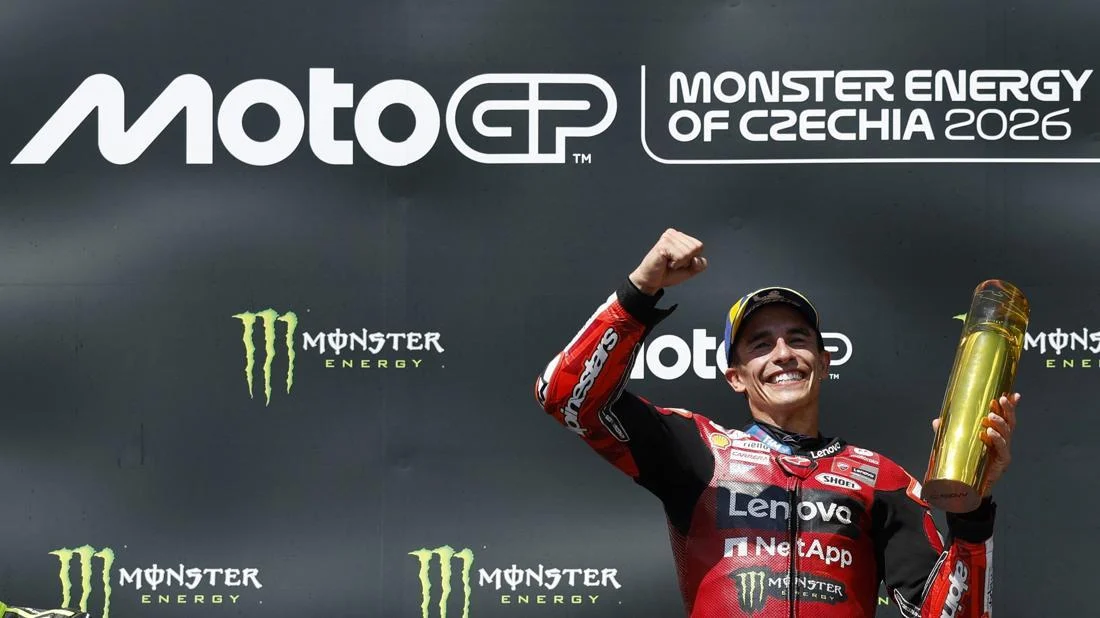
The landscape of modern Grand Prix motorcycle racing has been defined by a select group of extraordinary athletes whose rivalries transcended the track, creating a "Golden Era" of competition that captivated millions of fans worldwide. Marc Marquez, an eight-time World Champion and one of the most decorated riders in history, recently took a moment to reflect on the formidable opponents he faced during his formative years in the premier class. Speaking with clarity and a sense of historical perspective, Marquez provided a detailed breakdown of the unique attributes that made Jorge Lorenzo, Dani Pedrosa, Casey Stoner, and Valentino Rossi the titans of their time. These reflections offer more than just a trip down memory lane; they provide a masterclass in the technical and psychological demands of elite-level racing, illustrating how each rival forced Marquez to evolve his own legendary riding style.
The Metronomic Precision of Jorge Lorenzo
Among the rivals Marquez encountered upon his arrival in the MotoGP class in 2013, few possessed the surgical consistency of Jorge Lorenzo. A three-time MotoGP World Champion, Lorenzo was famous for his "Hammer and Butter" approach—a philosophy of riding that combined immense, unrelenting pressure with a smooth, flowing style. Marquez noted that Lorenzo’s greatest strength was his ability to maintain a nearly identical lap time from the start of the race to the checkered flag. In an era where tire degradation and fuel loads often cause significant fluctuations in performance, Lorenzo’s ability to stay within a two-tenth of a second window across 20 or more laps was, in Marquez’s words, "impressive."
Statistical data supports this observation. During his peak years with Yamaha (2010–2015), Lorenzo often secured victories by leading from the first corner and gradually gapping the field with a rhythm that appeared impossible to break. Marquez highlighted that Lorenzo did not rely on late-braking lunges or aggressive overtakes as much as he relied on pure, unadulterated pace. For a young Marquez, who was known for a more erratic and aggressive style, observing Lorenzo was a lesson in the value of consistency. Lorenzo ended his career with 47 MotoGP wins and 114 podiums, figures that cement his status as one of the most technically proficient riders to ever grace the sport.
Dani Pedrosa and the Triumph of Pure Talent
While Lorenzo represented consistency, Dani Pedrosa represented what Marquez describes as "pure talent." Pedrosa, Marquez’s long-time teammate at Repsol Honda, faced a unique physical challenge throughout his career. Standing at just 158 centimeters and weighing approximately 51 kilograms, Pedrosa was significantly smaller than his peers. Handling a 160-kilogram MotoGP machine, which produces over 250 horsepower, required a level of finesse and technical mastery that Marquez believes is often undervalued.
Marquez asserted that Pedrosa deserved a World Championship title in the premier class, a sentiment echoed by many paddock insiders. Despite never winning the MotoGP crown, Pedrosa’s stats are staggering: 31 wins and 112 podiums in the top category. Marquez pointed out that Pedrosa’s ability to pick up the bike early on corner exits to maximize acceleration—a technique necessitated by his lack of physical leverage—became a blueprint for others to follow. The "Little Samurai" was a master of the "stop-and-go" style, and Marquez credits his time as Pedrosa’s teammate as a period of intense learning, where he had to study Pedrosa’s data to understand how to be faster on the Honda RC213V.
The Explosive Speed and Natural Instinct of Casey Stoner
The transition of power at Honda occurred when Casey Stoner retired at the end of 2012, leaving his seat to the young Marc Marquez. Although they never competed against each other for a full season, Marquez had the opportunity to study Stoner’s telemetry and witness his raw speed during testing and the early stages of his own career. Stoner, a two-time champion with both Ducati and Honda, was renowned for his "explosive" ability to find the limit of a motorcycle almost instantly.
Marquez noted that while most riders require several laps to build heat in the tires and find a rhythm, Stoner could set a circuit record by his third lap of a session. This ability to override the bike’s limitations and ignore the lack of feedback from cold tires was a psychological weapon. Stoner’s riding style was characterized by a high degree of rear-wheel steering, using the throttle to slide the bike into position—a technique that Marquez would later refine and make his own. Stoner’s retirement at the age of 27 remains one of the great "what ifs" of the sport, but his impact on Marquez’s understanding of the bike’s limits remains profound.
Valentino Rossi and the Art of Tactical Sunday Brilliance
No discussion of Marquez’s career is complete without mentioning Valentino Rossi. The rivalry between the two is perhaps the most documented and intense in the history of the sport, peaking during the controversial 2015 season. However, in his recent reflections, Marquez focused on Rossi’s unparalleled tactical intelligence. Unlike Stoner or Lorenzo, Rossi was not always the fastest rider on the grid during Friday practice or Saturday qualifying. Marquez observed that Rossi could often appear to be struggling throughout a race weekend, only to undergo a transformation on Sunday.
"The Doctor" possessed a unique ability to "read" a race. Marquez explained that Rossi knew how to manage a race situation perfectly, whether he was the fastest man on track or not. Rossi’s 89 premier-class victories were often the result of psychological pressure and strategic positioning, forcing his opponents into mistakes. Marquez admitted that Rossi’s ability to perform when it mattered most—on race day—was a skill set that set him apart. This tactical maturity forced Marquez to develop not just his physical riding skills, but also his mental fortitude, as he learned that a race is not won in the first five laps, but in the final five.
A Chronology of the "Alien" Era
The period from 2008 to 2019 is often referred to by fans and journalists as the "Era of the Four Aliens," a term coined to describe Rossi, Stoner, Lorenzo, and Pedrosa—riders who were consistently on a different level from the rest of the field. Marquez’s entry into this group in 2013 disrupted the established order and raised the bar even higher.
- 2008–2012: The dominance of the original "Aliens." Rossi and Lorenzo battled at Yamaha, while Stoner took titles for Ducati and Honda.
- 2013: Marc Marquez enters MotoGP, winning the title in his rookie year and challenging the veterans immediately.
- 2014–2019: Marquez’s era of dominance, interrupted only by Jorge Lorenzo’s 2015 championship. During this time, Marquez faced intense challenges from a revitalized Rossi and a consistent Andrea Dovizioso.
- 2020–Present: A shift in the sport’s hierarchy following Marquez’s career-threatening arm injury in Jerez. A new generation, led by Fabio Quartararo and Francesco Bagnaia, has emerged, utilizing different technologies like ride-height devices and advanced aerodynamics.
The Philosophy of the Baby Alien: Why Humility Drives Success
Perhaps the most revealing aspect of Marquez’s reflection was his personal philosophy regarding his own talent. Despite his status as a living legend, Marquez stated that he never allows himself to believe he is more talented than his rivals. This mindset is not a lack of confidence, but rather a calculated psychological tool used to maintain his work ethic.
"If you think you are the best, it is very easy to get distracted or become complacent," Marquez noted. By operating under the assumption that his rivals have an edge—whether it be in speed, consistency, or tactics—Marquez forces himself to work harder in the gym, spend more time with his engineers, and take more risks on the track. This relentless drive for improvement is what allowed him to return to the front of the pack even after multiple surgeries and years of physical rehabilitation.
Analysis of Implications for the Modern MotoGP Era
Marquez’s comments come at a pivotal time for MotoGP. As the sport moves further into an era dominated by European manufacturers like Ducati, KTM, and Aprilia, the "old school" style of riding represented by the likes of Pedrosa and Rossi is being replaced by a more technical, aero-dependent approach. However, Marquez’s analysis suggests that the core requirements of a champion—Lorenzo’s consistency, Pedrosa’s technicality, Stoner’s speed, and Rossi’s tactics—remain the fundamental pillars of success.
The current crop of riders, such as Jorge Martin and Francesco Bagnaia, exhibit many of these traits. Bagnaia’s recent dominance often mirrors the metronomic precision of Lorenzo, while Martin’s explosive qualifying pace draws comparisons to Stoner. By articulating what made his past rivals great, Marquez is providing a roadmap for the current generation. Furthermore, his move to Gresini Racing to ride a Ducati in 2024 represents his own attempt to integrate these timeless lessons into a new technological framework.
Conclusion and Broader Impact
Marc Marquez’s retrospective serves as a reminder that the greatness of an athlete is often defined by the quality of their competition. The rivalries between Marquez, Rossi, Lorenzo, Stoner, and Pedrosa did more than just decide championships; they pushed the boundaries of what was thought possible on a motorcycle. These interactions led to innovations in riding technique, such as the extreme lean angles and "elbow-down" style that are now standard in the sport.
As Marquez continues his journey, now as a veteran seeking to reclaim his throne, his respect for the past informs his approach to the future. His acknowledgment of his rivals’ strengths highlights a rare level of professional maturity and underscores why he remains the most scrutinized and admired figure in the paddock. The "Baby Alien" may have grown up, but his hunger to learn from the best—even those he has already beaten—remains his greatest competitive advantage. In the high-stakes world of MotoGP, where milliseconds separate glory from disaster, the lessons learned from the legends of the past continue to be the most valuable currency.