 Nila Kartika Wati
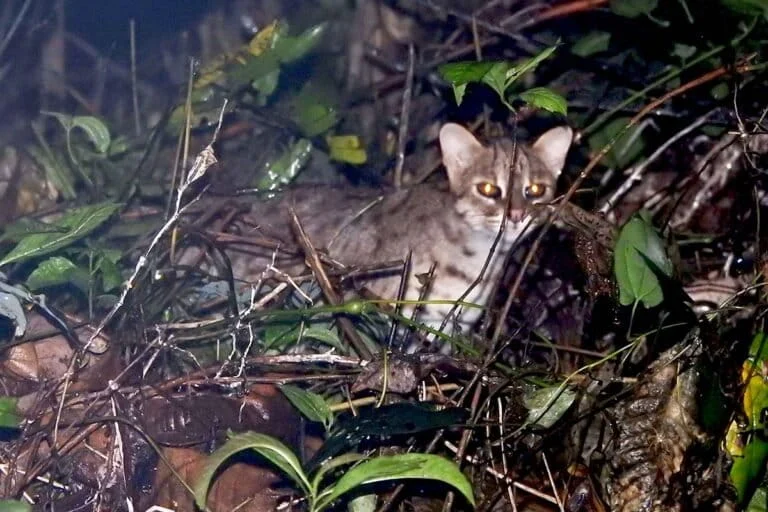
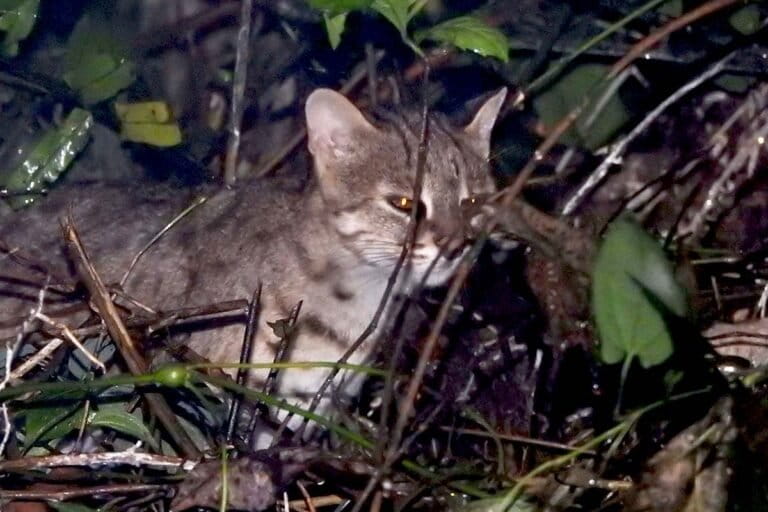
The sudden appearance of a leopard cat (Prionailurus bengalensis), locally known as "kucing kuwuk," in the dead of night is an event that wildlife researchers describe as akin to hitting a jackpot. For Burhanuddin Ihsan Alfani, a 26-year-old alumnus of the Faculty of Forestry at IPB University, such an encounter is not merely a stroke of luck but a profound testament to the elusive nature of this protected felid species. While Ihsan is accustomed to conducting nocturnal wildlife observations, the leopard cat remains a subject of mystery, often evading the gaze of researchers even in environments where they are known to thrive.
A Chance Encounter in the Dark
The encounter described by Ihsan occurred during a routine field survey. Initially, the research team—who were focused on surveying nocturnal reptiles, amphibians, insects, and birds—mistook the faint, yellowish-pale reflective glow of a pair of eyes for that of a bird. As they approached, the distinct coat pattern of a leopard cat became visible, confirming their rare sighting.
The chronology of the encounter highlights the sensitivity of the species. Upon the first flash of the camera, the cat immediately retreated into the darkness. Rather than pursuing the animal, the researchers exercised patience, waiting at the original site. Their restraint paid off when the cat, true to its opportunistic and secretive nature, re-emerged, moving cautiously through the underbrush before vanishing once more. This interaction serves as a prime example of the unpredictable behavior of Prionailurus bengalensis, a species that often defies systematic observation.
Ecological Profile and Behavioral Patterns
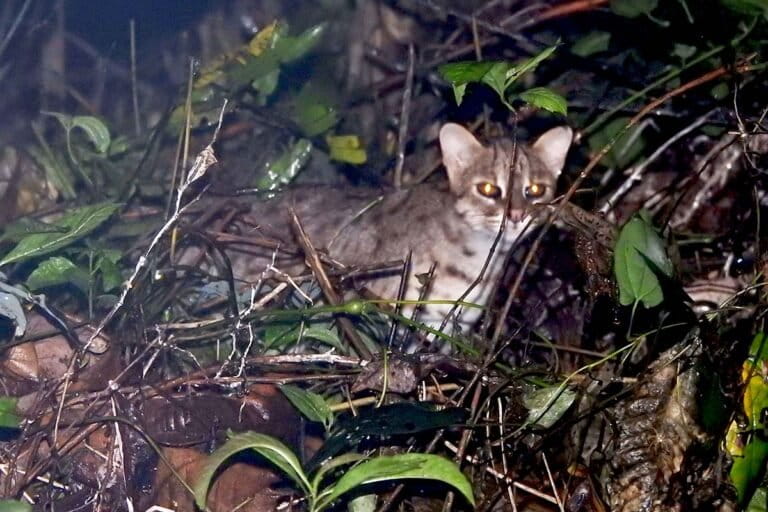
The leopard cat is a small wild cat native to South and Southeast Asia. Often misidentified as a domestic feline due to its size, the leopard cat is, in reality, a specialized mesopredator. Its distribution across diverse habitats, including forest fringes and agricultural landscapes, makes it a vital component of the ecosystem.
According to observational data, the timing of these sightings varies significantly. Records indicate activity peaks between 8:00 PM and 11:00 PM, with some individuals observed as late as 3:00 AM or 4:00 AM. Their presence in areas such as the IPB University Campus Forest—a habitat characterized by large trees, dense shrubbery, and proximity to water sources—demonstrates the species’ ability to navigate semi-natural environments.
However, the frequency of these sightings is low. In previous instances, cats have been observed crossing roads, only to disappear into vegetation at the slightest hint of vehicle light or human presence. This extreme shyness is a defense mechanism that keeps the species relatively safe but makes the study of its population density and health status exceptionally difficult for conservationists.
The Myth of "Rescue" and the Dangers of Captivity
Erwin Wilianto, an independent conservation practitioner and a member of the IUCN-SSC Cat Specialist Group, emphasizes that the primary threat to the leopard cat often stems from human misconceptions rather than direct poaching. A prevalent narrative on social media suggests that when habitats are degraded—due to logging, fire, or land conversion—the "humane" solution is to capture these animals and keep them as pets.
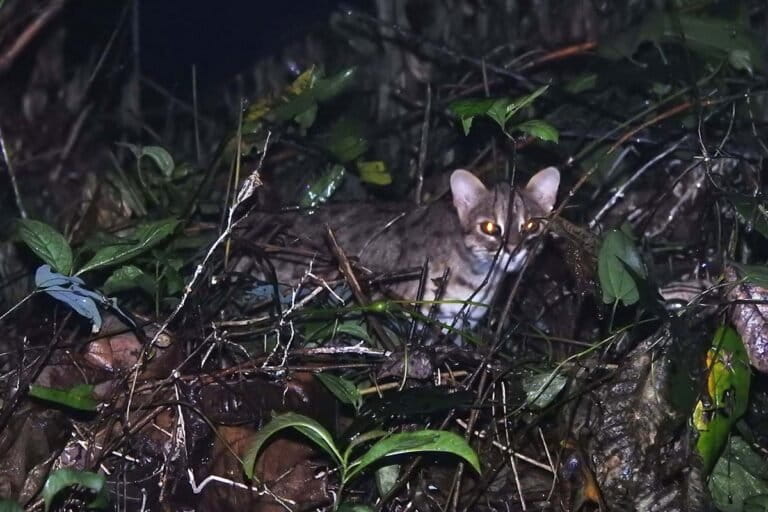
Wilianto strongly rejects this logic. "If the goal is to provide a good home, the solution lies in restoring and strengthening their habitat, not in removing the animal from the wild," he states. The impulse to "rescue" a leopard cat seen near a plantation or a forest edge is often based on a fundamental misunderstanding of the species’ ecology.
The Reality of Human-Leopard Cat Coexistence
Leopard cats are highly adaptable mesopredators. Their presence in ecotones—the transition zones between forests and human-cultivated land—is not necessarily an indicator of ecological collapse. These areas provide an abundance of small mammals, reptiles, and birds, which constitute the cat’s primary diet. Consequently, encountering a leopard cat in a rural or agricultural setting is often a normal occurrence, not an emergency requiring human intervention.
Furthermore, the discovery of a lone kitten does not automatically imply that it has been abandoned by its mother. It is common for maternal leopard cats to leave their young in a concealed location while they forage for food. Misguided attempts to "save" these kittens often result in the permanent removal of the animal from its natural social structure, which is detrimental to the kitten’s development and long-term survival.
Implications for Conservation Policy
The legal status of the leopard cat as a protected species in Indonesia is clear, yet the enforcement of these protections is complicated by public sentiment. Keeping a wild cat as a pet is not only a violation of national wildlife laws but also a hazard to the animal’s welfare. Captive leopard cats often suffer from:
- Behavioral Atrophy: The inability to practice natural hunting and roaming behaviors.
- Nutritional Deficiencies: Even with high-quality feed, captive diets rarely replicate the complexity of natural prey.
- Zoonotic Risks: Captivity increases the potential for disease transmission between humans and wild animals.
- Social Isolation: As solitary hunters, the lack of appropriate territorial space in domestic environments leads to extreme stress.
Strategic Recommendations for Future Wildlife Protection
To ensure the long-term viability of the leopard cat population, conservationists suggest a multi-pronged approach:
- Public Education Campaigns: Moving beyond the "cute pet" narrative to emphasize the ecological role of the leopard cat as a predator that controls rodent populations, which in turn benefits local agriculture.
- Habitat Connectivity: Prioritizing the maintenance of corridors between protected forest areas and human-managed landscapes to allow for natural movement.
- Community-Based Monitoring: Encouraging citizens to report sightings to local forestry or conservation authorities rather than interacting with or capturing the animals.
- Reframing Rescue Efforts: Establishing clear protocols for when to intervene (e.g., only in cases of clear injury or confirmed orphan status) and when to allow natural processes to continue.
Conclusion: The Value of Leaving Wildlife Wild
The experience of researchers like Ihsan highlights the immense value of the leopard cat as an indicator of ecosystem health. The fact that these animals continue to navigate the landscapes surrounding human development is a testament to their resilience. However, this resilience should not be taken for granted.
True conservation requires a paradigm shift: from seeing wild animals as entities to be collected or "saved" in a domestic sense, to viewing them as independent actors that belong to the ecosystem. As Wilianto notes, the best form of protection is ensuring that the habitat remains intact and that the species is left to thrive in its natural environment. Every encounter with a leopard cat should serve as a reminder that their presence is a wild privilege, one that requires human respect, distance, and a commitment to preserving the wild spaces they call home. The future of the species depends on our ability to coexist with them from afar, ensuring that the "jackpot" of a sighting remains a fleeting, magical moment in the wilderness, rather than a permanent fixture in a cage.