Nila Kartika Wati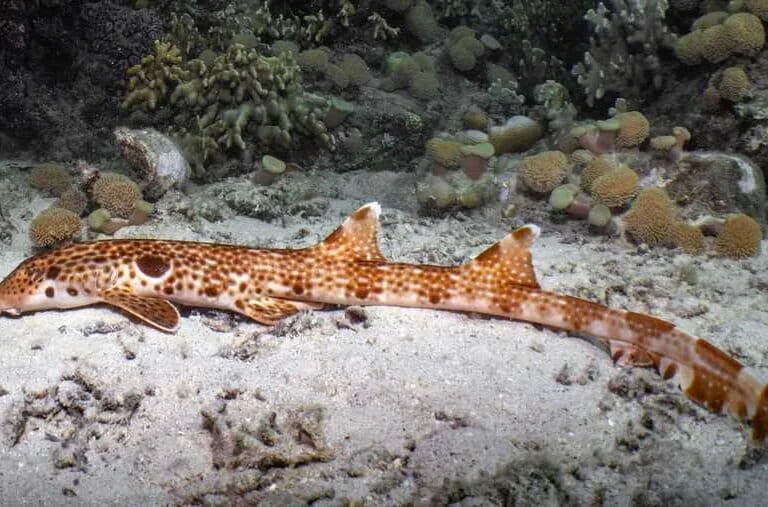
In a landmark contribution to marine taxonomy and biodiversity research, a team of marine scientists from the University of the Sunshine Coast (UniSC) in Australia has officially announced the discovery of a new species of walking shark in the remote waters of Milne Bay, situated at the southeastern tip of Papua New Guinea. The species, scientifically documented as Hemiscyllium dudgeonae, has been colloquially named Dudgeon’s Walking Shark. This nomenclature honors Dr. Christine Dudgeon, the lead researcher who achieved the rare feat of capturing the first specimen by hand during a field expedition. The comprehensive findings of this discovery were recently published in the prestigious Journal of the Ocean Science Foundation, marking a significant milestone in the study of elasmobranchs—the subclass of fish that includes sharks, rays, and skates.
The discovery of Hemiscyllium dudgeonae represents the first time a new walking shark species has been formally described since 2013. Walking sharks, which belong to the genus Hemiscyllium, are a unique group of small, bottom-dwelling sharks known for their remarkable ability to "walk" across the seabed and even over dry land. Unlike their more famous predatory cousins that roam the open oceans, these sharks have evolved specialized, muscular pectoral and pelvic fins. These appendages function similarly to limbs, allowing the sharks to crawl over reef flats and navigate through shallow tide pools. This evolutionary adaptation is particularly useful during low tide when the receding waters leave behind isolated pockets of seawater amidst the coral.
Evolutionary Adaptations and the "Walking" Mechanism
The primary fascination with the Hemiscyllium genus lies in its extraordinary locomotor capabilities. While most sharks rely on lateral undulation of the body and caudal fin for propulsion through the water column, the walking shark utilizes its fins to "tread" across the substrate. This behavior is not merely a biological curiosity but a critical survival strategy. By moving across exposed reef flats, these sharks can access prey—such as small crustaceans, mollusks, and polychaete worms—that are trapped in shallow pools unreachable by larger predators.
A key physiological trait that accompanies this movement is the shark’s high tolerance for hypoxia, or low oxygen levels. When trapped in small tide pools for hours, the oxygen in the water can deplete rapidly. Research on related species, such as the well-known epaulette shark (Hemiscyllium ocellatum), has shown that these animals can survive for up to two hours in near-anoxic conditions by slowing their metabolic rate and directing blood flow to vital organs. Hemiscyllium dudgeonae is believed to share these hardy physiological traits, allowing it to thrive in the harsh, fluctuating environment of the intertidal zone.
The Discovery and Identification Process
The identification of Hemiscyllium dudgeonae began with an unexpected observation during a research voyage in the Milne Bay region. The team, including researchers Christine Dudgeon and Jess Blakeway, was surveying the local marine life when they encountered a specimen that did not match the established descriptions of known species in the area.
Initially, based on previous sightings of similar sharks in the region, the researchers expected the shark to exhibit a leopard-like spotted pattern, a common trait among many Hemiscyllium species. However, upon closer inspection of the 90-centimeter-long specimen, they observed a striking and distinct pattern of white stripes running along its chocolate-brown body. "The first thing that stood out were the white lines along its brown body," noted Jess Blakeway in an official statement. "These stripes were quite different from the leopard-like spots we were expecting to see."
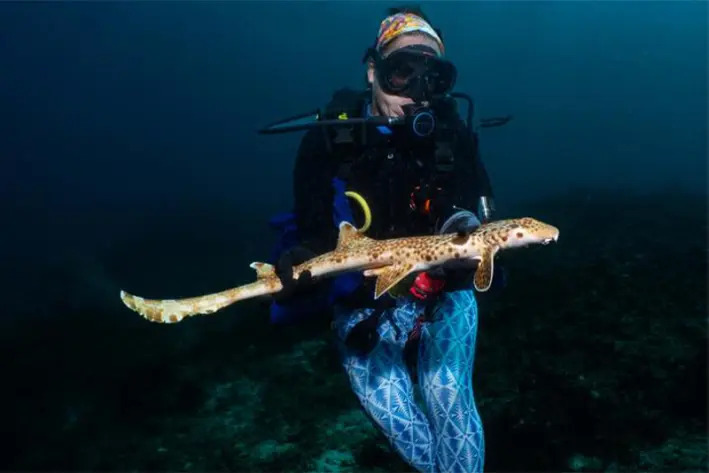
To confirm that the specimen was indeed a new species and not a mere color variant of an existing one, the team conducted a rigorous scientific analysis. After bringing the first specimen aboard their research vessel, they performed precise morphological measurements and collected blood samples for genetic sequencing. The results of the DNA analysis were definitive: the shark possessed unique genetic markers that separated it from its closest relatives, confirming its status as a distinct species within the Hemiscyllium genus.
Following the initial find, the team conducted further surveys over the subsequent two nights. Their persistence was rewarded with the discovery of 11 additional individuals, bringing the total count to 12. Finding such a significant number of individuals in a short period is a positive indicator of a localized population, providing researchers with a solid foundation for future demographic and behavioral studies.
Cultural Context and Local Knowledge
While the species is new to the global scientific community, it has long been known to the indigenous communities of Milne Bay. Local residents refer to the shark as kadedekedewa, a term that translates roughly to "lazy shark" or "dog shark." This name reflects the shark’s docile nature and its slow, methodical movement across the reefs.
The kadedekedewa is not considered a threat to humans. Given its small size—averaging under a meter in length—and its lack of speed, it is a harmless inhabitant of the shallow waters. The local name highlights the deep traditional ecological knowledge held by coastal communities in Papua New Guinea, who have lived alongside these unique creatures for generations. This discovery underscores the importance of integrating local knowledge with modern scientific inquiry to fully understand the planet’s biodiversity.
Geographic Isolation and Speciation
The discovery of Hemiscyllium dudgeonae adds to the growing body of evidence regarding the unique evolutionary history of walking sharks in the Indo-Pacific. The genus is largely confined to the shallow waters of the Coral Triangle, specifically around Papua New Guinea, Indonesia (West Papua), and Northern Australia.
Scientists believe that the diversity of walking sharks is a result of "allopatric speciation." Because these sharks are poor swimmers and do not cross deep-water barriers, populations become isolated by changes in sea levels or geological shifts. Over thousands of years, these isolated groups evolve independently, leading to the emergence of new species with distinct physical characteristics and genetic profiles. Milne Bay’s complex coastline and island structure provide the perfect environment for such evolutionary divergence.
Conservation Status and Environmental Threats
Despite the excitement surrounding the discovery, the long-term survival of Hemiscyllium dudgeonae remains a subject of concern. Currently, the species has not been evaluated by the International Union for Conservation of Nature (IUCN) Red List, meaning its official conservation status—whether it is "Least Concern," "Vulnerable," or "Endangered"—is yet to be determined.
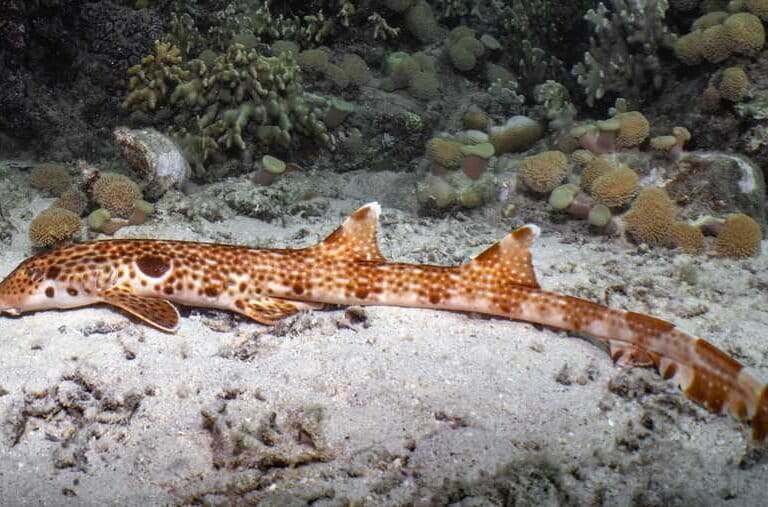
Walking sharks are particularly susceptible to environmental changes due to their limited geographic range and their reliance on healthy coral reef ecosystems. The primary threats facing the species include:
- Habitat Degradation: Coral reefs globally are under pressure from coastal development, pollution, and destructive fishing practices. Since walking sharks live and hunt exclusively on reef flats, the loss of coral cover directly impacts their survival.
- Climate Change and Ocean Warming: Rising sea temperatures lead to coral bleaching, which destroys the complex structures the sharks use for camouflage and hunting. Furthermore, extreme weather events can alter the topography of the shallow reefs they inhabit.
- Ocean Acidification: As the oceans absorb more CO2, the resulting acidity can affect the development and sensory capabilities of shark pups, potentially reducing their ability to hunt or avoid predators.
"We hope to collect more data during our next research trip in October to help the IUCN Red List assess the status of this species," said Blakeway. This follow-up expedition will focus on mapping the species’ range, estimating population density, and identifying specific localized threats in Milne Bay.
The Significance of the Find for Marine Science
The formal naming of Hemiscyllium dudgeonae is more than just an addition to a taxonomic list; it is a reminder of how much of the ocean remains unexplored. The fact that a nearly meter-long vertebrate could remain "undiscovered" by science until now highlights the critical need for continued investment in marine biology and exploration, particularly in biodiversity hotspots like the Coral Triangle.
For Dr. Christine Dudgeon, having a species named in her honor is a rare and humbling recognition of her career-long dedication to shark research. "A new shark species is not found often, and this is certainly the first one named after me," she remarked. Her work, along with that of the UniSC team, continues to shed light on the intricate web of life in the world’s most diverse marine environments.
As the scientific community prepares for the upcoming October expedition, the discovery of the Dudgeon’s Walking Shark serves as a beacon for conservation efforts. It emphasizes that protecting the oceans is not just about saving the apex predators like the Great White, but also about safeguarding the small, "lazy," and fascinating creatures that walk the reefs of Papua New Guinea. The data gathered in the coming months will be instrumental in ensuring that Hemiscyllium dudgeonae continues to "walk" the shores of Milne Bay for generations to come.