Bambang Pamungkas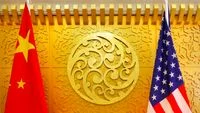
Amidst a backdrop of escalating global geopolitical rivalries, a recent decision by Panama’s Supreme Court to unilaterally revoke a decades-old port concession has triggered significant maritime tensions, drawing in the United States and China and signaling a profound reconfiguration within the international port management industry. This complex scenario, unfolding far beyond the immediate shores of Central America, highlights the strategic importance of global choke points and the evolving dynamics of international trade and power projection. The original concession, granted in 1997 to CK Hutchison, a conglomerate controlled by Hong Kong billionaire Li Ka-shing, for the operation of the Balboa and Cristobal terminals at the crucial entrances of the Panama Canal, was abruptly canceled in late January. This move has not only sparked a multi-billion dollar international arbitration lawsuit but has also ignited a diplomatic and economic standoff between two global superpowers.
The Geopolitical Chessboard: Panama Canal at the Forefront
The Panama Canal, a marvel of engineering connecting the Atlantic and Pacific Oceans, stands as one of the world’s most vital maritime arteries. It facilitates approximately 5% of global maritime trade by volume and is particularly critical for trade routes between Asia and the eastern United States. For the United States, the canal’s security and operational efficiency are paramount, given its historical role in the canal’s construction and its ongoing strategic interests in the Western Hemisphere. Historically, Panama has been considered within the United States’ sphere of influence, a relationship often described colloquially as its "backyard." This historical context imbues any significant shift in Panama’s economic or strategic partnerships with geopolitical implications. China, on the other hand, has steadily expanded its economic footprint across Latin America and globally through its Belt and Road Initiative (BRI), investing heavily in infrastructure, including ports. The presence of a Chinese-owned entity, CK Hutchison, operating such critical infrastructure at the canal’s termini had long been a point of quiet concern for Washington.
A Historic Concession Revoked: The January Ruling
The crux of the current dispute lies in the Panamanian Supreme Court’s decision to annul the legal framework supporting the 1997 concession agreement held by Panama Ports Company (PPC), a subsidiary of CK Hutchison’s Hutchison Ports. This historic concession had allowed PPC to operate the Balboa and Cristobal ports for nearly three decades, effectively controlling key logistics points for vessels transiting the canal. The court’s ruling, delivered at the end of January, cited unspecified legal deficiencies or public interest grounds as the basis for the unilateral termination. Such an abrupt and comprehensive revocation of a long-standing international concession is highly unusual and immediately raised questions about its underlying motivations. CK Hutchison’s subsidiary had invested substantial capital into modernizing and expanding the port facilities over its tenure, making the summary cancellation particularly contentious.
Panama’s Strategic Pivot and US Reaffirmation
Following the controversial ruling, the Panamanian government moved swiftly to appoint new interim operators for the critical port facilities. Two major global players, APM Terminals (a subsidiary of Danish shipping giant Maersk) and Terminal Investment Limited (TiL), owned by Mediterranean Shipping Company (MSC), were selected under an 18-month interim agreement. This decision immediately signaled a shift towards operators with strong ties to European and American commercial interests. While Panama asserts its sovereign right to manage its national assets, the rapid appointment of Western-aligned companies, particularly after the removal of a Chinese-affiliated entity, was widely interpreted as a strategic realignment. For the United States, this development was largely seen as a positive step, reaffirming its influence in a region of vital strategic importance and mitigating perceived security and economic risks associated with Chinese control over critical infrastructure.
China’s Assertive Response: Detaining Vessels
China’s reaction to Panama’s decision was swift and aggressive. In retaliation, Chinese authorities reportedly detained dozens of Panamanian-flagged cargo vessels in various ports. This move was a clear demonstration of economic leverage, targeting a significant segment of global shipping. Panama operates one of the world’s largest shipping registries, with thousands of vessels sailing under its flag, many of which are involved in international trade, including routes connecting to the United States. The Federal Maritime Commission (FMC) of the United States immediately announced that it was closely monitoring the surge in vessel detentions, recognizing the potential for significant commercial and strategic consequences for American shipping and supply chains. Analysts noted that such actions by Beijing were intended to exert pressure on Panama and to send a message to other nations contemplating similar actions regarding Chinese investments in critical infrastructure. The disruption to Panamanian-flagged vessels could indeed cascade into broader disruptions for the global containerized trade, a substantial portion of which serves the American economy.
The Shifting Sands of Global Port Management: CK Hutchison’s Divestment
Coincidentally, or perhaps strategically, the revocation of the Panama concession occurred amidst a broader global divestment strategy by CK Hutchison. The conglomerate had been in the process of offloading significant stakes in its port operations worldwide, under its Hutchison Ports subsidiary. This divestment spanned approximately 43 terminals and ports across 23 countries, including strategic assets in Europe (e.g., Rotterdam, UK, Spain) and Asia (e.g., Jakarta International Container Terminal – JICT, TPK Koja in Indonesia). This move initially led to speculation about Hutchison Ports potentially exiting the port business entirely. However, the company has retained significant holdings in key strategic locations such as Singapore, Hong Kong, Shenzhen, and other parts of Southern China, indicating a strategic refocus rather than a complete withdrawal. This global portfolio reshuffling by one of the world’s largest independent port operators set the stage for major changes in the industry landscape.
The Rise of Carrier-Owned Terminals: TiL and Blackrock’s Strategic Acquisitions
The primary beneficiaries of CK Hutchison’s global asset divestment have been a consortium formed by Blackrock, the world’s largest asset manager, and Terminal Investment Limited (TiL), the port terminal arm of Mediterranean Shipping Company (MSC). Together, they acquired a substantial portion of Hutchison Ports’ divested assets, valued at an estimated $22.8 billion. Crucially, this consortium also purchased 90% of Panama Ports Company, which operated the very Balboa and Cristobal ports at the center of the Panamanian dispute. This acquisition signifies a major shift in the traditional structure of the global port industry. Historically, port operations were largely managed by independent operators like PSA, DP World, and Hutchison Ports, often with financial institutions as investors and shipping lines as minority stakeholders. The increased involvement of carrier-owned terminal operators like TiL, with significant equity stakes in critical infrastructure, marks a departure from this model. While the exact ownership split between TiL and Blackrock in these newly acquired ports has not been fully disclosed, TiL’s expanded footprint is undeniable. As a subsidiary of MSC, the world’s largest container shipping line by capacity, TiL already manages terminals in major global hubs such as Singapore, Ningbo, Busan, Los Angeles, Long Beach, Rotterdam, Antwerp, New York/New Jersey, and Valencia. The integration of former Hutchison assets into this network dramatically extends MSC’s control over its supply chain.
Implications for Global Shipping: Vertical Integration and Market Concentration
This re-configuration represents a significant trend toward vertical integration within the shipping industry. Previously, shipping lines would typically berth their vessels at terminals managed by third-party operators. Now, with major carriers increasingly owning and operating their own terminals through subsidiaries like TiL, the dynamic is changing. While this offers potential efficiencies and cost savings for the integrated carriers, it raises concerns about market concentration and fair competition. Independent shipping lines, or those not affiliated with major terminal operators, could face disadvantages. They might find themselves competing for fewer available berths, potentially receiving less favorable service windows, or even being denied priority access at terminals controlled by their rivals. For instance, an MSC vessel would likely receive preferential treatment at a TiL-operated terminal compared to a vessel from a competing line such as Maersk (which has its own APM Terminals), COSCO, or Yang Ming. This shift could lead to a less level playing field, potentially increasing costs for non-integrated carriers and ultimately impacting freight rates and global trade flows. Industry analysts are closely watching these developments, warning of potential monopolistic practices and the need for regulatory oversight to ensure fair access and competition.
Legal Battles and Commercial Fallout
The immediate legal consequence of the Panamanian Supreme Court’s decision is CK Hutchison’s initiation of an international arbitration lawsuit. The company is seeking over US$2 billion in damages, alleging illegal asset seizure and breach of contract. Such international arbitration cases can be protracted and complex, involving intricate legal arguments regarding sovereign rights versus international investment protection agreements. The outcome of this legal challenge could set precedents for how foreign investments in critical infrastructure are treated by host nations, particularly in regions subject to geopolitical competition. Beyond the legal realm, the commercial fallout includes the disruption to maritime traffic caused by China’s retaliatory detentions, forcing the Federal Maritime Commission to intervene and monitor the situation. The incident underscores the fragility of global supply chains when geopolitical tensions spill over into commercial operations.
Southeast Asian Echoes: The Indonesian Port Landscape
The ripples of this global shift extend to Southeast Asia, particularly Indonesia, where Hutchison Ports holds stakes in Jakarta International Container Terminal (JICT) and TPK Koja. With Blackrock and TiL now acquiring much of Hutchison Ports’ divested portfolio, questions arise about the future of these Indonesian port concessions. The transition of ownership from an established independent operator to a consortium including a major shipping line’s terminal arm could have significant implications for existing cooperation agreements, lease terms, and operational dynamics. Indonesian port authorities and stakeholders will need to assess whether current contracts will be honored, revised, or potentially terminated. The principle of pacta sunt servanda (agreements must be kept) is a cornerstone of international law and commercial relations, and the new owners, as global players, are expected to uphold these commitments. However, the shift towards vertical integration means that the priorities and operational strategies of the new owners might differ significantly from the previous management, potentially influencing service levels, investment decisions, and competitive dynamics within Indonesia’s vital port sector.
Navigating Future Waters: A New Era for Maritime Logistics
The situation in Panama serves as a microcosm of broader trends shaping global maritime logistics and international relations. It highlights the growing importance of port infrastructure as a strategic asset, the intensifying geopolitical competition between global powers, and the evolving business models within the shipping industry. The transition from independent port operators to a more vertically integrated system dominated by major shipping lines, often backed by significant institutional investors, signals a new era for maritime trade. This era will likely be characterized by increased efficiency for integrated carriers but also by potential challenges for competition, market access, and regulatory oversight. As the dust settles on the Panamanian concession revocation and the ensuing legal and commercial battles, the global shipping industry will continue to adapt to these profound structural and geopolitical shifts, navigating increasingly complex and interconnected waters.