Nila Kartika Wati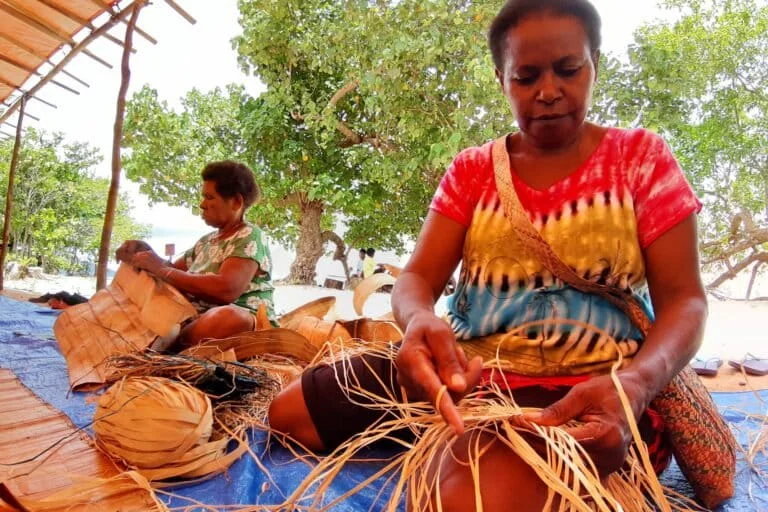
The PAPEDA Summit 2026, held in Sorong, Southwest Papua, has concluded as a critical juncture for the future of the Indonesian archipelago’s easternmost frontier. While the forum served as a high-level stage for government officials, international development partners, and private sector representatives to discuss sustainable development, the proceedings were underscored by a profound tension between state-led industrial ambition and the rights of indigenous communities. At the heart of this discourse were the women of Papua, who positioned themselves as the primary custodians of the region’s ecological and cultural integrity, arguing that the loss of forest cover is not merely an environmental setback but an existential threat to the indigenous identity of the Orang Asli Papua (OAP).
The Ecological and Cultural Stakes
For the indigenous people of Papua, the forest is not a commodity to be liquidated; it is a repository of life. The region’s tropical rainforests—the largest remaining in Indonesia—serve as the source of traditional medicine, food security, and spiritual heritage. Barbalina Osok, Chairperson of the Kwongke Kaban Salukh Moi in Southwest Papua, provided a stark account of the systemic displacement facing the Moi people.
According to Osok, the encroachment on Moi ancestral lands dates back to the early 1990s, when logging concessions were granted to private firms without the meaningful consent of the local population. Over the decades, these logging areas have been systematically converted into industrial-scale oil palm plantations. The impact of these land-use changes is long-term, with many existing concessions projected to remain active until 2032 or 2033. This continuity of land exploitation has, in many instances, stripped the Moi people of their ability to practice traditional agriculture and sustainable forest management, leaving them with limited benefits from the economic activities occurring on their own soil.
Chronology of Marginalization: A Legacy of Conflict
The friction between indigenous land rights and national development projects in Papua is not a contemporary phenomenon but a legacy of decades-old policy frameworks. Since the implementation of the New Order’s centralized forestry policies in the late 20th century, the legal status of customary forests (hutan adat) has been precarious.
- 1990s-2000s: Expansion of large-scale logging and plantation concessions in Southwest Papua. During this period, the legal framework favored state-issued permits over traditional customary land titles (hak ulayat).
- 2013: The Indonesian Constitutional Court issued a landmark ruling (MK 35/PUU-X/2012), which declared that customary forests are not state forests. This was meant to be a turning point for indigenous land rights.
- 2016-2020: Increased momentum for the Social Forestry program (Perhutanan Sosial), aimed at redistributing forest management rights to local communities.
- 2026: The PAPEDA Summit serves as a check-point for these commitments, revealing that while policy rhetoric has evolved, the implementation gap remains significant.
The Role of Women in Stewardship
The narrative presented at the summit by activists like Marlince Siep emphasized that the gendered impact of deforestation is frequently overlooked in high-level policy meetings. In many Papuan cultures, women are the primary stewards of the forest’s resources, responsible for gathering food, medicinal plants, and creating traditional artifacts, such as the noken (a traditional hand-woven bag made from tree bark).
"The land is our Mother," Siep stated during a panel discussion. "To the government and stakeholders, we demand that you preserve the remaining healthy forests and ecosystems so that they can be inherited by the future generations of indigenous Papuan women." Her testimony highlights a broader concern: when forests are cleared, women lose the primary venue for their economic and cultural agency. The loss of biodiversity directly limits the availability of traditional food sources, exacerbating issues of malnutrition and dependency on imported goods in rural communities.
Supporting Data and Policy Context
The Indonesian government has set an ambitious target to designate 12.7 million hectares of forest under the Social Forestry program by 2030. According to official data presented at the summit, approximately 8.41 million hectares have been realized nationwide to date. However, the progress in Papua remains uneven. While 12 indigenous legal communities (Masyarakat Hukum Adat) in Papua have successfully secured legal recognition, dozens of other applications remain trapped in bureaucratic verification processes.

This administrative bottleneck serves as a primary source of frustration. For indigenous communities, the lack of formal recognition makes them vulnerable to land grabbing, as their customary claims are often dismissed in favor of state-issued permits granted to corporations.
Official Responses and Provincial Commitment
Elisa Kambu, the Governor of Southwest Papua, acknowledged the systemic failures of the past and pledged to accelerate the mapping of indigenous lands. During the summit, Kambu expressed a commitment to prioritizing the legal recognition of customary forests, noting that granting such status is essential for empowering local communities to take charge of their own development. "We are committed to helping with the mapping of customary territories and land," Kambu noted. "Strengthening the legal standing of these forests is not just a policy priority; it is a necessity for the stability and prosperity of the region."
However, analysts suggest that provincial-level commitment often faces hurdles from the central government, which controls the licensing for major extractive projects classified as National Strategic Projects (Proyek Strategis Nasional or PSN). The conflict between local governance and central investment priorities remains a central point of contention in the development of Papua.
Implications of the PAPEDA Summit Disruption
The closing day of the summit was marked by an abrupt end to the proceedings as protests broke out in the vicinity of the venue. Local community members and student activists staged demonstrations against several National Strategic Projects currently planned for the region. The protests served as a physical manifestation of the skepticism felt by the grassroots population toward the summit’s outcomes.
The disruption underscores a fundamental disconnect: while officials discussed "sustainable development," protesters demanded a complete re-evaluation of the definition of development itself. For the demonstrators, the summit’s focus on bureaucratic progress was insufficient in the face of ongoing environmental degradation and the potential loss of their ancestral lands to large-scale infrastructure projects.
Future Outlook and Analytical Implications
The PAPEDA Summit 2026 has provided a clear picture of the current state of indigenous rights in Papua. The path forward remains fraught with challenges. The key implications include:
- The Legitimacy Gap: If the government continues to prioritize industrial expansion under the banner of "national interest" without resolving underlying land disputes, the social cost—and the potential for civil unrest—will likely increase.
- The Economic Shift: There is a growing demand for an economic model that values "standing forests" over extractive activities. The carbon credit market and the emerging green economy are often cited as potential alternatives, but these must be implemented with strict safeguards to prevent "green grabbing" of indigenous lands.
- Legal Empowerment: The pace of forest tenure reform is insufficient. Without a more streamlined and transparent process for the recognition of customary land titles, indigenous communities will remain at a significant disadvantage in legal and economic disputes with the state and private entities.
Ultimately, the success of the PAPEDA Summit will not be judged by the declarations signed in the conference hall, but by the tangible changes in the field. The women of Papua, through their persistent advocacy, have set a clear benchmark: the protection of the forest is not a negotiable aspect of policy, but a foundational requirement for the survival of their culture, their economy, and their future. The transition from policy-making to policy-implementation remains the most significant hurdle for the Indonesian government in its engagement with the indigenous peoples of Papua. As the nation looks toward 2030, the ability to harmonize economic growth with the protection of customary rights will likely define the long-term social and environmental stability of the region.