Eko Sulistyo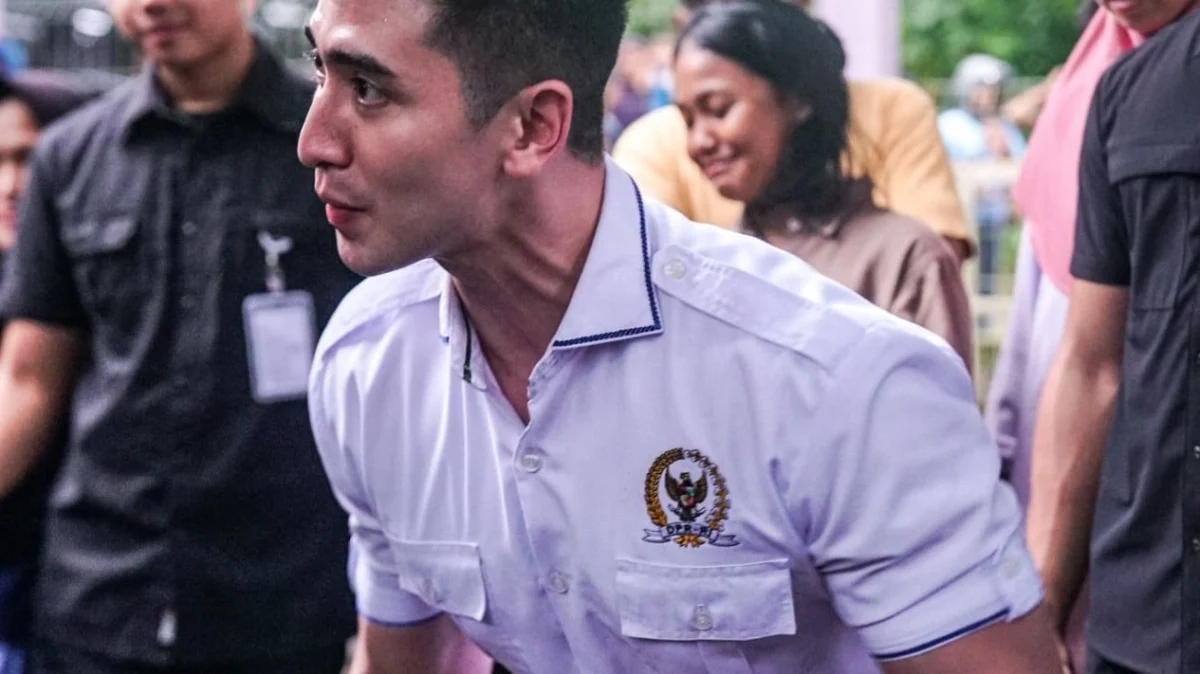
The inauguration of 1,061 Village and Urban Ward Red and White Cooperatives (Koperasi Desa dan Kelurahan Merah Putih) in Nganjuk, East Java, on Tuesday, May 19, 2026, served as a significant milestone for the national grassroots economy, yet it was a lighthearted exchange between President Prabowo Subianto and legislator Verrell Bramasta that captured the nation’s attention. Amidst the formal proceedings aimed at bolstering rural financial independence, a spontaneous dialogue occurred when the President paused his address to acknowledge the presence of the young politician, whose physical appearance prompted a series of curious inquiries regarding his heritage and citizenship.
The interaction began during the ceremonial segment of the event, where high-ranking officials and members of the House of Representatives (DPR RI) were introduced to the attendees. Verrell Bramasta, currently serving as a member of Commission X of the DPR RI—which oversees education, sports, and tourism—stood to offer a formal salute to the President as his name was called. President Prabowo, known for his direct and often jovial communication style, momentarily deviated from his prepared remarks to focus on Verrell, whose "international" facial features have long been a subject of public discussion in the Indonesian entertainment industry.
A Lighthearted Inquiry Into National Identity
Witnessing Verrell’s presence, President Prabowo posed a question that initially startled the audience but was quickly revealed to be in good humor. The President asked if Verrell was indeed an Indonesian citizen, a query seemingly rooted in the legislator’s distinctive looks which many often mistake for being of mixed European or "blasteran" descent. Verrell, maintaining his composure, promptly confirmed his status, stating clearly that he is a full citizen of the Republic of Indonesia.
The dialogue deepened as the President sought to understand the specific regions of Indonesia from which Verrell’s family originated. When Verrell explained that he possessed a mixture of Balinese and East Javanese heritage, a brief linguistic misunderstanding occurred. President Prabowo reportedly misheard the word "Bali" as "Belgium," leading to a humorous retort where the President questioned if there were people from Belgium who looked like Verrell in Nganjuk. The confusion was quickly clarified, leading to a wave of laughter from the gathered cooperative members, local officials, and ministerial representatives.
This moment of levity served to humanize the formal event, highlighting a relaxed rapport between the head of state and the younger generation of political leaders. However, beyond the humor, the interaction underscored a broader cultural phenomenon in Indonesia where the "international" aesthetic of certain public figures often leads to misconceptions about their roots, despite them being of indigenous or local ethnic descent.
The Genealogical Background of Verrell Bramasta
To provide context to the President’s curiosity, it is essential to look at the family history of the young politician. Verrell Bramasta is the eldest son of Ivan Fadilla Soedjoko and Venna Melinda. His father, Ivan Fadilla, is of Javanese descent, specifically with roots in East Java, which made the Nganjuk event particularly relevant to Verrell’s own ancestral geography. His mother, Venna Melinda, is a well-known figure in Indonesia, a former Puteri Indonesia (1994) and a veteran politician herself, who hails from a Balinese family.
Despite the lack of any European or "Western" ancestry, Verrell’s features—characterized by a sharp profile and fair complexion—have frequently led the public to assume he has foreign blood. The interaction with President Prabowo effectively dispelled these long-standing rumors on a national stage, confirming that his lineage is entirely rooted in the Indonesian archipelago.
Context of the Event: The Red and White Cooperatives Initiative
While the interaction with Verrell Bramasta provided a viral social media moment, the primary objective of the gathering in Nganjuk was the massive expansion of the "Koperasi Desa dan Kelurahan Merah Putih" program. This initiative is a cornerstone of the Prabowo administration’s economic strategy, which emphasizes "Ekonomi Pancasila"—an economic system rooted in cooperation and mutual aid (gotong royong) rather than pure competition.
The inauguration of 1,061 cooperatives in a single day represents an aggressive push toward decentralizing financial power. These cooperatives are designed to provide several key services to rural and urban ward residents:
- Access to Micro-Credit: Providing low-interest loans to small and medium enterprises (MSMEs) without the stringent requirements of traditional commercial banks.
- Agricultural Support: Acting as a distribution hub for subsidized fertilizers and a primary buyer for local harvests to stabilize commodity prices.
- Digital Integration: Each cooperative is equipped with digital payment systems to bridge the urban-rural technological divide.
Nganjuk was chosen as the site for this mass inauguration due to its strategic position as a burgeoning agricultural and industrial hub in East Java. The province itself serves as the backbone of Indonesia’s food security, and the empowerment of village-level cooperatives is seen as a vital step in ensuring that the profits from agricultural productivity remain within the local communities.
Timeline of the President’s Visit to Nganjuk
The President’s itinerary on May 19, 2026, was packed with activities aimed at rural development. The following chronology outlines the day’s events:
- 08:30 WIB: President Prabowo and his entourage arrived at the Nganjuk regional airstrip, greeted by the Governor of East Java and local traditional leaders.
- 09:15 WIB: The President conducted a brief inspection of a local "Digital Village" pilot project, where he observed how local farmers use mobile applications to monitor crop health.
- 10:00 WIB: Arrival at the main venue for the cooperative inauguration. The event was attended by thousands of cooperative managers from across the province.
- 10:45 WIB: The President began his keynote speech, during which the notable interaction with Verrell Bramasta took place.
- 11:30 WIB: The symbolic signing of the inauguration plaque for the 1,061 cooperatives.
- 12:15 WIB: A closed-door meeting with local community leaders to discuss land reform and water management issues in East Java.
Implications of Celebrity Presence in Indonesian Politics
The presence of Verrell Bramasta at such a significant governmental event highlights the evolving landscape of the Indonesian House of Representatives. Verrell, who transitioned from a highly successful career in television and film to the legislative branch, represents a trend of "celebrity politicians" who leverage their public platform to engage with younger demographics.
His role in Commission X is particularly pertinent, as the commission deals with the creative economy—a sector that the government hopes will become a new pillar of national growth. By participating in the cooperative inauguration, Verrell and other young legislators are being integrated into the traditional economic sectors, bridging the gap between modern creative industries and the foundational agricultural and cooperative sectors.
Political analysts suggest that President Prabowo’s decision to engage with Verrell in such a public and friendly manner is a calculated move to maintain a "grandfatherly" (gemoy) image that resonated well during his campaign. By blending humor with serious policy implementation, the administration seeks to maintain high public approval ratings while pushing through complex economic reforms.
Official Responses and Public Reaction
Following the event, the snippet of the conversation between the President and Verrell Bramasta went viral across platforms like TikTok and X (formerly Twitter). Many netizens expressed amusement at the "Bali vs. Belgium" confusion, with some praising the President’s relatability.
A spokesperson for the Presidency later clarified that the President’s remarks were intended to celebrate the diversity of the Indonesian people. "The President was simply admiring the diverse phenotypes of our citizens. Indonesia is a melting pot of various ethnicities, and sometimes that diversity produces features that people mistakenly attribute to foreign origins. It was a moment of pride in our national identity," the spokesperson stated.
Verrell Bramasta also took to his social media accounts to reflect on the day. He noted that it was an honor to be recognized by the President and reiterated his commitment to serving his constituents in East Java. He emphasized that his "Jawa-Bali" roots are a source of personal strength and that he is dedicated to ensuring that the newly inaugurated cooperatives succeed in improving the livelihoods of the people in his electoral district.
Broad Economic Impact of the Nganjuk Initiative
Beyond the social media buzz, the establishment of 1,061 cooperatives is expected to have a tangible impact on the regional economy. Economic data from the Ministry of Cooperatives and Small and Medium Enterprises suggests that for every village cooperative established, there is a projected 3-5% increase in the local circulation of capital within the first two years.
By targeting Nganjuk and the surrounding East Javanese districts, the government is focusing on a region that contributes significantly to the national GDP. The success of the "Red and White" model in this area will likely serve as a blueprint for similar mass inaugurations in Sumatra and Sulawesi later in the fiscal year.
In conclusion, the events in Nganjuk on May 19, 2026, provided a unique blend of high-level economic policy and human-interest storytelling. While the 1,061 new cooperatives represent the structural future of the Indonesian village economy, the interaction between President Prabowo and Verrell Bramasta served as a reminder of the cultural and personal threads that weave the national fabric together. As the cooperatives begin their operations, the nation will be watching to see if this grassroots approach can truly deliver the economic sovereignty promised by the administration.