Azin Asro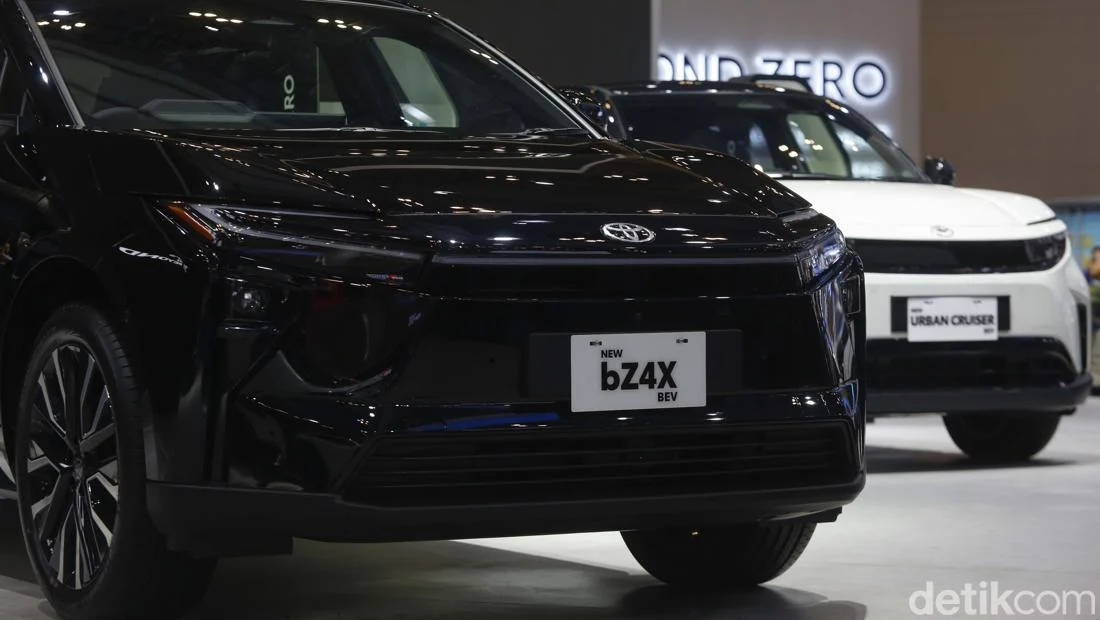
The Indonesian automotive landscape is undergoing a seismic shift as the transition toward electrification accelerates, revealing a stark divide between established industry leaders and aggressive new entrants. While Toyota Astra Motor (TAM) has long maintained a dominant position in the internal combustion engine (ICE) and hybrid markets, recent data regarding its battery electric vehicle (BEV) performance suggests a challenging road ahead. Despite a diversified "multi-pathway" strategy aimed at providing various electrified options to consumers, Toyota’s pure electric offerings—the bZ4X and the Urban Cruiser EV—have struggled to gain significant traction in a market increasingly dominated by high-volume, affordably priced Chinese alternatives.
The Current State of Toyota’s Electric Ambitions in Indonesia
According to the latest wholesale distribution data released by the Association of Indonesian Automotive Industries (Gaikindo), Toyota’s performance in the pure electric segment remains modest. For the first quarter of 2026, the distribution figures for the Toyota bZ4X, the brand’s flagship electric SUV, reached only 24 units. Even more concerning for the manufacturer is the Urban Cruiser EV, which, despite its entry into the domestic lineup, has yet to record any wholesale distribution during the same period.
This performance stands in sharp contrast to the broader market trends. In March 2026 alone, the Jaecoo J5, a newcomer from the Chinese automotive sector, recorded staggering sales of 2,959 units. The disparity highlights a growing consumer preference for a different value proposition—one that combines cutting-edge technology with aggressive pricing strategies that traditional manufacturers are currently struggling to match in the BEV space.
Analyzing the Pricing Barrier and Local Assembly Efforts
One of the primary factors contributing to the slow uptake of Toyota’s BEVs is the significant price gap between Japanese offerings and their Chinese counterparts. For years, Toyota’s bZ4X was positioned as a premium product, with prices initially exceeding the Rp 1 billion mark. In an effort to make the vehicle more competitive and to take advantage of government incentives related to local content requirements (TKDN), Toyota shifted to local assembly for the bZ4X.
This move effectively brought the price down to Rp 799 million. Similarly, the Urban Cruiser EV was introduced as a more "accessible" entry point into the Toyota electric ecosystem, priced at Rp 759 million. However, even with these price adjustments, Toyota remains positioned in a premium bracket. In contrast, Chinese manufacturers such as BYD, GAC, Geely, and Wuling have flooded the Indonesian market with electric vehicles starting as low as Rp 199 million. For the average Indonesian consumer, the price of a single Toyota bZ4X could purchase nearly four entry-level Chinese EVs, a reality that makes the "Toyota tax" difficult to justify for many first-time EV buyers.
The Multi-Pathway Strategy: A Double-Edged Sword?
Toyota’s global and domestic strategy is built on the concept of "multi-pathway" mobility. This philosophy posits that there is no single solution to achieving carbon neutrality. Instead, Toyota offers a spectrum of technologies, including Highly Efficient Internal Combustion Engines (ICE), Hybrid Electric Vehicles (HEV), Plug-in Hybrid Electric Vehicles (PHEV), and Battery Electric Vehicles (BEV).
In the Indonesian context, this strategy has been incredibly successful in the hybrid segment. Models like the Kijang Innova Zenix Hybrid and the Yaris Cross Hybrid have seen massive adoption, as they do not require a change in consumer behavior regarding charging infrastructure. However, this success in hybrids may be overshadowing the brand’s BEV efforts. While competitors focus 100% of their marketing and infrastructure investment on pure electric platforms, Toyota’s resources are divided across multiple technologies. This creates a perception issue where consumers view Toyota as a "hybrid brand" rather than a leader in the next generation of pure electric mobility.
Technical Specifications and Consumer Value Proposition
Despite the slow sales, Toyota’s electric vehicles offer robust engineering and competitive specifications within their price class. The Urban Cruiser EV is equipped with a battery system that provides a range of approximately 426.7 kilometers on a single charge, making it a viable option for urban commuting and occasional intercity travel.
The bZ4X, built on the dedicated e-TNGA (Toyota New Global Architecture) platform, offers a more substantial range of up to 525 kilometers. This vehicle is designed with a low center of gravity and high structural rigidity, providing a driving experience that aligns with Toyota’s reputation for reliability and comfort. To sweeten the deal and address "range anxiety" and battery health concerns, Toyota Indonesia provides an extensive warranty package. This includes an 8-year or 160,000-kilometer battery warranty and a mandatory battery health check every six months at authorized service centers.
Despite these technical merits, the market response suggests that technical specifications alone are not enough to overcome the price-to-value ratio offered by competitors who provide similar ranges for 30% to 40% less capital outlay.
The Rise of Chinese Manufacturers in the Indonesian EV Market
The Indonesian electric vehicle market in 2026 is vastly different from the market of five years ago. The entry of brands like Jaecoo, BYD, and Geely has disrupted the long-standing status quo. These manufacturers have not only brought lower prices but have also invested heavily in localized production and the development of a charging ecosystem.
The Jaecoo J5’s success is a case study in market penetration. By offering a high-tech interior, modern aesthetics, and a price point that undercuts Japanese rivals, the brand has managed to capture the "early adopter" demographic that Toyota previously held. Furthermore, Chinese brands are often perceived as more "digitally native," offering software features and over-the-air (OTA) updates that appeal to a younger, tech-savvy Indonesian middle class.
Chronology of Toyota’s EV Journey in Indonesia
To understand the current predicament, one must look at the timeline of Toyota’s electrification efforts in the country:
- 2022: Toyota officially introduces the bZ4X in Indonesia, coinciding with the G20 Summit in Bali, where the vehicle served as official transportation for delegates. At this stage, the car was a Completely Built-Up (CBU) unit with a price tag above Rp 1.1 billion.
- 2023-2024: As the government introduced VAT incentives for EVs with at least 40% local content, Toyota began evaluating local assembly (CKD) operations to remain competitive.
- 2025: Toyota launches the Urban Cruiser EV, aiming to capture the mid-tier SUV market. Simultaneously, local assembly for the bZ4X begins, resulting in a price drop to the Rp 700-800 million range.
- Q1 2026: Despite the lower prices and local assembly, Gaikindo data reveals a significant gap between Toyota’s production capacity and actual market absorption, with only 24 units of the bZ4X distributed and zero units for the Urban Cruiser EV.
Official Reactions and Industry Implications
While Toyota Astra Motor has not issued a specific statement regarding the Q1 2026 figures, company executives have previously emphasized that their goal is "long-term sustainability rather than immediate volume." Toyota’s leadership often points to the "total ownership experience," suggesting that their extensive dealer network and high resale value will eventually win over consumers who are currently lured by the low initial purchase price of newer brands.
However, industry analysts suggest that Toyota may need to pivot. "The Indonesian consumer is very price-sensitive, but they are also becoming very tech-conscious," says an automotive consultant based in Jakarta. "If Toyota cannot bring a BEV to market in the Rp 400 million to Rp 500 million range, they risk being relegated to a niche player in the electric segment, even if they continue to dominate hybrids."
The implications for the Indonesian automotive industry are profound. The government’s push for Indonesia to become a global EV battery hub relies on high domestic demand. If traditional market leaders like Toyota cannot stimulate high-volume EV sales, the burden of growth falls entirely on new entrants, which may impact the long-term stability of the domestic supply chain and the established labor force tied to Japanese manufacturing plants.
Future Outlook: Can Toyota Reclaim the Lead?
The road ahead for Toyota in the Indonesian BEV market requires a multi-faceted approach. First, the company must address the "affordability gap." This may involve further localization of battery components, which remain the most expensive part of the vehicle. If Toyota can leverage Indonesia’s nickel reserves to produce batteries locally, a significant price reduction could be on the horizon.
Second, Toyota must enhance its digital ecosystem. While Toyota vehicles are known for mechanical reliability, the modern EV buyer expects a smartphone-like experience inside the cabin. Integrating better infotainment systems and autonomous driving features will be crucial to competing with the tech-heavy offerings from China.
Finally, the success of the multi-pathway strategy will depend on how well Toyota can educate the public. As long as consumers view BEVs as the "only" future, Toyota’s hybrid success will be seen as a temporary bridge. Toyota needs to demonstrate that its BEVs are not just "compliance cars" but are superior products worth the premium price.
As the 2026 fiscal year progresses, all eyes will be on Gaikindo’s subsequent reports. Whether Toyota can ramp up the distribution of the Urban Cruiser EV and the bZ4X—or whether they will be forced to introduce even more affordable models—will define the brand’s legacy in the era of green mobility. For now, the "Giant of Jakarta" finds itself in the uncharacteristic position of an underdog in the race for electric supremacy.