Bambang Pamungkas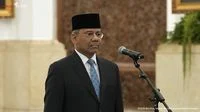
Jakarta, CNBC Indonesia – In a significant shift in national economic leadership, President Prabowo Subianto has officially inaugurated Suahasil Nazara as the new Minister of Finance. The swearing-in ceremony took place at the State Palace on Monday, September 14, 2026, marking a pivotal transition in the management of Indonesia’s state budget and fiscal policy.
Suahasil steps into the role to succeed Purbaya Yudhi Sadewa, who held the critical ministerial portfolio for one year. This leadership change occurs at a demanding juncture in the fiscal calendar. With the 2026 fiscal year already more than eight months underway, the newly minted Minister must immediately dive into complex budgetary execution while simultaneously coordinating with the House of Representatives (DPR) to deliberate the State Budget Bill (RAPBN) for the 2027 fiscal year.
For Suahasil, the corridors of the Ministry of Finance are exceptionally familiar. He has served as the Deputy Minister of Finance since 2019, having held the position throughout the second administration of former President Joko Widodo. This extensive tenure ensures that Suahasil brings deep institutional memory and comprehensive technical mastery of the country’s fiscal architecture. However, despite his familiarity with the office, he inherits an intensive portfolio loaded with urgent challenges that demand immediate attention.
From aggressively pursuing state revenue targets and managing the national debt trajectory to balancing the state budget deficit and steering regional transfer funds, Suahasil faces a multifaceted balancing act. His primary mandate remains clear: safeguarding fiscal credibility while ensuring unwavering financial support for the government’s flagship socioeconomic programs amid a volatile global economic landscape.
A Familiar Hand Facing High Stakes
Suahasil’s elevation to the helm of the Ministry of Finance comes at a time of profound economic crosscurrents. Having worked closely beneath and alongside previous leadership, his transition is expected to provide a degree of administrative continuity, yet the external pressures bearing down on the Indonesian economy require decisive and agile policymaking.
The immediate test for the new minister involves navigating six critical operational domains: steering tax collection pipelines, managing complex government funding and institutional programs, keeping the budget deficit within legal boundaries, maintaining prudent debt management, optimizing regional financial transfers, and consolidating internal ministry structures following a recent bureaucratic overhaul.
1. Navigating the Up-Hill Battle for Tax Revenue
One of the most pressing items on Suahasil’s desk is the rigorous pursuit of remaining tax revenue targets to close out the 2026 fiscal year.
Data from the Ministry of Finance indicates that national tax revenues reached Rp1,224.3 trillion by the end of July 2026. This figure represents a robust year-on-year growth of 23.7% compared to the same period in 2025 and accounts for roughly 51.9% of the total tax revenue target mandated in the 2026 State Budget (APBN), which sits at Rp2,357.7 trillion.
Consequently, the administration must collect an estimated Rp1,133.4 trillion over the final five months of the year to meet its annual goals. Earlier economic projections by government analysts suggested that total 2026 tax collections might cap out closer to Rp2,310.8 trillion—falling approximately Rp46.9 trillion short of the initial budgetary blueprint.
Achieving these targets will be an uphill battle. The domestic business climate and household consumption patterns face mounting headwinds, largely driven by external shocks and heightened geopolitical tensions in the Middle East. These global uncertainties complicate corporate profitability and consumer spending, adding layers of difficulty to tax collection efforts.
Under Purbaya’s preceding tenure, the ministry favored a strategy focused on expanding the tax base, intensifying compliance enforcement, and upgrading digital tax administration systems rather than resorting to direct rate hikes. Suahasil will now evaluate how to optimize these ongoing strategies. His challenge extends beyond mere revenue extraction; he must ensure that aggressive tax collection measures do not inadvertently stifle business growth or erode consumer purchasing power during a period of global economic vulnerability.
2. Managing Complex Financial Interventions and Institutional Programs
Beyond traditional taxation, Suahasil inherits a series of high-profile financial programs initiated by his predecessor, most notably the deployment of government funds stored in the Government Budget Excess Balance (SAL) into state-owned commercial banks.
This policy served as a cornerstone of Purbaya’s tenure. By shifting funds previously parked at Bank Indonesia into state-owned banks (Himbara), the government aimed to inject much-needed liquidity into the financial system to spur commercial lending. Initial planning targeted a total placement of nearly Rp400 trillion. Of this sum, approximately Rp200 trillion was locked into the banking sector through July 2027, another Rp100 trillion was scheduled to remain through the end of 2026, and the remaining Rp100 trillion was structured dynamically to respond to shifting government cash flow needs.
While this capital injection successfully reduced banking cost-of-funds and expanded credit distribution channels, it remains public money. The Ministry of Finance must meticulously balance public expenditure obligations, domestic liquidity conditions, withdrawal timelines, and synchronization with Bank Indonesia’s monetary policy stances. Any abrupt withdrawal of these funds risks squeezing banking liquidity, while an overly prolonged placement could constrain state treasury flexibility.
Simultaneously, the new minister must oversee financial mechanisms tied to the Village/Sub-district Cooperatives program, known as Kopdes Merah Putih. This community-level economic initiative requires intricate institutional coordination, involving commercial banking syndicates, government cash placements, and structured regional transfers.
With the 2026 Village Fund ceiling established at Rp60.57 trillion, approximately 58.03%—or Rp34.57 trillion—has been explicitly earmarked to back the rollout of Kopdes Merah Putih. Under Ministry of Finance Regulation (PMK) No. 15/2026, individual cooperative outlets, warehouses, and supporting facilities can secure financing of up to Rp300 million per unit. These financing packages carry a favorable 6% annual interest rate over a six-year tenor, complete with a 12-month principal repayment grace period. Repurchasing obligations can be serviced via local revenue allocations, shared tax revenue, or village funds, with the physical assets ultimately vesting as regional or village property. Suahasil’s leadership will be vital in ensuring this complex financial plumbing operates without systemic bottlenecks.
3. Maintaining Budget Deficit Discipline Amid Rising Global Costs
A central pillar of Indonesia’s macroeconomic stability is adherence to statutory fiscal rules, chief among them being the legal mandate that caps the annual state budget deficit at 3% of Gross Domestic Product (GDP).
Domestic financial markets experienced bouts of volatility earlier in 2026 following cautious notes from global credit rating agencies, including Moody’s and Fitch. These agencies scrutinized the final realization of the 2025 budget deficit, which ticked upward to 2.92% of GDP—dangerously close to the statutory ceiling.
Although the budget deficit through the end of July 2026 was recorded at a manageable Rp235.6 trillion, or 0.91% of GDP, historical fiscal patterns show that deficits typically widen sharply in the second half of the year. This expansion is driven by accelerated spending from ministries and state agencies, increased regional transfers, and the disbursement of heavy energy subsidies and compensation programs.
Current official forecasts suggest that the full-year deficit for 2026 could settle around 2.85% of GDP. While this projection exceeds the initial budget target of 2.68%, it safely respects the legally mandated 3% threshold. However, external variables threaten to disrupt these projections. Global crude oil prices have pierced the threshold of $100 per barrel, exerting intense upward pressure on state energy subsidies and compensation outlays. Concurrently, ongoing rupiah depreciation risks inflating foreign-currency-denominated state expenditures.
4. Navigating Public Debt and Rising Borrowing Costs
Debt management stands as another immediate operational hurdle for the new finance minister. The growing demand for government financing coincides uncomfortably with a global trend of rising bond yields and elevated borrowing costs.
Official figures show that Indonesia’s central government debt reached Rp10,293.69 trillion at the close of June 2026, representing 41.26% of GDP. This reflects a substantial increase of Rp373.27 trillion amassed over a compressed three-month window. The vast majority of this sovereign debt—roughly 87.11%, or Rp8,966.79 trillion—is denominated in tradable Government Securities (SBN), with the remaining Rp1,326.90 trillion held as multilateral and bilateral loans.
While Indonesia’s debt-to-GDP ratio remains safely below the legal ceiling of 60% established by the State Finance Law, the cost of securing fresh capital has climbed in tandem with secondary market yield hikes. Furthermore, the compounding burden of sovereign debt servicing continues to expand, with projected interest payments for the 2026 fiscal year alone reaching an estimated Rp582.2 trillion.
5. Balancing Regional Transfers and Local Fiscal Health
Regional governments across the archipelago have increasingly raised concerns regarding reductions in Transfer to Regions (TKD) allocations.
The initial TKD allocation within the 2026 State Budget was set at Rp693 trillion, marking a notable contraction of about Rp226.9 trillion, or 24.7%, compared to the initial 2025 budgetary ceiling of Rp919.9 trillion. The central government defended the policy shift by explaining that a portion of these funds was converted into centralized ministerial expenditures destined for regional project execution.
Nevertheless, this funding reduction forced municipal and provincial administrations to radically revise their local budgets (APBD). Regions with narrow Local Original Revenue (PAD) bases faced severe fiscal stress, as administrative payrolls, public services, and infrastructure maintenance heavily rely on central subvention.
Recognizing these vulnerabilities, the previous leadership established contingency mechanisms to channel emergency financial support to regional governments facing imminent administrative paralysis. By September 14, 2026, real-time TKD realization stood at Rp485.54 trillion, or 73.38% of the operational ceiling of Rp661.67 trillion. Looking ahead, the government has proposed an increased TKD allocation of Rp735 trillion for the 2027 fiscal year.
Suahasil must now manage this delicate dynamic: protecting the structural health of the central state budget while extending constructive fiscal lifelines to local governments grappling with compressed local fiscal space.
6. Post-Reshuffle Internal Consolidation at the Ministry of Finance
Compounding these technical fiscal responsibilities, Suahasil faces the immediate domestic task of internal administrative consolidation.
Just four days prior to his inauguration, the Ministry of Finance underwent a sweeping bureaucratic overhaul. On Thursday, September 10, 2026, outgoing Minister Purbaya inaugurated hundreds of officials across structural echelons, including High-Ranking Pratama Officials, Administrators, Supervisors, Functional Officers, and non-eselon organizational units. Notably, the revamp included the rotational appointment and promotion of roughly 350 officials at the echelon III level alone.
This sweeping structural refresh was designed to enhance organizational agility, tighten revenue collection streams, maximize spending efficiency, and reinforce institutional fiscal discipline. However, the introduction of a new lineup of department heads means Suahasil must rapidly establish operational cohesion and working rhythms under his direct leadership. He will need to ensure that the personnel transition does not disrupt ongoing public services or derail the execution of the state budget calendar.
This internal consolidation demands sustained bureaucratic reform, unwavering institutional integrity, and clear internal communication channels. By proactively engaging with career civil servants across various departments, Suahasil will need to quickly diagnose emerging bottlenecks and reinforce the institutional resilience of the Ministry of Finance as it navigates the remainder of 2026 and prepares the foundational architecture for the 2027 national budget.