Chalifah Fatihah
For countless cat owners, affectionately known as "anabul" guardians, the sight of their feline companions curled up at the foot of their bed is a familiar and often heartwarming tableau. This seemingly simple act of comfort, however, sparks a perennial question: why do cats gravitate towards sleeping at our feet? Far from being a mere quirk of feline behavior, this common habit is rooted in a complex interplay of instinct, environmental factors, and the unique bond shared between humans and their pets.
The inherent nature of cats, as both predators and prey, profoundly influences their sleeping choices. Unlike domesticated animals that have been selectively bred for generations to rely entirely on human provision, cats retain a primal vigilance. This ingrained wariness dictates their selection of resting spots, prioritizing locations that offer a delicate balance of warmth, security, and strategic positioning. Understanding these underlying drivers is key to deciphering the endearing mystery of why cats choose our feet as their preferred slumber zones.
The Primal Need for Warmth and Energy Conservation
One of the most significant drivers behind a cat’s preference for sleeping at your feet is the pursuit of warmth and the subsequent conservation of energy. Mammalian bodies, including our own, generate heat. The extremities of our bodies, particularly our feet, can radiate a considerable amount of warmth, creating a localized microclimate that is highly attractive to cats. This is especially true during cooler periods or in environments where ambient temperatures fluctuate.
Cats, unlike humans, possess a narrower thermoneutral zone, meaning they are more sensitive to temperature changes and expend more energy to maintain their core body temperature. Studies on feline thermoregulation indicate that cats are most comfortable within a temperature range of approximately 86 to 97 degrees Fahrenheit (30 to 36 degrees Celsius). When this ambient temperature falls below their optimal range, they actively seek external heat sources. Sleeping at the foot of a human bed provides a readily available and consistent source of this vital warmth, allowing them to relax more deeply and conserve precious metabolic energy.
This need for warmth is not merely about comfort; it’s intrinsically linked to their physiological well-being. Just as humans feel sluggish and uncomfortable in excessively cold environments, cats can experience stress and reduced immune function if their body temperature is not adequately maintained. By positioning themselves near their human companions, cats are not only seeking a cozy spot but are also engaging in a survival strategy to optimize their energy reserves, ensuring they are well-rested and ready for their next burst of activity, whether that involves hunting imaginary prey or engaging in playful antics.
A Strategic Haven: Security and Vigilance Combined
Beyond the allure of warmth, cats also choose our feet as sleeping spots due to the strategic advantage they offer in terms of security and environmental awareness. As mentioned earlier, cats are creatures of dual instinct: they are adept hunters but also potential prey in the wild. This inherent duality shapes their perception of safety and their approach to rest.
The foot of the bed, or indeed any position at the periphery of a human’s resting space, offers a unique combination of proximity and distance. It’s close enough for the cat to feel the reassuring presence and body heat of their human, fostering a sense of security derived from their pack leader. Simultaneously, it provides a vantage point that allows them to remain aware of their surroundings. Any sudden movements, unusual sounds, or the presence of perceived threats can be detected from this position, enabling a swift reaction.
Consider the evolutionary context. A wild feline might seek shelter in a den or a protected crevice, but even then, it would likely position itself to monitor the entrance. In a domestic setting, the human bed serves as a surrogate den, and the feet become the watchful outpost. This strategic placement allows the cat to enter a state of rest without completely relinquishing its vigilance. It’s a compromise between the vulnerability of deep sleep and the innate need for self-preservation.
This behavior is not exclusive to sleeping at our feet. It can also be observed when cats choose to sleep near doorways or windows, places that offer both a sense of enclosure and a view of the outside world. The human foot, in this context, becomes a trusted and predictable element within their perceived territory, offering a safe zone from which to observe and rest.
The Comfort of Routine and the Power of Trust
For many cats, the act of sleeping at their owner’s feet evolves into a cherished routine, a comforting ritual that reinforces their sense of security and belonging. Cats are creatures of habit, finding solace and predictability in established patterns. When a cat consistently chooses to sleep in a particular spot, it signifies that this location has become a reliable source of comfort and safety.
This consistency in their sleeping habits is a testament to the trust they place in their human companions. The act of surrendering to sleep, especially in a vulnerable position, requires a deep level of trust. By choosing to rest at your feet, your cat is essentially communicating that they feel safe enough in your presence to let down their guard. This is particularly true if the cat has had past negative experiences or displays signs of anxiety. A cat that consistently seeks out your feet for slumber is likely experiencing a profound sense of contentment and security within the domestic environment.
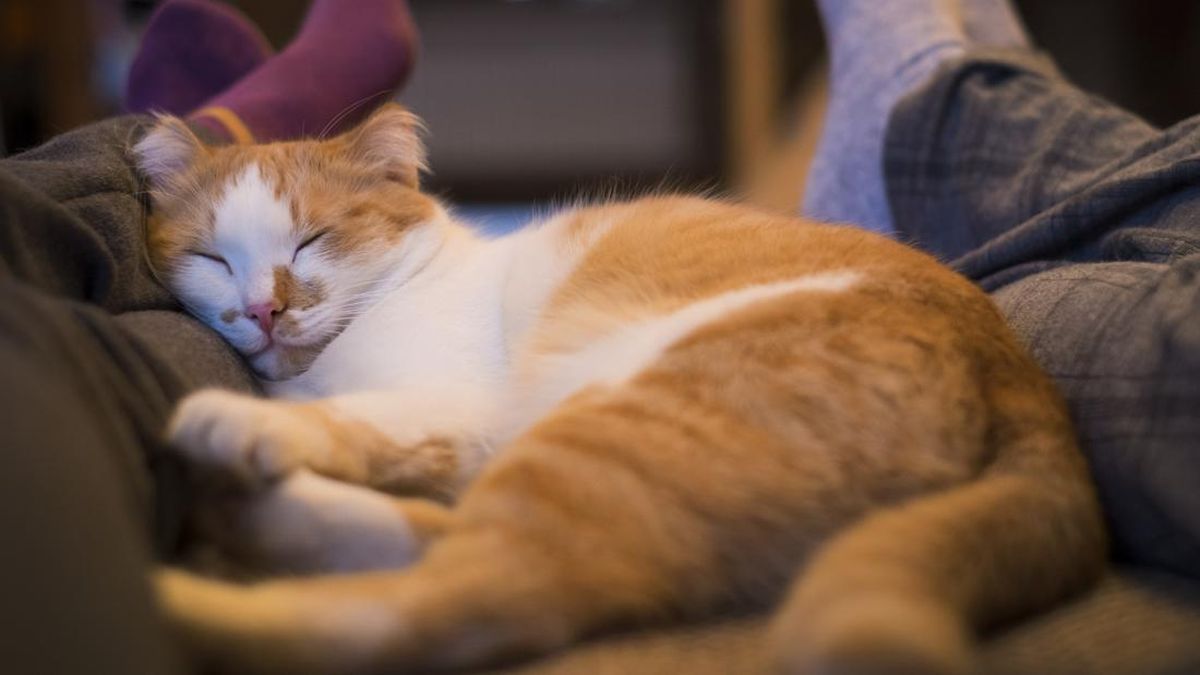
The development of this routine can be influenced by various factors. Perhaps the initial placement of the cat on the bed led to this preference, or maybe it was a response to a particular warmth or scent that the cat found appealing. Regardless of the origin, once established, this routine becomes an integral part of the cat-owner dynamic. It’s a silent affirmation of the bond, a daily ritual that strengthens the emotional connection between human and feline.
Furthermore, this routine can also extend to a broader sense of territoriality. While not as overtly possessive as some other animals, cats do establish and defend their territories. By regularly sleeping at your feet, they are, in a subtle way, marking you and your immediate space as part of their domain. This is a gentle assertion of ownership, a sign that they consider you and your sleeping space as belonging to their established territory.
The Subtle Art of Claiming Territory and Affection
Cats are inherently territorial creatures, and their sleeping habits are intrinsically linked to this aspect of their nature. While their territorial claims in a domestic setting might not involve the same aggressive displays seen in the wild, they are still present and expressed in nuanced ways. Sleeping at your feet is a subtle yet powerful method of reinforcing their claim over their human and the immediate environment.
Through their presence and scent, cats mark their territory. When a cat sleeps at your feet, they are not only claiming that space but also associating their scent with yours. This creates a unique olfactory signature that signifies their bond with you and their presence within your personal space. This can also be a way for them to signal to other pets or even to themselves that this human is "theirs."
It’s important to note that while sleeping at your feet often signifies comfort and trust, it doesn’t mean a cat will exclusively sleep there. Cats are adaptable and may explore various sleeping locations based on their immediate needs for warmth, security, or even just a change of scenery. They might curl up in a sunbeam during the day, find a quiet corner for a nap, or even seek out a new, intriguing spot. However, the consistent return to your feet as a preferred resting place speaks volumes about the depth of their comfort and security with you.
Beyond the Feet: Understanding Feline Sleeping Dynamics
While sleeping at our feet is a common and endearing behavior, it’s part of a broader spectrum of feline sleeping preferences. Cats can sleep in a multitude of positions and locations, each offering insights into their current state of mind and environmental perceptions. Understanding these variations can further enrich our appreciation for our feline companions.
For instance, a cat that sleeps in a curled-up ball, tucking its paws and tail around its body, is typically seeking to conserve heat and protect its vulnerable organs. This is a common posture when the environment is cooler or when the cat feels slightly insecure. Conversely, a cat that sleeps stretched out on its back, exposing its belly, is demonstrating a profound level of trust and relaxation. The belly is the most vulnerable part of a cat’s anatomy, and exposing it signifies that the cat feels absolutely safe and comfortable in its surroundings.
Similarly, a cat that kneads its paws while sleeping, often referred to as "making biscuits," is exhibiting a behavior rooted in their kittenhood. Kittens knead their mother’s teats to stimulate milk production. This behavior, carried into adulthood, is often a sign of deep contentment and a return to a state of primal comfort and security.
The choice of sleeping location can also be influenced by environmental factors such as the presence of other pets, the level of household activity, and the availability of quiet, undisturbed spaces. A cat that is feeling overwhelmed or stressed might seek out secluded spots like closets, under beds, or even inside cardboard boxes, which offer a sense of enclosure and security.
The Significance of Feline Sleep in Human-Animal Bond
The seemingly simple act of a cat choosing to sleep at your feet is more than just a cute habit; it’s a powerful indicator of the human-animal bond. It reflects a deep level of trust, comfort, and mutual understanding that has developed between you and your feline companion. In a world where our lives are often filled with complexities and stresses, these quiet moments of connection with our pets offer a profound sense of peace and unconditional affection.
As we continue to learn more about feline behavior and cognition, the mysteries surrounding their choices, like their preference for our feet as sleeping spots, become clearer. These behaviors are not random; they are carefully orchestrated responses to their environment, their instincts, and their deeply ingrained social needs. By observing and understanding these subtle cues, we can not only provide better care for our feline friends but also deepen the already remarkable connection we share with these enigmatic and beloved creatures. The next time your cat settles down at the foot of your bed, take a moment to appreciate the silent language of trust and comfort being spoken, a testament to the enduring and beautiful bond between humans and cats.