Nila Kartika Wati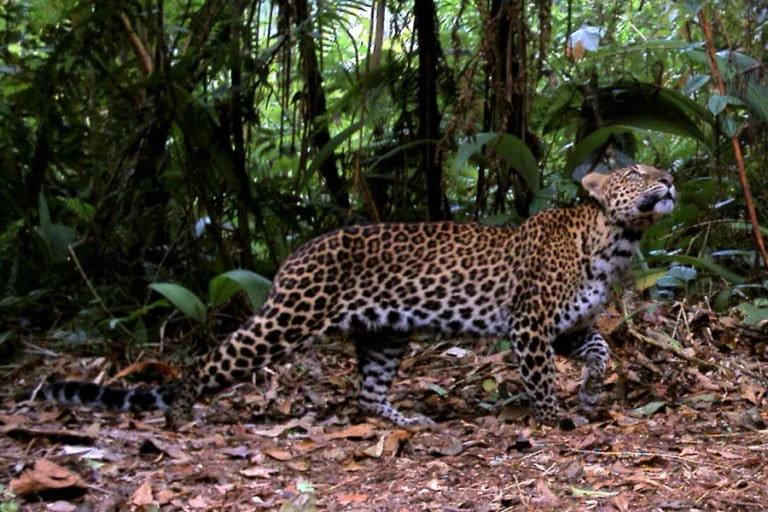
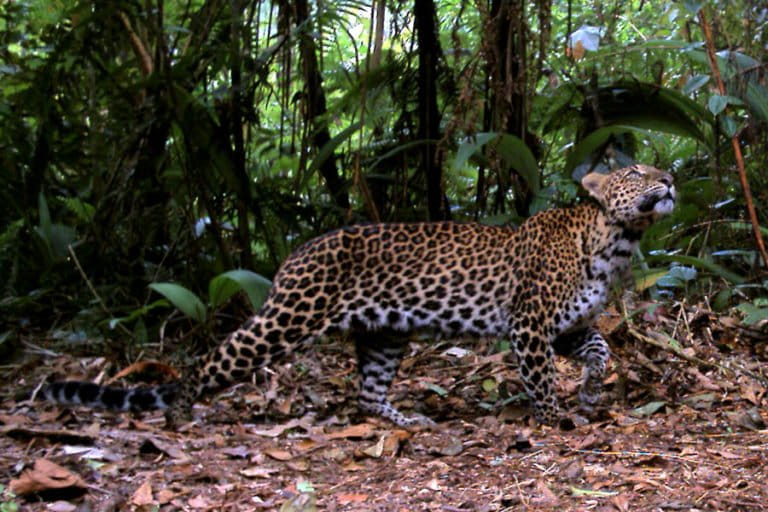
The island of Java, a landmass teeming with over 150 million people and serving as the economic heartbeat of Indonesia, has long since bid farewell to one of its most iconic residents: the Javan tiger. With the tiger’s extinction confirmed in the late 20th century, the mantle of the island’s apex predator has fallen solely upon the shoulders of the Javan leopard (Panthera pardus melas). This elusive big cat, often referred to as the "silent guardian" of the Javanese wilderness, represents the final line of defense for the island’s terrestrial biodiversity. However, recent scientific assessments and ecological observations suggest that while this predator possesses an extraordinary ability to adapt, it is currently being pushed to its absolute physiological and environmental limits.
The Javan leopard is not merely another variety of leopard; it is a distinct biological treasure. It is recognized as one of the nine subspecies of leopards globally and is endemic exclusively to the island of Java. While a casual observer might mistake it for its cousins in Africa or the Indian subcontinent, genetic analysis reveals a deep evolutionary divergence. Scientists believe that the Javan leopard has been isolated on the island for hundreds of thousands of years, evolving unique traits that allow it to thrive in the dense, humid tropical rainforests that characterize the region.
One of the most striking features of this subspecies is the prevalence of melanism, which gives rise to the legendary "macan kumbang" or black panther. For generations, local communities often viewed the black panther as a separate species or even a mystical entity. Modern biology has demystified this, explaining that the black coat is the result of a genetic mutation. Interestingly, the frequency of melanistic individuals is significantly higher in Java than in many other leopard populations worldwide. Researchers hypothesize that this is an evolutionary adaptation; the dark coat provides superior camouflage in the deep shadows of Java’s thick tropical canopy, where light penetrates sparingly. Even on these melanistic individuals, the characteristic "rosettes" or spots of the leopard remain visible under specific lighting conditions, serving as a reminder of their true lineage.
The Generalist Strategy: A Survivalist’s Toolkit
The survival of the Javan leopard in an environment as crowded as Java is largely attributed to its status as an opportunistic generalist. Unlike the Javan tiger, which required vast territories and large ungulate prey to survive, the leopard is far less fastidious. Its diet is remarkably diverse, ranging from small rodents and birds to primates like the Javan lutung and long-tailed macaques. In more remote areas, they continue to hunt barking deer (muntjac) and wild boar.
This dietary flexibility has allowed the leopard to persist in fragmented landscapes where other large predators would have perished. When primary forests are degraded, the Javan leopard often retreats to the "edges"—the transitional zones between forests and agricultural land. However, this adaptability is a double-edged sword. As their natural prey base diminishes due to poaching and habitat loss, leopards are increasingly forced to look toward human settlements for sustenance, often targeting goats, poultry, or dogs. This proximity to humans is the primary driver of the escalating human-wildlife conflict that defines modern conservation efforts in West, Central, and East Java.
The Geography of Decline: Habitat Fragmentation
Despite its resilience, the Javan leopard faces an existential threat that no amount of biological adaptation can overcome: the systematic disappearance of its home. Hendra Gunawan, a Senior Researcher at the Research Center for Ecology and Ethnobiology under the National Research and Innovation Agency (BRIN), has highlighted that the primary driver of the population’s decline is the fragmentation of the landscape.
Historically, Java was covered in a continuous belt of tropical forest. Today, less than 10% of the island’s original forest cover remains. What is left is not a single cohesive ecosystem but a series of "habitat islands" or isolated green pockets. These pockets are typically restricted to the rugged terrain of volcanic mountain ranges, such as the Halimun-Salak, Gede Pangrango, and Meru Betiri massifs. These high-altitude refuges are separated from one another by vast stretches of "human seas"—expansions of asphalt roads, sprawling urban centers, industrial zones, and monoculture plantations.
The isolation of these populations creates a biological ticking clock. When a leopard population is trapped in a small forest patch, the "island effect" takes hold. Young males, which naturally disperse to find new territories and mates, find themselves blocked by human infrastructure. This lack of connectivity leads to inbreeding, a process where the genetic pool becomes increasingly shallow.
The Genetic Toll of Isolation
The implications of genetic isolation are profound and often invisible until it is too late. According to ecological data, small, isolated populations are highly susceptible to "inbreeding depression." This phenomenon results in reduced fertility, higher infant mortality rates, and a weakened immune system. In a healthy, connected ecosystem, a leopard from the western part of a mountain range might eventually mate with one from the eastern side, ensuring a flow of diverse genes.
In the current Javanese landscape, a leopard in a small forest patch in Central Java may never encounter an individual from outside its immediate kin group. Over several generations, this lack of genetic "new blood" makes the entire sub-population vulnerable to a single catastrophic event, such as a disease outbreak. If a virus were to enter an inbred population, the lack of genetic variance means that if one individual is susceptible, they likely all are, potentially leading to local extinction in a matter of months.
Ecological Consequences of the Leopard’s Absence
The potential loss of the Javan leopard is not merely a tragedy of natural heritage; it is a looming ecological disaster. As the apex predator, the leopard performs "ecosystem services" that are vital for the balance of Java’s remaining wild spaces. By preying on herbivores and primates, they prevent overgrazing and overpopulation.
When a top predator is removed, a "trophic cascade" occurs. For instance, without leopards to check their numbers, populations of wild boars and macaques can explode. These animals then venture more frequently into human farms, destroying crops and causing significant economic damage to rural farmers. Furthermore, leopards naturally cull the weak and the sick from prey populations, ensuring that only the healthiest individuals survive to reproduce. In essence, the leopard acts as the "sanitary police" of the forest. Without them, the risk of zoonotic diseases spreading among wildlife and potentially jumping to domestic animals or humans increases significantly.
Human-Wildlife Conflict and the Socio-Economic Context
The reality of leopard conservation in Java is inextricably linked to the socio-economic conditions of the people living on the forest fringes. In many cases, a leopard "attacking" livestock is not an act of aggression but a desperate attempt at survival by an animal that has been squeezed out of its territory.
Researchers have identified specific patterns in these conflicts. Often, the individuals involved are "transient" males—young leopards that have been forced out of prime habitat by older, more dominant males and have nowhere to go because the surrounding forest is gone. In other instances, nursing mothers may take the risk of raiding a village to provide easy calories for their cubs.
Addressing these conflicts requires a nuanced approach. Simply relocating a "problem" leopard often fails, as the animal may try to return to its home or may not survive in a new, unfamiliar territory already occupied by other leopards. Conservationists are now advocating for better livestock management, such as the construction of "leopard-proof" enclosures, and the implementation of compensation schemes for farmers to prevent retaliatory killings.
A Chronology of Conservation and the Path Forward
The history of Javan leopard conservation has seen a shift from passive protection to active intervention. In the 1970s and 80s, the focus was largely on the Javan tiger, but as that species faded, attention turned to the leopard. In 2008, the IUCN officially classified the Javan leopard as Critically Endangered, a wake-up call for the Indonesian government and international NGOs.
Today, the strategy is shifting toward the concept of "landscape-scale conservation." Experts agree that protecting isolated national parks is no longer enough. The future of the Javan leopard depends on "habitat corridors"—strips of forest or managed greenery that allow animals to move safely between larger forest patches. This requires a massive coordination effort between the Ministry of Environment and Forestry, local governments, private plantation owners, and civil society.
Furthermore, the use of technology has revolutionized our understanding of the species. Camera trap surveys in National Parks like Gunung Halimun Salak have provided the first reliable population estimates, suggesting that while numbers are low—likely fewer than 500-600 individuals remaining in the wild—the species is still breeding.
Conclusion: The Moral and Ecological Mandate
The Javan leopard stands at a crossroads. It is a symbol of the incredible resilience of nature, having survived on an island that has undergone one of the most rapid transformations in human history. Yet, it is also a symbol of our precarious relationship with the environment.
The loss of the Javan leopard would mean more than just the disappearance of a beautiful animal; it would represent the final collapse of the natural predatory hierarchy on Java. To prevent the leopard from following the Javan tiger into the annals of extinction, Indonesia must prioritize the restoration of ecological connectivity. The "silent penguasa" (ruler) of the Javanese forest still stalks the shadows of the volcanic peaks, but without a concerted effort to bridge the gaps in its fragmented home, those shadows may soon grow empty. The survival of the Javan leopard is ultimately a test of whether a modern, densely populated society can coexist with the wild spirits of its past.