
 Tyo Susilo
Artificial intelligence has traditionally functioned as a cloud-based utility, requiring robust internet connections to interface with remote data centers managed by tech giants. Services such as OpenAI’s ChatGPT, Google Gemini, and Anthropic’s Claude have conditioned everyday users to rely on server-side processing for tasks ranging from casual conversation to advanced document summarization. However, a significant paradigm shift is underway across the technology sector, steering consumer electronics and enterprise computing toward "local AI"—the practice of deploying and executing large language models (LLMs) and generative algorithms directly on local hardware like personal computers, laptops, and dedicated edge servers.
The distinction between local AI and domestic software developed by local companies within a specific geographic region is an important technical clarification. While the latter refers to regionally developed technology, local AI specifically denotes computational architecture. In this context, "local" means the AI model resides and executes entirely on the end-user’s physical device, operating independently of external cloud infrastructure once the initial software package and model weights have been downloaded.
Defining Local AI and the Architectural Shift
Local AI refers to artificial intelligence models that are installed and executed locally on a consumer’s device or a localized enterprise server rather than relying on remote cloud servers. When an individual uses a local AI deployment to answer queries, write code, or analyze documents, the computational heavy lifting is performed by the host machine’s internal resources.

The primary technological enabler of this model is quantization and parameter reduction, which allows sophisticated neural networks to be scaled down so they can fit within consumer-grade hardware constraints without sacrificing substantial accuracy. Unlike cloud-based ecosystems where every prompt travels across the internet to a distant data center, local AI architectures execute inference processes directly on the user’s CPU, GPU, or Neural Processing Unit (NPU).
A defining characteristic of local AI is its offline capability. Provided that the model weights, application runtime, and necessary dependencies have already been downloaded to the storage drive, the system can function entirely without an active internet connection. Nevertheless, users must acknowledge that maintaining a network connection remains necessary for initial model acquisition, software updates, and accessing real-time online search augmentation features.
Comparing Local AI and Cloud AI Infrastructure
The fundamental difference between local AI and cloud AI lies in the locus of computation. Cloud AI processes user inputs on massive server farms equipped with clusters of enterprise accelerators, such as NVIDIA H100 or Blackwell GPUs, maintained by cloud service providers. Conversely, local AI shifts this computational burden onto the end-user’s hardware.
This architectural variance carries profound implications for data privacy and security. Local AI offers unprecedented control over sensitive information. Because the model operates entirely within the user’s local ecosystem, confidential documents, proprietary source code, and personal communications do not need to be uploaded to third-party servers. This makes local deployment highly attractive for legal, medical, and financial sectors bound by strict regulatory compliance frameworks regarding data sovereignty.

Despite these privacy advantages, hardware dependency remains the most significant barrier to mass adoption. Local AI models demand substantial computational resources—specifically high-capacity RAM, dedicated Video RAM (VRAM), and fast NVMe storage.
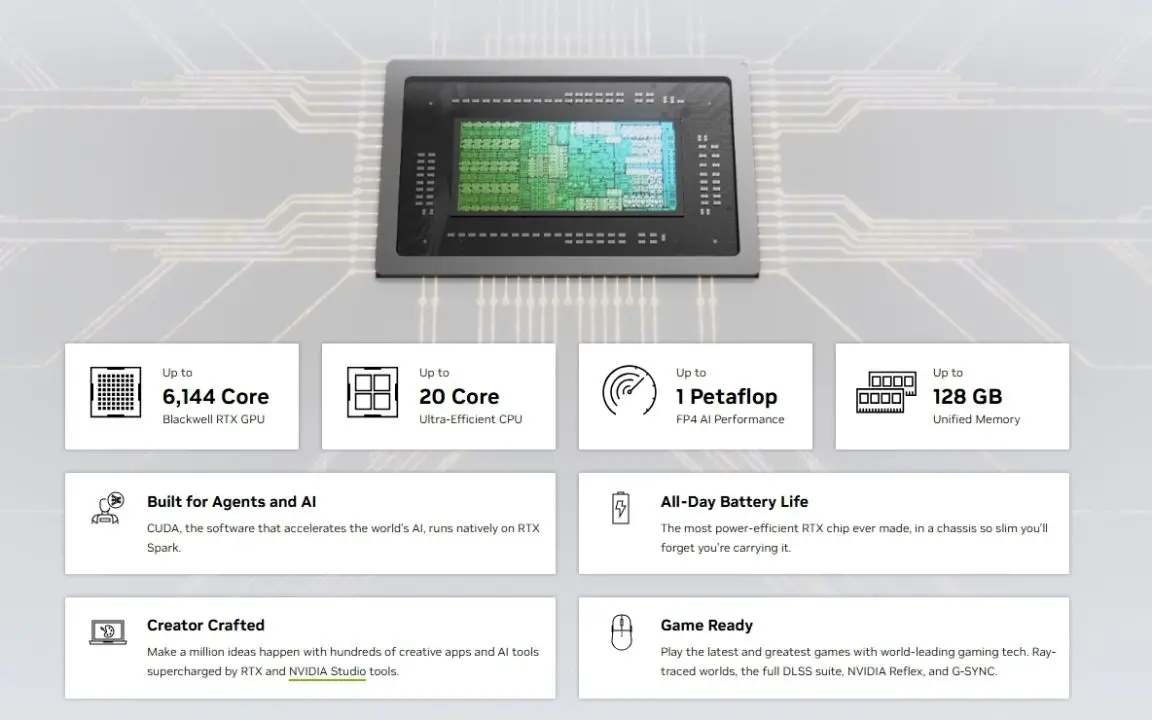
To contextualize the hardware requirements for modern on-device workloads, high-end consumer and workstation solutions demonstrate the sheer scale of compute needed for advanced local inference. Systems incorporating advanced architectures—such as multi-core CPUs paired with dedicated graphics processors featuring thousands of CUDA cores, high-bandwidth unified memory scaling up to 128 GB, and terabytes of rapid storage—deliver elite performance metrics. For instance, advanced local hardware configurations can achieve processing thresholds measured in petaflops of low-precision floating-point performance (such as FP4), enabling users to run sophisticated models scaling up to 120 billion parameters with expansive context windows directly on their desktop systems.
In contrast, cloud-hosted AI abstracts these physical limitations away from the consumer. Users of cloud services are freed from worrying about hardware specifications, thermal management, or local power consumption. They interface with models boasting hundreds of billions or trillions of parameters simply by submitting a web or API request, receiving instantaneous outputs generated by industrial-grade server infrastructure.
Advantages and Disadvantages of On-Device Intelligence
The transition toward edge computing and local AI brings a distinct matrix of benefits and drawbacks for both consumers and enterprise environments.

Key Advantages:
- Enhanced Data Privacy and Security: By processing data on-device, organizations eliminate the risk of data interception during transit and prevent third-party cloud providers from using proprietary inputs to train future public models.
- Complete Offline Functionality: Users can leverage advanced generative capabilities in remote locations, during travel, or in secure environments where internet connectivity is restricted or prohibited.
- Zero Latency and Predictable Access: Local execution removes network latency issues and protects users from cloud service outages, rate limits, or sudden subscription price hikes imposed by third-party vendors.
- Cost Efficiency Over Time: While initial hardware investments are high, heavy power users avoid ongoing recurring monthly subscription fees associated with premium cloud AI tiers.
Key Disadvantages:
- High Hardware Thresholds: Running competent local models requires expensive components, including GPUs with large VRAM buffers and fast memory architectures, making it less accessible for budget-conscious consumers.
- Hardware Thermal and Power Constraints: Intensive AI inference heavily stresses laptop and desktop components, leading to increased power consumption, fan noise, and elevated thermal output.
- Model Scalability Limitations: Local devices are inherently constrained by physical memory sizes, meaning they cannot run frontier-class models containing trillions of parameters that require vast server clusters.
- Maintenance Responsibility: Users must manage software updates, dependency configurations, and model file management manually, requiring a higher degree of technical literacy.
Prominent Tools and Software Ecosystems for Local AI
The democratization of local AI has been accelerated by the rapid development of accessible software frameworks and open-source model repositories. Developers and enthusiasts now have access to robust toolchains designed to simplify local deployment.
One of the most prominent platforms in this space is Ollama, a lightweight, extensible framework that allows users to easily download, configure, and execute a wide variety of open-source large language models—such as Meta’s Llama series, Mistral, and Gemma—directly via the command line or compatible graphical user interfaces on Windows, macOS, and Linux.
Beyond text-based models, local deployment has also revolutionized creative workflows. Software suites capable of running image generation pipelines like Stable Diffusion allow digital artists to render high-resolution graphics locally using their own GPU hardware, ensuring total ownership over generated assets without cloud filtering restrictions or usage fees.
Industry Implications and Future Outlook
The rapid evolution of local AI reflects a broader industry movement toward edge computing, where processing power is increasingly distributed to client devices rather than centralized in massive cloud data centers. Semiconductor manufacturers are actively responding to this demand by integrating dedicated Neural Processing Units (NPUs) into nearly all modern consumer CPUs and system-on-chips (SoCs), signaling that on-device AI will soon become a standard feature of personal computing rather than a niche hobby for tech enthusiasts.

Ultimately, the choice between local AI and cloud AI is not absolute; rather, it represents a continuum determined by individual use cases, budgetary constraints, and privacy requirements. While cloud services will continue to dominate heavy enterprise workloads and massive multi-trillion parameter research models, local AI provides an indispensable solution for users demanding absolute data sovereignty, offline reliability, and immediate, unthrottled computational access.