Azin Asro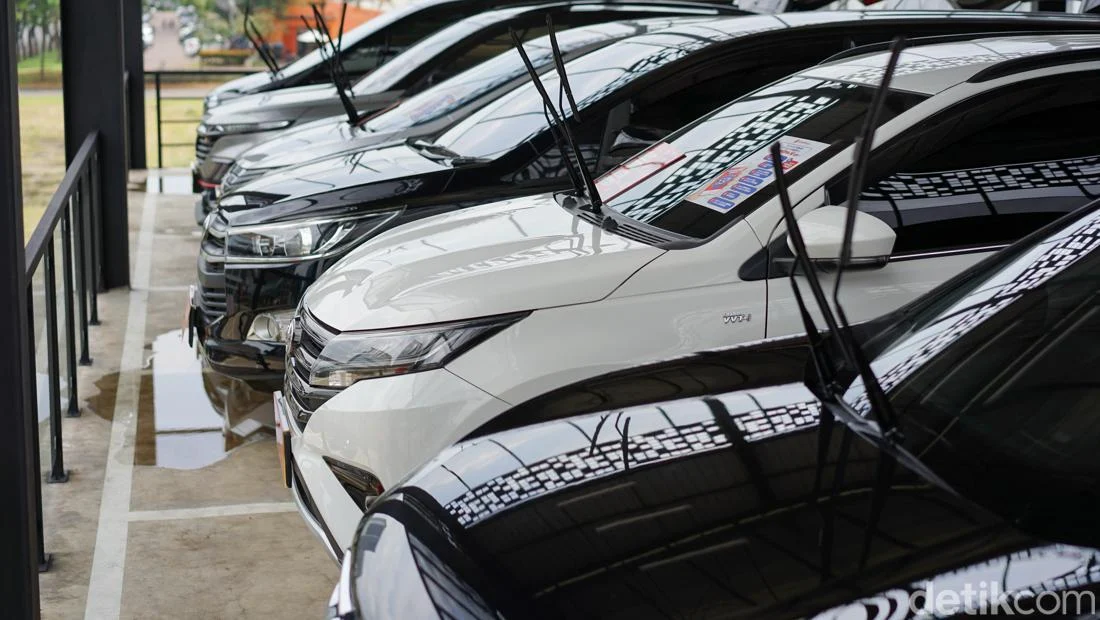
The Indonesian automotive landscape is undergoing a significant transformation as economic pressures and shifting consumer priorities drive a surge in the used car market, a trend highlighted by recent data from the Institute for Economic and Social Research at the University of Indonesia’s Faculty of Economics and Business (LPEM FEB UI). According to the study, the market share for used cars has climbed to 67.5 percent in 2024, effectively eclipsing the new car market, which now holds a 32.5 percent share. This pivot is largely attributed to the widening gap between rising new vehicle prices and stagnant household income growth, coupled with a persistent inflationary environment that has made affordability the primary concern for the Indonesian middle class.
As new car sales experience a period of stagnation—reflected in data from the Association of Indonesian Automotive Industries (Gaikindo)—the secondary market has become the go-to solution for citizens seeking mobility without the heavy financial burden of a brand-new vehicle. However, this growth in demand is met with a long-standing challenge: consumer anxiety regarding the physical and mechanical integrity of used vehicles. To address this, industry players like Caroline.id, a subsidiary of PT Autopedia Sukses Lestari Tbk (ASLC), are introducing comprehensive warranty schemes and high-profile trust-based marketing campaigns to bridge the confidence gap in a market traditionally plagued by information asymmetry.
Economic Drivers and the Affordability Crisis
The shift toward used vehicles is not merely a matter of preference but a reaction to harsh economic realities. In recent years, the price of new cars in Indonesia has risen at a rate that far outpaces the average increase in consumer wages. This phenomenon is exacerbated by global supply chain fluctuations, the rising cost of raw materials, and the volatility of the Rupiah against major currencies, which affects the cost of imported components.
The LPEM FEB UI study underscores that the "affordability gap" is the single most significant factor driving the 67.5 percent market share for used cars. For many Indonesian families, a vehicle is a necessity for economic productivity, yet the barrier to entry for a new model—often exceeding 200 million IDR for basic MPVs—is becoming insurmountable. Consequently, the used car market has transformed from a secondary option into the primary marketplace for the majority of the population.
Future projections suggest this trend is likely to persist. Survey data indicates that 59 percent of current car owners who intend to purchase an additional vehicle plan to buy used, compared to only 41 percent who are looking at new models. This indicates a structural change in the automotive ecosystem where the value proposition of a used car—lower depreciation and lower initial capital outlay—outweighs the prestige of a new license plate.
The "Lemon Market" Dilemma and Consumer Anxiety
Despite the booming demand, the used car industry in Indonesia has historically struggled with a lack of transparency. In economic terms, this is often referred to as the "Market for Lemons," where the seller has more information about the vehicle’s defects than the buyer. Indonesian consumers frequently express "was-was" (anxiety) regarding potential hidden issues such as previous flood damage, major accident history, or manipulated odometers.
The fear of "buying a problem" often deters potential buyers or forces them to rely on expensive third-party inspectors. If a buyer inadvertently purchases a vehicle with mechanical failures, the perceived savings of buying used are quickly erased by repair costs. This friction in the marketplace has created a demand for institutionalized trust—corporate entities that can provide the same level of assurance for a used car as a manufacturer provides for a new one.
Strategic Response from PT Autopedia Sukses Lestari Tbk
In response to these market dynamics, PT Autopedia Sukses Lestari Tbk, through its retail arm Caroline.id, has launched a campaign centered on the concept of "Pasti" (Certainty). Jany Candra, CEO of PT Autopedia Sukses Lestari Tbk, noted that the core of the consumer’s hesitation lies in the discrepancy between a vehicle’s description and its actual condition. The company aims to eliminate this uncertainty by standardizing the inspection and warranty process.
"For a long time, buying or selling a used car has always caused anxiety. Is the condition truly as described? Is the price fair? Is there a guarantee if problems arise later? Through this campaign, we answer all those questions with one word: Certainty," Candra stated.
The company’s strategy involves a multi-layered protection plan known as the 7G+ Warranty. This one-year guarantee covers critical components that are typically the source of buyer concern: the engine, transmission, air conditioning, braking system, electrical components, drive system, and steering. By providing a formal warranty on these parts, the platform seeks to mimic the after-sales experience of the new car market.
Chronology of Market Evolution and Platform Integration
The evolution of the Indonesian used car market can be traced through several key phases over the last decade. Initially, the market was dominated by fragmented, independent dealers and individual-to-individual transactions with little to no consumer protection.
Between 2015 and 2020, the rise of digital classifieds began to aggregate supply, but quality control remained elusive. The post-pandemic era (2021–2024) saw the entry of "ecosystem" players like PT Autopedia Sukses Lestari Tbk, which integrated wholesale auctions (through JBA Indonesia) with retail outlets (Caroline.id). This vertical integration allows the company to control the quality of inventory from the moment it leaves the previous owner until it reaches the new consumer.
The introduction of the "5-Day Buyback Guarantee" represents the latest stage in this chronology. This policy allows consumers to return the vehicle and receive a full refund if the car’s actual condition does not match the platform’s description. This move is designed to shift the risk from the consumer back to the seller, a radical departure from the traditional "sold as seen" nature of the used car trade.
Data-Driven Pricing and Technological Integration
To further enhance transparency, the industry is moving toward automated valuation models. Caroline.id and similar platforms have implemented systems where users can input vehicle data to receive an instant price estimate based on real-time market data. This prevents the "price gouging" often associated with traditional dealerships and ensures that both buyers and sellers are operating on a level playing field.
By leveraging big data from thousands of auction transactions and retail sales, these platforms can provide a "fair market value" that reflects current demand, regional variations, and the specific condition of the vehicle. This data-driven approach reduces the time spent on negotiations and builds a foundation of trust through objective metrics.
The Role of Influencer Trust: The Appointment of Denny Sumargo
In a strategic move to personify the value of "trust," Caroline.id has appointed Denny Sumargo, a prominent public figure, actor, and podcaster, as its Brand Ambassador. In the Indonesian context, where social proof and personal reputation carry significant weight, Sumargo’s image as a "straight-talker" is being utilized to validate the platform’s claims.
Sumargo, known for his "Curhat Bang" podcast which often tackles controversial and sensitive social issues with a focus on accountability, represents the bridge between the corporate entity and the skeptical consumer. "I cannot deal with gray areas," Sumargo stated during the announcement. "On my podcast, people trust me because I am accountable. It’s the same with Caroline.id—there is a one-year warranty, a buyback guarantee; it’s all real and provable."
The choice of a brand ambassador whose personal brand is built on transparency reflects a sophisticated understanding of the Indonesian consumer psyche. In a high-value transaction like a car purchase, consumers look for institutional guarantees backed by relatable, trustworthy figures.
Broader Economic Impact and Industry Implications
The growth of the used car market has far-reaching implications for the Indonesian economy. Firstly, it supports the financial services sector. As new car sales slow down, multi-finance companies (leasing providers) are increasingly pivoting their portfolios toward used car financing. This shift ensures the continued flow of credit within the economy, even as the primary manufacturing sector faces headwinds.
Secondly, the formalization of the used car market contributes to the "circular economy." By extending the life cycle of vehicles through better maintenance and certified resales, the industry reduces the environmental footprint associated with new car production.
However, the rise of the used car market also poses a challenge to national automotive manufacturing targets. If the majority of the population opts for secondary vehicles, manufacturers may need to recalibrate their production volumes or focus more on export markets. This could also influence government policy regarding vehicle taxation and incentives for Electric Vehicles (EVs). Currently, the used EV market is in its infancy, but as the first generation of new EVs begins to age, the same demand for transparency and warranties will likely define the success of the green energy transition in the automotive sector.
Conclusion: Toward a Transparent Future
The 2024 data from LPEM FEB UI serves as a wake-up call for the Indonesian automotive industry. The dominance of the used car market is a clear signal that affordability and value-for-money are the primary drivers of consumer behavior in the current economic climate.
As platforms like Caroline.id continue to institutionalize trust through warranties, buyback guarantees, and celebrity endorsements, the traditional barriers to buying used cars are being dismantled. The shift from a "was-was" (anxious) culture to a "Pasti" (certain) culture is not just a marketing slogan; it is a necessary evolution for a market that now commands over two-thirds of the nation’s automotive transactions. The future of Indonesian mobility, it seems, will be defined not by the smell of a new car, but by the reliability and transparency of a pre-owned one.