Tata Titiana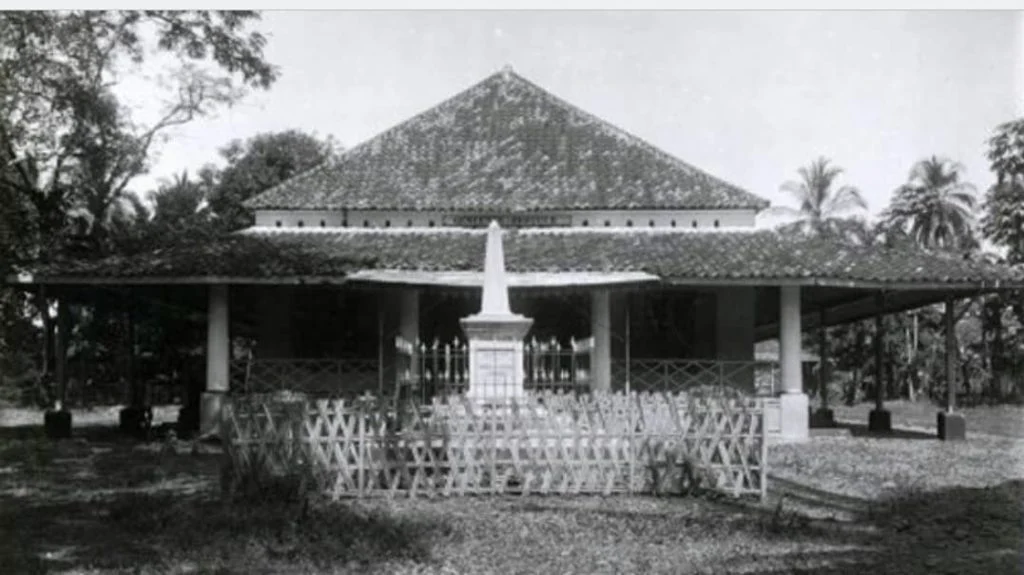
Depok, a municipality in West Java, Indonesia, boasts a history far more complex and intriguing than its current administrative status suggests. While officially established as a city on April 27, 1999, having previously been a sub-district within Bogor Regency, Depok’s origins trace back to the late 17th century when it was acquired by a wealthy Dutch merchant. This acquisition marked the beginning of a unique period where Depok functioned as a private estate, eventually evolving into an independent entity with its own form of governance, complete with a democratically elected president. This little-known chapter of Depok’s past reveals a fascinating microcosm of colonial land ownership, the dynamics of power, and the aspirations for self-determination among a population freed from bondage.
The story begins with Cornelis Chastelein, a prosperous Dutch merchant who, in the late 17th century, purchased a vast tract of land in Depok, spanning 12.44 square kilometers, for the considerable sum of 2.4 million guilders. Crucially, this land was acquired as a particuliere land or private estate, placing it outside the direct administrative control of the Dutch East Indies government. By the 18th century, Depok had developed into an administrative region with its own civil government, known as gemeente bestuur. Chastelein, as the owner and founder, effectively became its first ruler.
At the time of Chastelein’s purchase, the Depok area was largely undeveloped wilderness. With the labor of his enslaved people, who hailed from various ethnic backgrounds across the archipelago, Chastelein undertook the monumental task of clearing the dense forests to cultivate the land. The scope of his private estate was extensive, encompassing not only the present-day Depok region but also extending to Pasar Minggu in South Jakarta and Gambir in Central Jakarta. The initial inhabitants of this burgeoning estate were Chastelein’s enslaved laborers.
The Genesis of a Private Nation
Cornelis Chastelein was a devout Catholic and demonstrated remarkable generosity towards his enslaved population. In his will, dated June 28, 1714, he bequeathed his land, houses, livestock, and farming equipment to his enslaved people. Furthermore, he decreed their emancipation upon his death. To preempt any potential disputes over land and resources after his passing, Chastelein appointed Jarong van Bali to lead and manage the newly freed community.

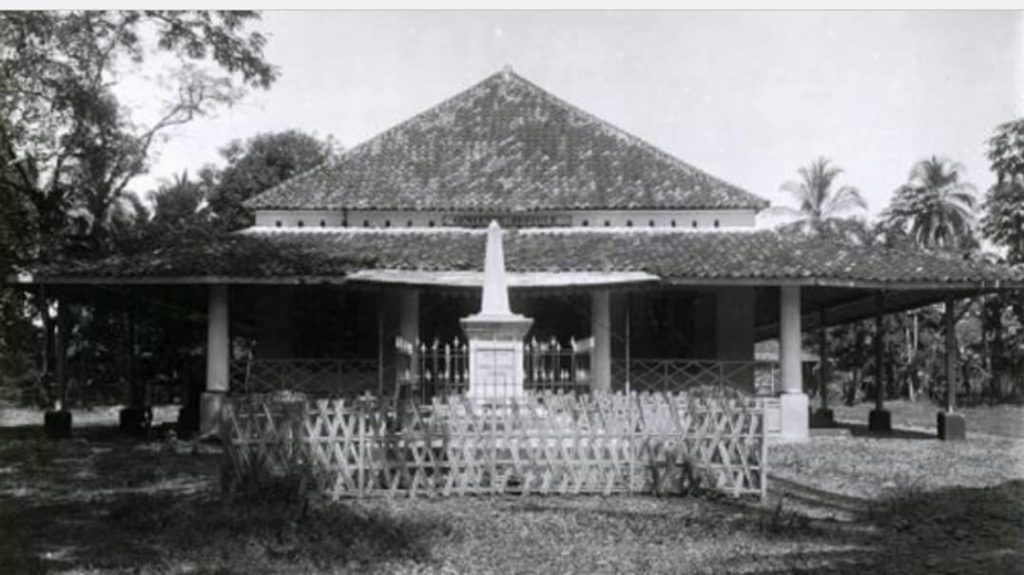
However, the freed slaves harbored concerns about future power struggles upon Jarong van Bali’s eventual departure. To ensure a stable and equitable system of governance, they collectively agreed to implement a democratic process for selecting their leader, who would be designated as president, with elections held every three years. This system, conceptualized by a Batavia-based lawyer, was formally established and implemented in 1913, marking the birth of the Het Gemeente Bestuur van Het Particuliere Land Depok (The Municipal Government of the Private Land of Depok). The administrative center of this unique government was located at Kilometer 0, symbolized by the Depok Monument, with the former government building, now serving as Harapan Hospital, standing nearby. The presidential term was set at three years.
The first president of Depok was Gerrit Jonathans, who assumed office in 1913. He was succeeded by three other presidents who led the community during its independent phase: Martinus Laurens (1921), Leonardus Leander (1930), and Johannes Matjis Jonathans (1952). Despite the establishment of a formal governmental structure and a succession of leaders, detailed records from the administrations of these presidents are scarce, making it challenging to fully reconstruct the specifics of their governance and the socio-political landscape of Depok during this period.
A Timeline of Depok’s Independent Governance
- Late 17th Century: Cornelis Chastelein acquires the Depok estate as a private landholding.
- 18th Century: Depok develops as an administrative region with its own civil government under Chastelein.
- June 28, 1714: Cornelis Chastelein’s will is enacted, granting land, property, and freedom to his enslaved people. Jarong van Bali is appointed to lead the community.
- Early 20th Century (pre-1913): The community establishes a democratic system for electing a president.
- 1913: The formal government, Het Gemeente Bestuur van Het Particuliere Land Depok, is established. Gerrit Jonathans becomes the first president.
- 1921: Martinus Laurens is elected president.
- 1930: Leonardus Leander assumes the presidency.
- 1952: Johannes Matjis Jonathans, the last president, oversees the handover of the Depok estate to the Indonesian government.
From Private Estate to Part of the Nation
The legacy of Cornelis Chastelein’s will laid the foundation for a community that, while rooted in its colonial past, developed a distinct identity and governance structure. The descendants of Chastelein’s freed slaves formed the core of this unique society. The system of electing a president every three years, with a secretary assisting the president in administrative duties, was a remarkable instance of self-governance, particularly within the context of the Dutch colonial era. The absence of a vice-president meant that the president held significant executive authority, supported by their secretary.
The significant transfer of the particuliere land Depok to the Indonesian government occurred in 1952. This act was formalized by the last president, Matijs Jonathans, through a deed of transfer. While Depok as a municipality is a relatively young entity, established in 1999, its history as a distinct territorial and political unit stretches back over three centuries. This rich past means that Depok effectively enjoyed a form of self-governance and autonomy for a considerable period, predating the full independence of Indonesia.
Broader Implications and Historical Context
The story of Depok as a private nation offers a fascinating lens through which to examine the complexities of colonial land ownership and its long-term consequences. The particuliere land system allowed wealthy individuals to wield significant power and establish quasi-governmental structures, often independent of direct colonial administration. This created pockets of unique social and political organization within the larger colonial framework.
The establishment of a democratically elected presidency among the descendants of enslaved people is a particularly noteworthy aspect. It speaks to the agency and organizational capacity of a community seeking to manage its own affairs and ensure fair leadership. This experiment in self-governance, however limited in scope and duration, predates many broader movements for self-determination in the region.
The eventual handover of Depok to the Indonesian government in 1952 marked the end of its unique status as a private estate with its own president. This transition integrated Depok fully into the national administrative structure, leading to its eventual development into a municipality. The historical significance of Depok’s past as a self-governing entity is a crucial, albeit often overlooked, element of its identity. It underscores that the journey of Depok, like many regions in Indonesia, is woven with diverse threads of colonial history, emancipation, and the continuous pursuit of self-determination. The transformation from a private landholding with its own elected president to a modern Indonesian city highlights the dynamic and multifaceted evolution of Indonesian territories.
The existence of a formal governmental structure, even within a private estate, raises questions about its interactions with the broader Dutch colonial administration. While the land was private, it is plausible that certain overarching legal and administrative frameworks of the Dutch East Indies government still influenced the broader context in which Depok operated. The lack of detailed records for the presidencies makes it difficult to ascertain the extent of this influence or the specific policies enacted during their terms. However, the fact that a formal transfer of power to the Indonesian government was orchestrated by the last president suggests a recognition of national sovereignty and an eventual integration into the newly formed nation.
The story of Depok serves as a potent reminder that the history of administrative regions is rarely linear or simple. The evolution from a privately owned estate to a self-governing community and finally to an integral part of a modern nation-state offers valuable insights into the historical processes that have shaped contemporary Indonesia. The legacy of Cornelis Chastelein and the resilience of the community he freed continue to form a distinctive chapter in the rich tapestry of Indonesian history. The contrast between Depok’s current status as a bustling city and its past as a sovereign entity ruled by its own elected president underscores the profound historical transformations that have occurred in the region.