Eko Sulistyo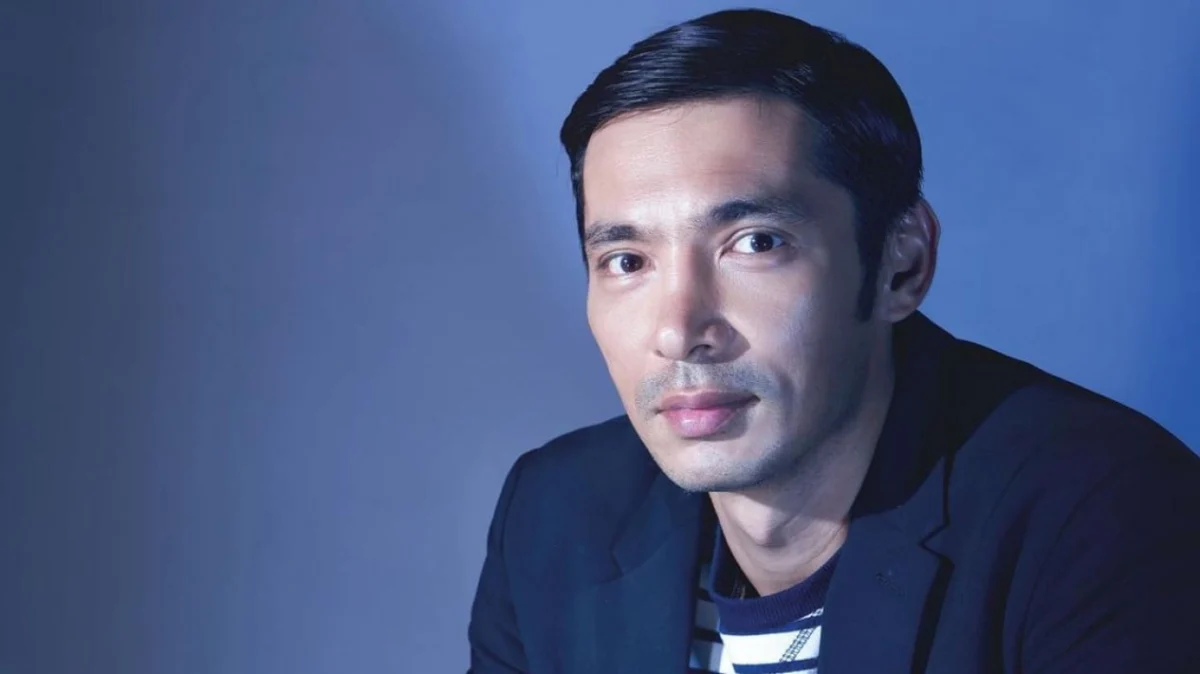
Abimana Aryasatya stands today as a cornerstone of the Indonesian film industry, a versatile actor whose presence in blockbuster hits like Gundala, The Night Comes for Us, and the Warkop DKI Reborn franchise has solidified his status as a leading man of his generation. However, the name Abimana Aryasatya, which has become synonymous with gritty realism and profound emotional depth on screen, was not the name he carried during his formative years or the initial stages of his professional career. For nearly three decades, the actor was known to his peers, the industry, and the public as Robertino, a name that carried the weight of a complex family history and a linguistic misunderstanding that would eventually prompt a total reinvention of his public and private identity.
The story of Abimana’s transition from Robertino to his current name is not merely a branding exercise for the sake of show business; rather, it is a narrative deeply rooted in the search for belonging, the reconciliation of religious identity, and the emotional closure required to move past a fractured childhood. Born on October 24, 1982, in Jakarta, the actor was the product of a cross-cultural union between an Indonesian mother and a Spanish father. It was this paternal connection that dictated his birth name, yet the absence of that very father figure would later make the name a source of psychological discomfort.
The Linguistic Misstep and Paternal Absence
The name Robertino was originally chosen by Abimana’s mother as a tribute to his father, Roberto Candelas Aguinaco. In her attempt to honor the Spanish heritage of her son’s father, she sought a name that signified "son of Roberto." Under the impression that the suffix "-ino" served this purpose in Spanish naming conventions, she settled on Robertino. However, linguistic experts and native speakers would later note that the correct diminutive or patronymic-style nickname in Spanish would have been "Robertito." This minor grammatical error resulted in a name that felt culturally ambiguous—often mistaken for Italian—and fundamentally disconnected from the heritage it was meant to represent.
Beyond the linguistic inaccuracy, the name Robertino served as a constant reminder of an absent parent. Abimana grew up in a household where his father was entirely out of the picture. Following the separation of his parents, his father returned to Europe, leaving Abimana to be raised by his mother in Jakarta. For many years, the actor possessed no information regarding his father’s whereabouts, nor did he have a relationship with him. In various interviews, Abimana has reflected on this period, stating that using his father’s name felt like wearing a garment that did not fit. He felt he was carrying the legacy of a man he did not know, which created a sense of internal dissonance that grew more pronounced as he reached adulthood.
Religious Identity and the Mualaf Experience
A significant turning point in the actor’s life occurred when he was 13 years old. Living in a neighborhood with a strong communal spirit and frequently spending time at the local mosque, Abimana decided to convert to Islam. Becoming a mualaf (convert) at such a young age was a personal choice driven by his environment and a search for a spiritual foundation that his early childhood lacked.
However, his birth name, Robertino, frequently created a disconnect between his faith and his public persona. In the Indonesian social context, names often carry heavy religious and ethnic connotations. With a name like Robertino, many people instinctively assumed he was of Christian or Catholic faith and of direct Italian or Latin descent. While Abimana never hid his faith, the constant need to explain his background or correct assumptions about his religion became a wearying task. He sought a name that would not only honor his journey as a Muslim but also provide him with a fresh start, unencumbered by the shadow of his father’s identity.
The Professional Transition: From Robertino to Abimana
In the late 1990s and early 2000s, Abimana began his career in the Indonesian entertainment industry using the name Robertino. He appeared in several popular sinetron (soap operas), such as Lupus Milenia, where he played the character Nuno. During this era, he was often cast in roles that capitalized on his "indo" (mixed-race) features, which were highly sought after in the television industry at the time. Despite his growing success, the actor felt increasingly alienated from his professional moniker.
The decision to officially change his name came around 2011, a period that coincided with a significant shift in his acting career toward more serious, character-driven cinema. He chose the name Abimana Aryasatya, a name derived from Sanskrit elements common in Javanese culture, which carry profound meanings. "Abimana" translates roughly to "one who possesses pride or dignity," while "Aryasatya" signifies "noble truth."
The transition was not instantaneous in the eyes of the public. When he starred in the 2011 film Catatan Harian Si Boy, some credits still lingered on his previous identity, but by the time he appeared in Belenggu (2013) and Haji Backpacker (2014), the industry and his fans had largely embraced the new name. Abimana has noted that the name change felt like a "rebirth," allowing him to step into his roles with a renewed sense of self that was no longer tied to the insecurities of his youth.
Chronology of Key Events
To understand the scope of Abimana Aryasatya’s transformation, it is essential to look at the timeline of his life and career:
- 1982: Born in Jakarta as Robertino to Roberto Candelas Aguinaco and Ie Siu Khiauw.
- 1995: At age 13, Abimana converts to Islam, seeking a sense of community and spiritual belonging.
- 1990s – Early 2000s: Begins his acting career under the name Robertino, gaining fame in television series like Lupus Milenia.
- 2011: Decides to officially drop the name Robertino and adopts Abimana Aryasatya to better reflect his religious identity and personal growth.
- 2013: Receives critical acclaim for his role in the psychological thriller Belenggu, marking his arrival as a serious cinematic force under his new name.
- 2016: A pivotal year where Abimana travels to Spain to find his biological father. After years of searching via social media and various leads, he finally meets Roberto Candelas Aguinaco in Durango, Spain.
- 2019: Stars as the titular hero in Gundala, directed by Joko Anwar, cementing his place as an icon of Indonesian pop culture.
The Search for the Father: Closing the Circle
While the name change provided Abimana with a new identity, the emotional wound of his father’s absence remained until 2016. Encouraged by his wife, Inong Ayu, Abimana embarked on a journey to find the man whose name he had once carried. This was not a search for a return to the name Robertino, but rather a search for closure and an understanding of his own origins.
Through the power of social media and the assistance of acquaintances, Abimana located his father in Spain. The meeting was a landmark moment in his life. He discovered that his father was unaware he had a son who had become a famous actor in Indonesia. The reconciliation allowed Abimana to forgive the past and move forward without the "burden of the unknown." Paradoxically, it was only after he had fully established himself as Abimana Aryasatya that he was able to face the legacy of Roberto and find peace with it.
Broader Implications and Industry Impact
Abimana’s story resonates within the Indonesian entertainment industry as a rare example of an actor successfully rebranding at the height of his career. In an industry where "stage names" are common, Abimana’s change was distinct because it was fueled by personal and spiritual necessity rather than marketing strategy.
His journey also highlights the complexities of identity for mixed-race individuals in Indonesia. The "indo" look has historically been a ticket to stardom in Indonesian media, but Abimana’s insistence on a name that reflected his Javanese environment and Muslim faith challenged the stereotype that actors with European heritage must maintain a Westernized persona.
Industry analysts suggest that his name change actually deepened his appeal. By shedding the "Robertino" persona, he transitioned from a "teen idol" archetype into a "method actor" archetype. The name Abimana Aryasatya carries a weight and a local resonance that fits the gritty, intense characters he has portrayed in recent years. It allowed him to be perceived as a "local hero" rather than a foreign transplant, which was crucial for his roles in culturally significant projects like the Warkop DKI remakes, where he played the legendary Indonesian comedian Dono.
Conclusion: A Legacy Defined by Choice
Today, Abimana Aryasatya is more than just a name on a movie poster; it is a testament to the power of self-determination. His refusal to be defined by a name that felt foreign to his soul—and his courage to reclaim his identity in a way that aligned with his faith and personal history—has become an integral part of his public narrative.
By resolving the linguistic error of his birth name and the emotional void left by his father, Abimana has crafted a life and a career that are authentically his own. He remains one of Indonesia’s most respected actors, not because of the mystery of his heritage, but because of the clarity of his conviction. His story serves as a reminder that while a name is given at birth, an identity is something that must be forged through experience, faith, and the courage to seek the truth.