Nila Kartika Wati
In the heart of Gianyar, Bali, the rhythmic cycle of rice cultivation—once the pulse of the island’s cultural and ecological identity—is faltering. Made Kuter, a 63-year-old farmer, navigates the narrow, muddy embankments of his 30-are plot in Subak Padang Legi, Desa Medahan, carrying a homemade concoction of rodenticide. For Kuter, this is not a choice but a desperate necessity. His fields, historically productive and lush, are now increasingly squeezed by the encroaching shadows of luxury villas. This transformation is not merely a local inconvenience; it is a symptom of a systemic crisis threatening the future of Bali’s UNESCO-recognized irrigation system, the Subak.
The Erosion of a Global Heritage
The Subak system is far more than a technical method of distributing irrigation water. It is a manifestation of Tri Hita Karana, a Balinese philosophy that mandates a harmonious relationship between humanity, the divine, and the natural world. Since 2012, this cultural landscape has been designated as a UNESCO World Heritage site, recognized for its democratic water management and sophisticated terraced architecture. However, the reality on the ground today stands in stark contrast to the accolades bestowed upon it by the international community.
The fragmentation of the landscape is accelerating. Where once contiguous rice paddies stretched across the horizon, now stand concrete structures, swimming pools, and tourist accommodations. This spatial encroachment is not just a matter of aesthetics; it is a fundamental disruption of the hydrological cycle. As concrete replaces soil, the land loses its ability to act as a sponge. When heavy rains arrive, the runoff has nowhere to go, leading to unprecedented flooding—a phenomenon that hit Kuter’s farm in September 2025, marking the first time his land had been inundated by overflowing river water.
A Chronology of Decline
The degradation of the Subak landscape has been a gradual, yet accelerating process over the past two decades.
- 2012: UNESCO formally lists the Cultural Landscape of Bali Province as a World Heritage site, specifically highlighting the Subak system of Jatiluwih and the Pakerisan river valley.
- 2015: Data from the Bali Provincial Agriculture and Food Security Agency indicates that the island’s total paddy field area stood at approximately 80,063 hectares.
- 2015–2020: Rapid tourism development, particularly in the southern regions of Badung, Gianyar, and Denpasar, begins to cannibalize agricultural land at an unprecedented rate.
- 2023–2024: Reports of severe pest infestations and unpredictable rainfall patterns become widespread. The total agricultural area shrinks to 64,473.63 hectares, a loss of over 15,500 hectares in less than a decade.
- September 2025: Catastrophic rainfall events demonstrate the vulnerability of the remaining subaks, as floods damage crops, signaling a breakdown in the traditional water management infrastructure.
The Pest Crisis and Ecological Imbalance
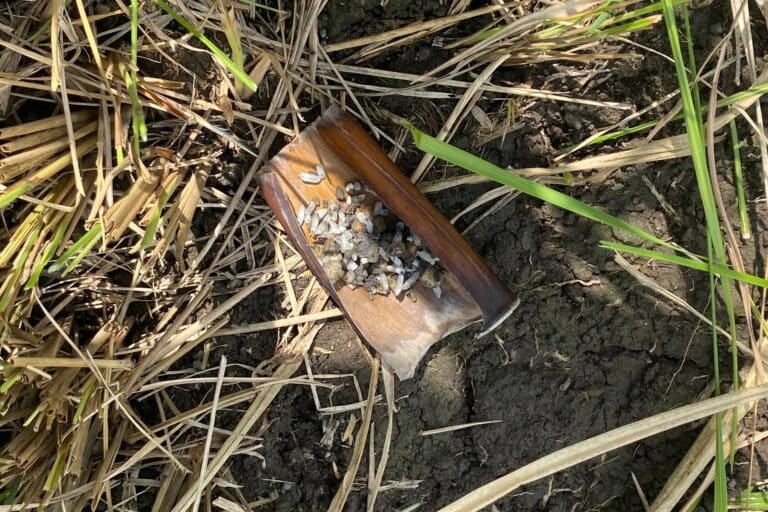
The struggle of farmers like Kuter is compounded by an biological crisis. The Mandhara Research Institute, represented by researcher Ayu Putu Diah, has documented an alarming shift in the behavior of rice field rats. In previous cycles, pests were manageable through traditional communal practices. Today, the rats are attacking crops during the vegetative stage, long before the grain has even formed.
Experts suggest this is a result of broken ecological corridors. As rice fields are fragmented by villas, the natural predators of these pests—such as snakes and owls—lose their habitats. Furthermore, the lack of synchronized planting schedules, a hallmark of the Subak system, allows rodent populations to thrive unchecked. When one field is harvested and another is being planted, the pests simply migrate, ensuring a constant cycle of destruction that leaves farmers exhausted and financially depleted.
The Hydrological Bottleneck
Ketut Sugata, Chairman of the Forum Pekaseh Agung (the governing body of the Pakerisan watershed), notes that the flooding issue is a direct result of land conversion. "The soil’s capacity to absorb and store water, which existed for generations, is diminishing," Sugata explains. The conversion of permeable earth into impermeable concrete creates a "runoff effect." Instead of replenishing groundwater tables, rainfall now flows rapidly into irrigation channels, causing them to burst their banks during the wet season and leaving the land parched during the dry season.
For farmers, this has created a state of perpetual uncertainty. As Kuter lamented, "Ten karuan ngorang panen, ten misi yeh" (There is no certainty of a harvest; there is no water now). The traditional irrigation rituals, which once synchronized the needs of the community, are failing because the physical infrastructure—the canals and the soil—is no longer being maintained as a coherent system.
Statistical Reality: The Disappearing Paddies
The figures provided by the Bali Provincial Agriculture and Food Security Agency paint a grim picture. A loss of roughly 20% of Bali’s rice fields in nine years is not just a statistical decline; it is a cultural catastrophe. The loss is most acute in the "triangle of development"—Badung, Gianyar, and Denpasar.
This loss has broader socio-economic implications. As the land disappears, so does the agrarian workforce. The younger generation of Balinese, seeing the dwindling returns and the physical hardship of farming in a degraded environment, are increasingly turning toward the service and hospitality industries. This creates a "graying" of the farming population, where the average age of a farmer continues to climb, threatening the intergenerational transfer of traditional agricultural knowledge.
Academic Projections and Expert Analysis
I Gusti Ngurah Santosa, an academic from the Faculty of Agriculture at Udayana University, offers a sobering projection: if the current rate of land conversion continues unabated, the traditional Subak system in Bali could effectively cease to exist within 65 years.
"When you cover the land with concrete, it becomes water-tight," Santosa explains. "This creates surface runoff, which is the direct trigger for these unprecedented floods." He argues that the solution is not merely technical, but policy-driven. Protection of the Subak requires a multi-pronged approach:
- Strict Zoning Enforcement: Regional governments must move beyond rhetoric and enforce "Green Zones" where agricultural land is legally protected from all forms of development, including residential and commercial tourism structures.
- Hydrological Restoration: Rebuilding the capacity of the landscape to absorb water by maintaining natural drainage paths and discouraging the paving of agricultural fringes.
- Economic Viability: Farmers must be incentivized to keep their land. This includes government subsidies for inputs, direct support for ecological farming practices, and perhaps even "agri-tourism" initiatives that keep the farmer as the primary stakeholder rather than a marginalized laborer.
- Integrated Pest Management: Restoring the natural predators and implementing synchronized planting across entire watersheds to break the reproductive cycles of pests.
The Path Forward: Can the Subak Be Saved?
The preservation of the Subak is not merely an issue of food security for the island, but a struggle for the soul of Bali. The system represents a unique human achievement in sustainable living. If the island continues to prioritize short-term tourism gains over the long-term ecological services provided by its rice fields, the cost will be high.
Beyond the loss of rice, the collapse of the Subak will result in a loss of the island’s natural flood defenses, a decline in groundwater quality, and the erosion of a spiritual and social identity that has sustained the Balinese people for over a millennium.
As Made Kuter continues to walk his narrowing fields, he represents the frontline of a battle against time. The question remains whether the government, the tourism industry, and the international community will step in to provide the necessary support—both financial and regulatory—before the last of the Subak fades into the concrete landscape. As Santosa succinctly puts it, "If the land is preserved, and the water is preserved, the farmers will continue their work in the fields." Without those two fundamental pillars, the future of Balinese agriculture is, much like the water in Kuter’s irrigation canals during a drought, drying up.