Azin Asro
Toyota Motor Corporation has officially deepened its strategic alliance with Joby Aviation, a leading American aerospace company, by establishing a specialized joint venture aimed at the large-scale production of electric vertical takeoff and landing (eVTOL) aircraft. This move marks a significant milestone in the evolution of urban air mobility, transitioning the relationship between the Japanese automotive giant and the California-based startup from one of financial investment to one of integrated industrial cooperation. The newly formed entity, named Joby Toyota Aero Manufacturing Preparation Co., will be headquartered in California, signaling a concentrated effort to revolutionize how people move within congested urban environments.
Under the terms of the agreement, Toyota Motor Corporation holds a majority stake of 51% in the joint venture, with Joby Aviation retaining the remaining 49%. This ownership structure underscores Toyota’s commitment to leading the venture’s manufacturing strategy, leveraging its world-renowned Toyota Production System (TPS) to streamline the assembly of sophisticated aerial vehicles. For Joby, the partnership provides access to decades of expertise in high-volume, high-quality manufacturing, a hurdle that has historically stymied the commercialization of new aerospace technologies.
A Vision for the Third Dimension of Mobility
The collaboration is rooted in a shared vision of "mobility for all," a philosophy long championed by Toyota’s Chairman, Akio Toyoda. While Toyota has dominated the terrestrial automotive market for nearly a century, the company has increasingly identified the "third dimension"—the sky—as the next frontier for personal and commercial transport. By integrating electric air taxis into the broader transportation ecosystem, the companies aim to alleviate ground-level traffic congestion, reduce carbon emissions, and drastically shorten commute times in major metropolitan areas.
The primary focus of the initial phase of the joint venture is the establishment of a robust production foundation. This involves the design of assembly lines, the implementation of automated manufacturing processes, and the optimization of supply chain logistics specifically tailored for eVTOL components. Unlike traditional aircraft manufacturing, which often relies on low-volume, artisanal processes, the Toyota-Joby partnership seeks to apply automotive-style mass production techniques to the aerospace sector without compromising the stringent safety standards required by aviation regulators.
Technical Specifications and the Joby Aircraft
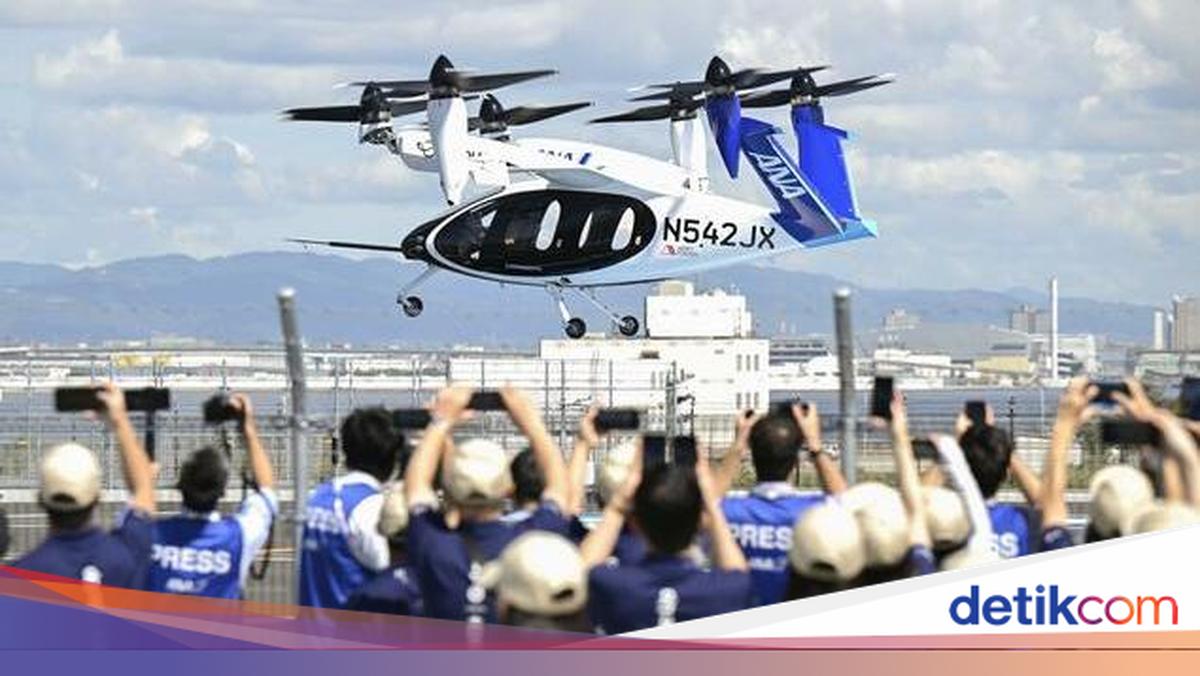
The aircraft at the center of this partnership is an innovative electric air taxi designed to carry a pilot and four passengers at speeds of up to 200 miles per hour. With a projected range of over 100 miles on a single charge, the Joby eVTOL is engineered for rapid urban hops, such as transporting passengers from a city center to a major international airport in a fraction of the time required by a car.
One of the most critical aspects of the Joby design is its acoustic profile. Traditional helicopters are often barred from urban centers due to excessive noise. Joby’s aircraft, however, utilizes six electric motors and a sophisticated propeller system that makes it significantly quieter than a traditional rotorcraft. During takeoff and landing, the noise is comparable to a conversation, and while in flight, it is virtually silent to those on the ground. This technical achievement is vital for gaining public acceptance and securing the necessary permits for "vertiports" located in densely populated areas.
The Evolution of a Strategic Partnership
The formation of Joby Toyota Aero Manufacturing Preparation Co. is the culmination of a multi-year relationship. Toyota’s involvement with Joby began in early 2020 when it led a Series C funding round with a $394 million investment. Since then, the partnership has grown incrementally. Toyota engineers have been working side-by-side with Joby teams at their facilities in Marina, California, sharing insights on tooling, factory layout, and material science.
In 2023, the two companies reached an agreement for Toyota to supply key powertrain and actuation components for Joby’s aircraft. This integration of Toyota-manufactured parts into the air taxi’s core systems paved the way for the current joint venture. By October 2024, Toyota further solidified its commitment by announcing an additional $500 million investment, intended to support the certification and commercial production of the aircraft. This brought Toyota’s total investment in Joby to approximately $894 million, making it the company’s largest external shareholder.
Chronology of Key Milestones
The path toward this joint venture has been defined by several critical milestones:
- January 2020: Toyota invests $394 million in Joby Aviation, marking its first major entry into the eVTOL space.
- February 2021: Joby announces its intention to go public via a SPAC merger with Reinvent Technology Partners, valuing the company at $6.6 billion.
- June 2023: Joby receives its Special Airworthiness Certificate from the Federal Aviation Administration (FAA) for its first production prototype.
- October 2023: Joby performs the first-ever flight of an electric air taxi in New York City, demonstrating the vehicle’s quiet operation at the iconic Downtown Manhattan Heliport.
- Early 2024: Toyota and Joby begin formalizing the joint venture to prepare for commercial-scale manufacturing.
- July 2024: The official announcement of Joby Toyota Aero Manufacturing Preparation Co. is made, with Toyota taking a 51% stake.
The Global Competitive Landscape
Toyota’s aggressive expansion into the aerial mobility sector comes at a time of intense global competition. Several other major automotive and aerospace players are vying for dominance in the nascent eVTOL market. In the United States, Archer Aviation—backed by Stellantis and United Airlines—is a primary competitor. In Europe, companies like Volocopter and Lilium are working toward EASA (European Union Aviation Safety Agency) certification.
However, the most significant pressure may be coming from China. Companies such as EHang have already secured type certificates from Chinese aviation authorities and have begun trial commercial operations for sightseeing. Xpeng AeroHT, an affiliate of the electric vehicle manufacturer Xpeng, is also making rapid strides in developing "flying cars" that can both drive on roads and take to the air.
Toyota’s partnership with Joby is seen as a strategic move to ensure that Japanese and American technology remains at the forefront of this global race. By combining Toyota’s unmatched manufacturing prowess with Joby’s advanced aerospace engineering, the joint venture aims to create a gold standard for the industry.
Regulatory Challenges and Infrastructure Requirements
Despite the technological progress, significant hurdles remain before the skies are filled with electric air taxis. The FAA in the United States and the JCAB (Japan Civil Aviation Bureau) in Japan have rigorous certification processes. An eVTOL must prove it is as safe as a commercial airliner, which involves exhaustive testing of battery systems, motor redundancy, and flight control software.
Beyond the aircraft itself, the "ecosystem" of urban air mobility requires new infrastructure. This includes:
- Vertiports: Dedicated takeoff and landing pads equipped with high-speed charging stations.
- Air Traffic Management: New software systems to manage a high volume of low-altitude aircraft alongside drones and traditional helicopters.
- Public Acceptance: Addressing concerns regarding privacy, safety, and visual pollution in city skylines.
The joint venture will likely play a role in advocating for these regulatory frameworks, using Toyota’s global influence to engage with governments and urban planners.
Analysis of Economic and Industrial Implications
The creation of the Joby-Toyota joint venture is more than just a business deal; it is a signal of the industrial shift toward sustainable, multi-modal transport. For Toyota, this venture provides a hedge against the plateauing of the traditional car market. As urban centers become more crowded and car ownership in cities becomes less practical, providing a "flight-as-a-service" model could become a lucrative new revenue stream.
For the broader aerospace industry, the entry of Toyota’s manufacturing philosophy could be transformative. The "Kaizen" (continuous improvement) approach and Just-In-Time manufacturing could drastically reduce the cost of aircraft production. If the joint venture succeeds in lowering the price point of eVTOLs, it could move the technology from a luxury service for the wealthy to a viable public transit option for the middle class.
The location of the headquarters in California is also strategic. It keeps the production close to Joby’s engineering core and within the United States’ primary aerospace innovation hub, while allowing Toyota to export its manufacturing culture to the American West Coast.
Future Outlook
As Joby Toyota Aero Manufacturing Preparation Co. begins its operations, the focus will shift to the final assembly line in Marina, California. The goal is to reach a production rate that can support the launch of commercial services, which Joby has optimistically targeted for 2025, pending final FAA certification.
While the "flying car" has been a staple of science fiction for decades, the formalization of this joint venture suggests that the reality is closer than many anticipate. With Toyota’s financial backing and manufacturing discipline combined with Joby’s pioneering electric flight technology, the partnership is positioned to lead the transition into a new era of aviation. The success of this venture will likely be measured not just in aircraft produced, but in how effectively it integrates the sky into the daily commute of the 21st-century urbanite.