 Azin Asro
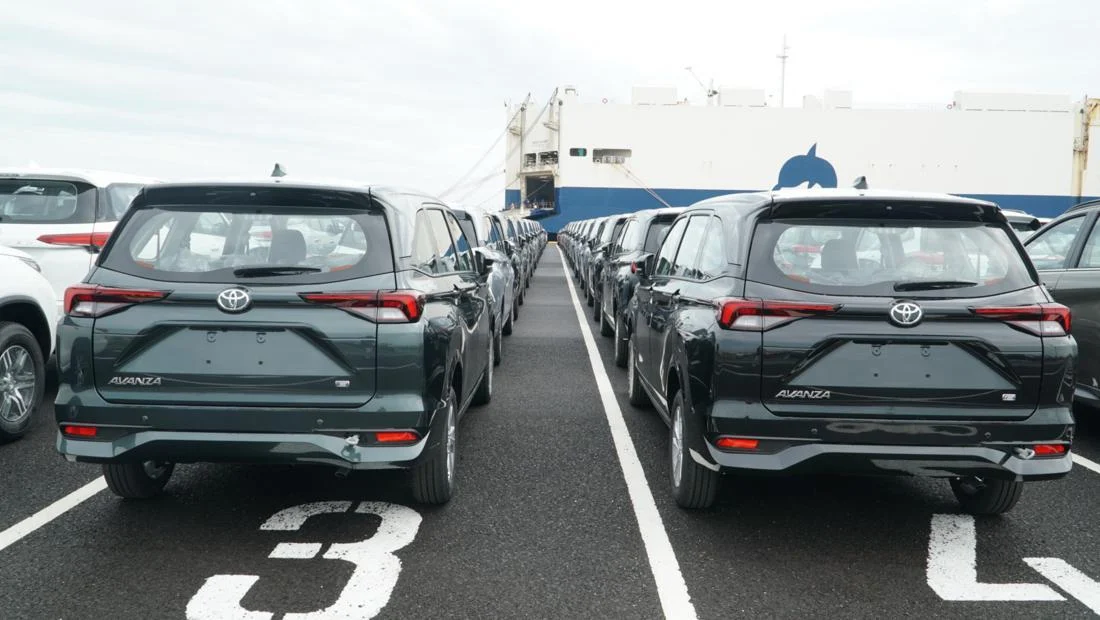
Jakarta — The automotive landscape in Indonesia has long been dominated by multi-purpose vehicles, with one name standing consistently at the forefront for over two decades. The Toyota Avanza, a vehicle deeply embedded in the daily mobility of Indonesian families, has transcended its status as a local market favorite. Beyond its domestic success, where it routinely battles for the top spot on monthly sales charts, the Avanza has quietly established itself as a formidable global export product, manufactured entirely on Indonesian soil and shipped to markets spanning multiple continents.
Recent trade and industry data released by the Association of Indonesian Automotive Industries, widely known as Gabungan Industri Kendaraan Bermotor Indonesia (Gaikindo), highlight the robust international demand for this Indonesian-made multi-purpose vehicle. As of August 2026, official export records confirm that six distinct countries actively import the Toyota Avanza in completely built-up condition from Indonesian manufacturing facilities. This milestone underscores the high manufacturing standards, competitive pricing, and reliable engineering achieved by the Indonesian automotive sector, proving that vehicles assembled locally possess the necessary appeal to satisfy diverse international regulatory standards and consumer preferences.
The Evolution of a Domestic Icon into a Global Contender
To understand the magnitude of the Toyota Avanza’s export success, one must examine its historical trajectory within the Indonesian market. Introduced more than twenty years ago, the Avanza was specifically conceptualized to address the unique infrastructural and demographic demands of Southeast Asia’s largest economy. Featuring a spacious cabin capable of accommodating larger families, robust mechanical durability suited for varying road conditions, and an economical fuel consumption profile, the vehicle quickly captured the imagination of Indonesian consumers.
Over successive generations, Toyota continuously refined the Avanza, transitioning from a basic rear-wheel-drive utilitarian transporter into a more modern, technologically equipped family vehicle. The integration of advanced safety features, improved suspension systems, and contemporary interior layouts ensured that the vehicle retained its competitive edge domestically.
However, the saturation of the domestic market and the strategic vision of making Indonesia a regional automotive production hub prompted manufacturers to look outward. Indonesia’s strategic positioning within the Association of Southeast Asian Nations, coupled with significant investments in local supply chains, transformed domestic assembly plants into export powerhouses. The Toyota Avanza emerged as a prime beneficiary of this strategic pivot, transitioning from a localized success story into a globally recognized badge of Indonesian manufacturing capability.
Destination Breakdown: Where Do Indonesian-Made Avanzas Go?
According to comprehensive shipping and export data compiled by Gaikindo up to August 2026, the six nations importing the Toyota Avanza from Indonesia comprise a diverse geographic mix, including countries in Southeast Asia, Latin America, and the Middle East. The distribution volume varies significantly across these regions, reflecting local market sizes, distribution networks, and segment preferences.
Filipinas stands unequivocally as the primary destination for the Indonesian-built Avanza. During the first eight months of 2026 alone, a staggering 15,168 units were shipped across the maritime border to the Philippine archipelago. The vehicle’s popularity in the Philippines mirrors its domestic reception in Indonesia, where consumers prioritize multi-passenger capacity, reliability, and low cost of ownership.
Philippine consumers are offered a diverse lineup of the Avanza, distributed through official channels by Toyota Motor Philippines. The local lineup typically consists of four distinct variants, categorized primarily by engine displacement and transmission options. Three of these variants are powered by a responsive 1.3-liter engine, catering to budget-conscious buyers and urban commuters, while the flagship variant features a more robust 1.5-liter engine designed for enhanced highway performance and heavier loads. Pricing for the Avanza in the Philippines ranges from approximately 844,000 Philippine pesos, equivalent to roughly Rp 239 million, for the entry-level variants, scaling up to 1.071 million pesos, or approximately Rp 303 million, for the top-tier configuration.
Following the Philippines as the second-largest international market is Peru. Located on the western coast of South America, Peru has demonstrated a steady appetite for Indonesian automotive engineering. Between January and August 2026, Peruvian importers took delivery of 3,190 units of the Toyota Avanza. The vehicle’s sturdy chassis and practical interior layout make it exceptionally well-suited for navigating both dense urban environments and challenging topographical landscapes frequently encountered in Andean terrain.
Securing the third position in the export hierarchy is Mexico. Despite being situated in a region with deep ties to North American automotive manufacturing, the Mexican market imported 2,289 units of the Indonesia-produced Avanza over the course of 2026. This indicates that the vehicle’s price-to-performance ratio successfully undercuts or outperforms regional alternatives, making it an attractive proposition for Mexican fleet operators and private buyers alike.
The remaining export destinations, while smaller in cumulative volume, highlight the far-reaching logistics network established by Indonesian manufacturing plants. Qatar, representing the Middle Eastern market, imported 249 units during the monitoring period. Myanmar, a fellow Southeast Asian neighbor, accounted for 128 units, while Bangladesh, situated in South Asia, received a modest shipment of 19 units.
Comprehensive Export Data Summary (January – August 2026)
To provide a clear and structured overview of the international distribution network for the Indonesia-produced Toyota Avanza, the official figures released by Gaikindo are categorized as follows:
- Philippines: 15,168 units
- Peru: 3,190 units
- Mexico: 2,289 units
- Qatar: 249 units
- Myanmar: 128 units
- Bangladesh: 19 units
This quantified breakdown illustrates a clear concentration of export volume within the Asian and Latin American regions, driven by favorable trade agreements, established logistics corridors, and strong brand equity held by Toyota in those specific territories.
Industry Implications and Economic Impact
The consistent outflow of thousands of built-up units of the Toyota Avanza carries profound implications for the Indonesian national economy and the domestic automotive manufacturing ecosystem. Beyond the immediate commercial success experienced by the brand itself, the robust export performance serves as a testament to the maturation of Indonesia’s industrial sector.
Automotive analysts and industry observers note that sustained export volumes of high-volume models like the Avanza provide crucial stability to local component manufacturers. The tier-one, tier-two, and tier-three suppliers—many of which are small and medium-sized enterprises operating within Indonesia—benefit immensely from the economies of scale generated by both domestic and international demand. When assembly plants secure large overseas orders, the entire domestic supply chain experiences increased production runs, leading to optimized operational efficiencies, technological knowledge transfer, and sustained employment opportunities for thousands of skilled workers.
Furthermore, these export achievements strengthen Indonesia’s trade balance. In an era where macroeconomic stability is heavily dependent on non-commodity exports, the automotive sector’s ability to generate foreign exchange earnings through manufactured goods is invaluable. The consistent dispatch of thousands of units to nations as distant as Peru and Mexico demonstrates that Indonesian assembly lines can compete globally on quality, compliance with international safety norms, and manufacturing precision.
Strategic Outlook for the Future of Indonesian Automotive Exports
As global automotive trends shift toward electrification and sustainable mobility, traditional internal combustion engine vehicles like the Toyota Avanza continue to hold a foundational role in emerging and developing markets. The infrastructure required for rapid adoption of battery electric vehicles remains unevenly distributed across the nations currently importing the Avanza, ensuring a prolonged demand window for reliable, fuel-efficient multi-purpose vehicles powered by conventional or hybrid powertrains.
Industry stakeholders and government trade bodies are expected to build upon this momentum by exploring additional bilateral and multilateral trade frameworks. By reducing tariff barriers and streamlining export procedures, Indonesia aims to position itself even more firmly as the definitive automotive manufacturing hub for the broader Indo-Pacific region and beyond.
The remarkable journey of the Toyota Avanza—from a locally engineered people carrier tailored for Indonesian urban streets to a globally distributed asset crossing oceans to reach driveways in Manila, Lima, and Mexico City—illustrates the dynamic potential of Indonesia’s industrial capacity. As production lines continue to hum across local facilities, the success of the Avanza remains a shining example of how local manufacturing excellence can successfully capture the imagination of the global marketplace.