Eko Sulistyo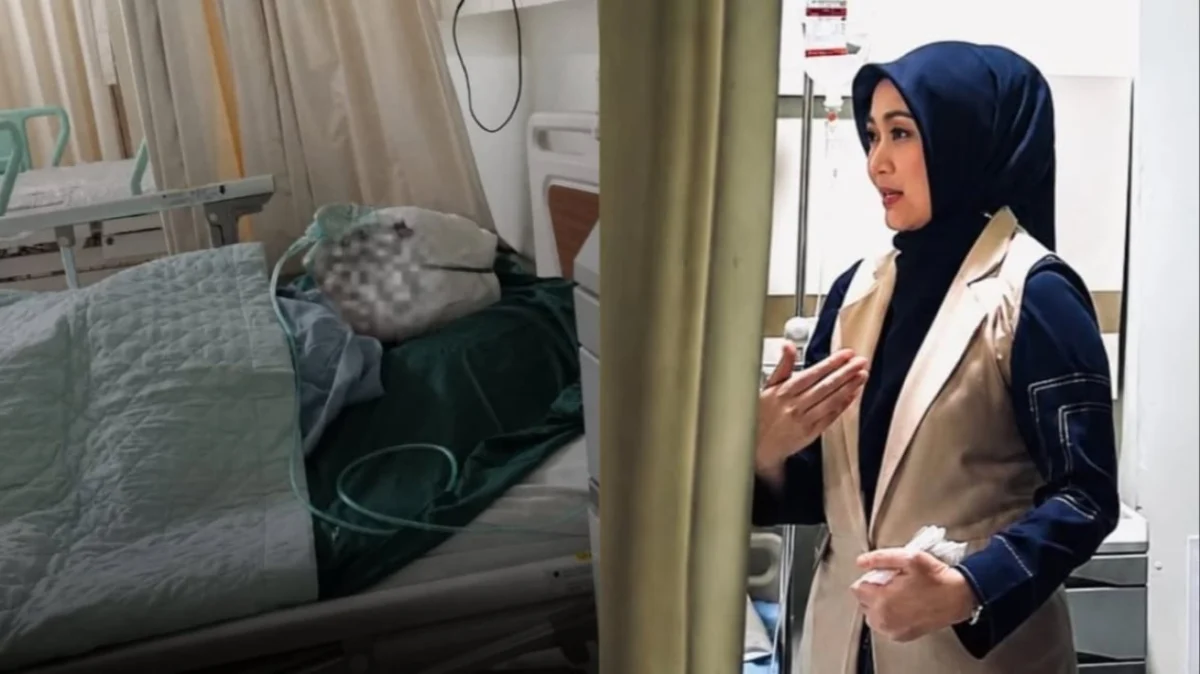
The harrowing details of a long-term captivity case in Bandung Regency, West Java, have sent shockwaves across Indonesia as the condition of the victim, a 29-year-old woman identified by the initials YTR, was recently disclosed to the public. After enduring what investigators describe as nearly three years of systematic confinement and physical torture, YTR is currently fighting for her life under intensive medical supervision at the Hasan Sadikin Hospital (RSHS) in Bandung. The case, which underscores a catastrophic failure of local social monitoring, has prompted high-profile figures and human rights advocates to demand a thorough investigation into how such an atrocity could persist undetected for thirty-six months in a populated residential area.
The severity of YTR’s condition came to the forefront of national conversation after Atalia Praratya, a prominent public figure and advocate for women’s and children’s rights, voiced her profound concern via social media. Her public statement not only shed light on the gruesome physical state of the survivor but also served as a scathing critique of societal apathy. As of June 2026, the victim remains in a critical state, with medical professionals at RSHS working around the clock to stabilize her vitals and address a multitude of permanent injuries resulting from prolonged trauma and neglect.
A Chronology of Systematic Abuse and Discovery
The legal process began on June 12, 2026, when the victim’s family officially filed a report with the West Java Regional Police (Polda Jawa Barat). According to preliminary investigation records, the ordeal began approximately three years prior, around mid-2023. YTR was allegedly held against her will in a rented room (kos-kosan) located in the Cileunyi district of Bandung Regency. During this period, she was reportedly subjected to escalating levels of violence that left her physically decimated and psychologically shattered.
For three years, the victim’s whereabouts were obscured from her family and the community. The suspect, whose identity is currently being processed by law enforcement, reportedly used various methods of intimidation and isolation to ensure YTR remained hidden. The discovery of the victim occurred only after a series of events led family members to the location in Cileunyi, where they found YTR in a state of advanced physical decay. The rescue operation immediately transitioned into a medical emergency, as YTR was rushed to the hospital in a condition that doctors described as near-death.
Medical Assessment and the Extent of Physical Trauma
The medical report from Hasan Sadikin Hospital paints a devastating picture of the violence YTR endured. Upon admission, the medical team noted that the victim had suffered a total loss of function in several sensory organs. The most alarming injuries include permanent blindness, which medical experts attribute to repeated blunt force trauma to the cranial and ocular regions. Furthermore, the victim’s facial structure has been significantly altered due to untreated fractures and tissue damage; her lips are reported to be severely mutilated, rendering her almost unable to speak or consume solid food.
Beyond the facial injuries, the physical examination revealed a pattern of sadistic abuse. Atalia Praratya’s disclosure mentioned that YTR’s body was covered in cigarette burns and deep lacerations, including sharp-force trauma to her legs that has left her unable to walk. The presence of infected wounds and abscesses on her scalp indicates that the victim was denied basic hygiene and medical care for years. The psychological toll is equally severe, with specialists noting that the victim is suffering from acute Post-Traumatic Stress Disorder (PTSD) and severe cognitive disorientation, common in survivors of long-term "hostage-like" domestic captivity.
Public Outcry and Atalia Praratya’s Advocacy
The case gained significant momentum on June 21, 2026, when Atalia Praratya addressed the incident on her personal Instagram account. As the wife of a former regional leader and an influential voice in West Java, her intervention transformed the local police report into a matter of national urgency. Praratya expressed her heartbreak and disbelief that such a crime could occur in the heart of a community for three years without intervention.
"Three years. Not three days. Not three weeks. Not three months. A woman has lived in captivity and suffering for three years," Praratya wrote, emphasizing the timeline to highlight the duration of the victim’s isolation. She detailed the "horrific" state of the victim—mentioning the pus-filled wounds on her head, the blindness, and the cigarette burns—to force the public to confront the reality of the abuse. Her post posed a poignant question to the residents of Bandung and the nation at large: "Where were we all during those three years?"
Praratya’s statement serves as a call to action for "social vigilance." She argued that the case is a grim reminder that community engagement must go beyond superficial pleasantries. In her view, the failure to detect YTR’s suffering suggests a breakdown in the traditional Indonesian values of gotong royong (mutual cooperation) and neighborhood watchfulness. She urged citizens to be more inquisitive when they notice irregularities in their surroundings, noting that a single inquiry or a report to local authorities could be the difference between life and death for victims of domestic or confined violence.
Legal Implications and the Police Investigation
Polda Jawa Barat has confirmed that a specialized task force is handling the investigation. The suspect faces potential charges under multiple statutes, including the Law on the Elimination of Domestic Violence (UU PKDRT), the Law on Sexual Violence Crimes (UU TPKS), and various articles of the Indonesian Penal Code (KUHP) pertaining to illegal deprivation of liberty and aggravated assault. If convicted, the perpetrator could face the maximum penalties allowed under Indonesian law, which may include decades of imprisonment given the duration and the extreme nature of the torture.
Legal analysts suggest that this case may also test the accountability of property owners. Under Indonesian regulations, landlords of boarding houses are often required to report the identities of their tenants to the local neighborhood heads (RT/RW). The fact that YTR was held for three years suggests a lapse in these administrative protocols. Investigators are currently looking into whether there was negligence or complicity on the part of the property management or neighbors who may have heard or seen signs of distress but failed to act.
Contextualizing Violence Against Women in Indonesia
The tragedy of YTR is not an isolated incident but a extreme manifestation of a broader trend of violence against women in the country. Data from the National Commission on Violence Against Women (Komnas Perempuan) has consistently shown that thousands of cases of physical and psychological abuse are reported annually, with many more remaining in the shadows due to fear of retribution or social stigma.
In recent years, the Indonesian government has made strides in legislative protection, most notably with the passage of the Law on Sexual Violence Crimes (UU TPKS) in 2022. However, advocates argue that the implementation of these laws remains inconsistent, particularly in suburban and rural areas where traditional social structures sometimes discourage "interfering" in what are perceived as private domestic matters. The YTR case highlights the "bystander effect," a psychological phenomenon where individuals are less likely to offer help to a victim when other people are present, often assuming someone else will intervene or that the situation is not their responsibility.
The Role of the RT/RW System and Social Apathy
Indonesia’s unique administrative structure, which includes the Rukun Tetangga (RT) and Rukun Warga (RW) at the neighborhood level, is designed to provide a tight-knit security and social net. Every resident is technically accounted for through these local heads. The YTR case exposes a critical vulnerability in this system. When social apathy takes root, these administrative layers become mere formalities rather than protective barriers.
Experts in sociology suggest that as urban and peri-urban areas like Cileunyi become more densely populated and transient, the sense of community responsibility diminishes. People living in "kos-kosan" often maintain high levels of anonymity, which can be exploited by abusers to hide their crimes. The enrichment of the legal investigation will likely involve a review of how local leaders monitor their jurisdictions and whether new protocols are needed to ensure the safety of vulnerable individuals living in rented accommodations.
The Long Road to Recovery and Justice
For YTR, the path forward is fraught with immense challenges. Beyond the immediate medical crisis, she will require years of reconstructive surgery, physical therapy, and intensive psychological counseling. The loss of her eyesight and the damage to her motor functions mean that her life has been permanently altered. Human rights organizations are calling for the state to provide comprehensive victim support, ensuring that she is not further marginalized by the cost of her recovery.
The case also serves as a somber reminder of the importance of the "orange ribbon" movement and other initiatives aimed at ending violence against women. As the legal proceedings move forward, the public eye remains fixed on the West Java police to ensure a transparent and rigorous prosecution. The goal is not only to achieve justice for YTR but to send a definitive message that such egregious violations of human rights will be met with the full force of the law.
In conclusion, the tragedy in Cileunyi is a call for a national "moral awakening." It challenges every citizen to look beyond their own doorstep and to recognize that silence in the face of suspected abuse is a form of complicity. While the medical team at RSHS works to heal YTR’s physical wounds, the legal and social systems of Indonesia face the daunting task of healing a broken culture of vigilance, ensuring that no other individual is ever left to suffer in silence for three years again.