Nila Kartika Wati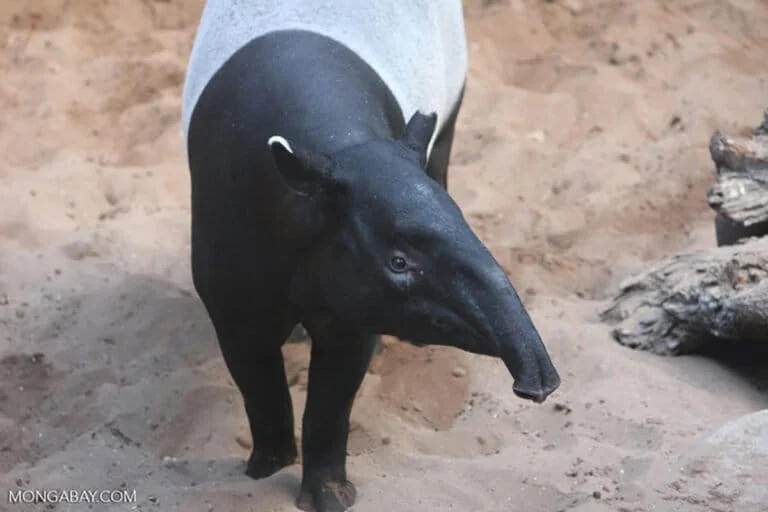
The brutal killing and consumption of an endangered Asian tapir in the Mesuji Regency of Lampung has ignited a national conversation regarding the precarious state of Indonesia’s wildlife protection and the rapid encroachment of human activity into natural habitats. The incident, which was documented in a viral video and widely circulated on social media, culminated in the arrest of four individuals, while authorities continue to search for two other suspects involved in the slaughter of the protected mammal. The event has drawn sharp condemnation from conservationists, government officials, and biological researchers, who view the tragedy as a significant setback for biodiversity conservation in Southeast Asia.
The sequence of events began on the afternoon of Thursday, July 2, 2026, on the Jalan Lintas Sumatera, a major highway traversing the Register 45 area in Mesuji, Lampung. A 42-second video captured a lone Asian tapir (Tapirus indicus) appearing visibly disoriented and confused as it wandered onto the busy road. As a nocturnal species, the tapir was likely emerging early to forage as dusk approached. Witnesses at the scene were seen attempting to herd the animal toward the roadside, away from the heavy flow of traffic. However, the footage took a dark turn toward its conclusion, showing a shirtless man armed with a spear pursuing the animal as it fled toward a nearby residential settlement.
By the time law enforcement officers arrived at the scene following public reports, the tapir was already dead. According to police reports, the animal had been beheaded, and its meat had been distributed among several local residents. Some of the meat had reportedly been prepared into a local spicy dish known as rica-rica. The rapid response by the police led to the apprehension of four suspects, identified as being directly involved in the killing and butchering of the animal. Two additional suspects remain at large and are currently on the police’s wanted list.
The incident has triggered a wave of concern from the scientific community, most notably from the Indonesian Biology Consortium (KOBI). Budi Setiadi Daryono, the Chairman of KOBI and Dean of the Faculty of Biology at Gadjah Mada University (UGM), issued a stern statement condemning the act. He emphasized that the Asian tapir is the only tapir species found in Asia and is strictly protected under Indonesian law, specifically the Minister of Environment and Forestry Regulation No. P.106/MENLHK/SETJEN/KUM.1/12/2018. Daryono characterized the killing as not only a legal violation but a "regression in Indonesia’s efforts to conserve biodiversity," asserting that such actions cannot be justified under any circumstances.
The Ministry of Forestry, through its Directorate General of Forest Law Enforcement and the Directorate General of Conservation of Natural Resources and Ecosystems, also expressed profound regret over the loss. Ministry officials noted that the death of even a single individual represents a massive blow to the ecological balance, as tapirs play a specialized role in forest regeneration. In a formal statement issued on Friday, July 3, 2026, the Ministry committed to intensifying preventive measures through public socialization and education to foster a deeper understanding of the intrinsic value of biodiversity.
The Ecological Role and Unique Biology of the Asian Tapir
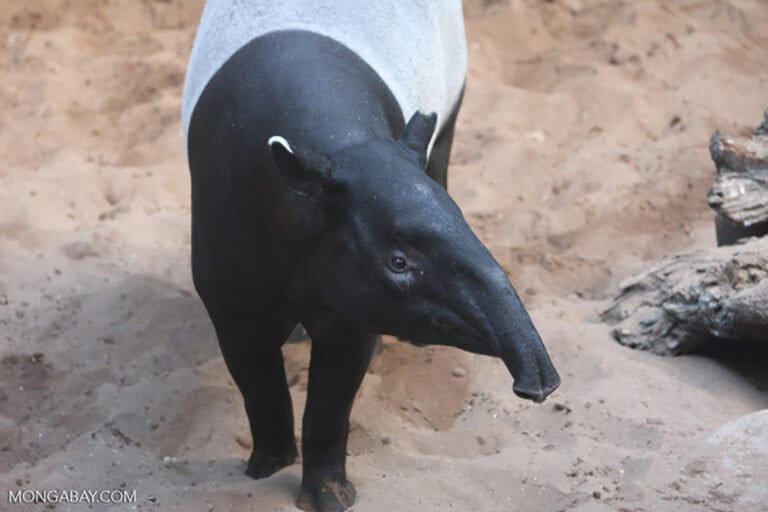
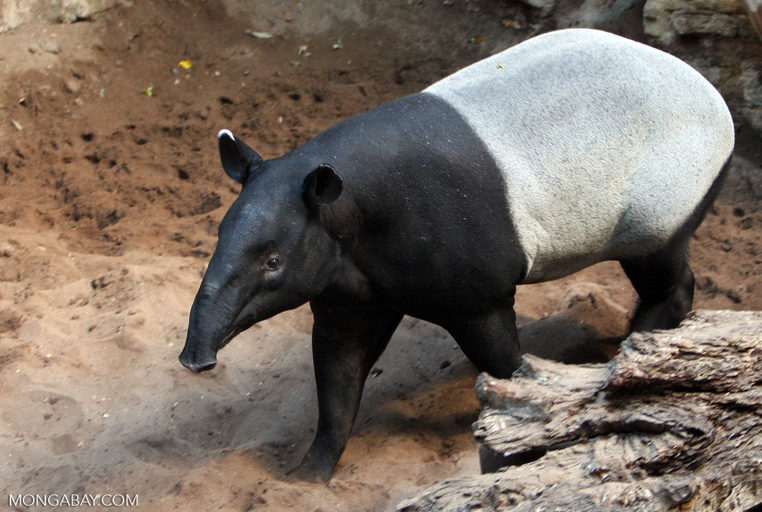
The Asian tapir is often described as an evolutionary marvel, possessing a physical appearance that seems to be a mosaic of various animals. In Thailand, it is known as psom sett, a name that translates to "the animal created from the leftovers of others," referring to its horse-like feet, rhinoceros-like ears, elephant-like trunk, and pig-like body. Despite its somewhat awkward appearance, the tapir is a vital "ecosystem engineer."
As a primary seed disperser, tapirs consume a wide variety of fruits and plants. Because they travel long distances and have a digestive system that allows many seeds to pass through intact, their dung serves as a mobile fertilizer, planting the next generation of forest canopy. This process is essential for maintaining the health and diversity of tropical rainforests. Furthermore, their habit of wallowing in rivers and marshes helps keep waterways clear, facilitating the flow of water from highland areas to the lowlands.
The Asian tapir is distinct from its three South American relatives—the Brazilian tapir, the Mountain tapir, and the Baird’s tapir—due to its striking black-and-white coloration. This disruptive coloration serves as camouflage in the dappled light of the forest floor, making the animal difficult for predators to spot in the moonlight. While it shares a similar color palette with the giant panda, the tapir’s markings are unique: its head is entirely black, whereas the panda has a white head with black patches around the eyes and ears.
Historically, the Asian tapir’s range extended across Myanmar, Thailand, Malaysia, Vietnam, Cambodia, and Indonesia. However, it has been declared extinct in Vietnam and Cambodia, leaving the remaining populations fragmented across the rest of Southeast Asia. In Indonesia, the island of Sumatra is the species’ final stronghold in the wild. Estimates from the International Union for Conservation of Nature (IUCN) suggest that the Indonesian population may consist of fewer than 400 to 500 individuals, making every single loss a step closer to local extinction.
Human Encroachment and the Myth of Animal Invasion
The appearance of the tapir on a public highway in Mesuji highlights a growing crisis in wildlife management: the shrinking boundary between natural habitats and human civilization. M. Ikhsan Shiddieqy, a Senior Researcher at the National Research and Innovation Agency (BRIN), argued that the narrative of "animals entering human territory" is a fundamental misunderstanding of the situation.
According to Shiddieqy, the reality is that human infrastructure—agriculture, plantations, and residential areas—is aggressively expanding into the last remaining wilderness areas without regard for the spatial needs of wildlife. This expansion leads to habitat fragmentation, where animal populations are cut off from one another by roads and farms. When a tapir or an elephant "wanders" into a village, it is often simply trying to navigate its traditional home range, which has been bisected by human development.
The Register 45 area in Mesuji is a prime example of this conflict. Once a dense forest area, it has seen significant land-use changes over the decades. When animals are forced into proximity with humans, the risk of conflict increases exponentially. In the case of the Mesuji tapir, the animal’s natural shyness and nocturnal habits were no match for the presence of a high-speed road and a local population that lacked the education or incentive to protect it.
Scientific Findings on Habitat Suitability
A recent study published in the journal Oryx in June 2024, titled "Safeguarding Asian tapir habitat in Sumatra, Indonesia," provides critical data on where these animals still survive. Led by Irene M.R. Pinondang and a team of international researchers, the study utilized camera trap data from nine key landscapes across Sumatra, including Bukit Barisan Selatan, Way Kambas, and Kerinci Seblat.
The research found that tapir detections were highest in the Bukit Barisan mountain range, which runs along the western spine of Sumatra. Crucially, the data revealed that many tapirs are living dangerously close to human activity. Detections were often concentrated within 12 kilometers of the nearest road and less than 50 kilometers from significant human populations. The study emphasized that low-lying forests with high biomass, typically under 600 meters in elevation, are the most suitable habitats for tapirs. Unfortunately, these lowlands are also the areas most targeted for agricultural conversion.
The researchers concluded that the survival of the Asian tapir is intrinsically linked to the protection of other "umbrella species" like the Sumatran tiger and elephant. By protecting the vast tracts of forest required by these large predators, conservationists can simultaneously secure the habitat needed for the more reclusive tapir.
Implications and the Path Forward
The tragedy in Mesuji serves as a grim "alarm bell" for the Indonesian government and environmental NGOs. The fact that a protected animal was not only killed but consumed in a public setting suggests a significant gap in the enforcement of wildlife laws and a lack of grassroots conservation awareness.
To prevent a recurrence of such events, experts suggest a multi-pronged approach. First, there is an urgent need for "wildlife corridors"—strips of protected forest that allow animals to move safely between fragmented habitats without crossing highways. Second, law enforcement must be consistent; the prosecution of the Mesuji suspects will serve as a test case for whether the legal system can effectively deter wildlife crime. Under Law No. 5 of 1990 concerning the Conservation of Living Natural Resources and their Ecosystems, individuals who kill protected species can face up to five years in prison and heavy fines.
Finally, the incident underscores the necessity of community-based conservation. When local residents view wildlife as a source of food or a nuisance rather than a national treasure, conservation efforts are doomed to fail. Programs that involve locals in the monitoring and protection of their natural surroundings can turn potential poachers into guardians of the forest.
The loss of the Mesuji tapir is a somber reminder that the "Old Man of the Forest," as the tapir is sometimes called due to its ancient lineage, is running out of time. If the current trends of habitat loss and human-wildlife conflict are not reversed, the iconic black-and-white silhouette of the Asian tapir may soon vanish from the Sumatran landscape forever, leaving the ecosystem it helped build to slowly unravel.