Bambang Pamungkas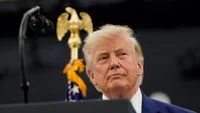
The United States government is preparing to implement a significant wave of new import tariffs, poised to impact approximately 60 trading partners, including key economies like Indonesia, China, India, Japan, Canada, Brazil, and the European Union. This aggressive protectionist measure is set to take effect imminently, coinciding with the expiration of existing temporary global tariffs this week. The move, spearheaded by the administration of President Donald Trump, marks a renewed and intensified use of trade barriers as an instrument of foreign policy and economic pressure, raising global concerns about escalating trade tensions and potential retaliatory actions.
Background: A Resurgent Era of Trade Protectionism
The forthcoming tariffs are a clear continuation of the "America First" trade agenda championed by the Trump administration since its inception. This policy framework prioritizes domestic industries and employment, often through the imposition of tariffs, quotas, and other trade barriers, under the premise of correcting perceived imbalances and unfair practices in global trade. Historically, the administration has utilized tariffs on a range of goods, from steel and aluminum to various Chinese products, sparking a series of trade disputes that have reshaped global supply chains and international economic relations. The current announcement, as reported by Channel News Asia on Wednesday, July 22, 2026, indicates a broadening of this strategy, moving beyond specific product categories or bilateral disputes to a more systemic application of tariffs based on broader compliance issues.
The strategic rationale behind these tariffs, as articulated by US Trade Envoy Jamieson Greer, is multifaceted. Primarily, it targets nations deemed to have failed in taking decisive action against forced labor practices within their supply chains. However, the policy also extends to address what Washington perceives as broader "unfair trade practices" and to enhance its negotiating leverage in ongoing trade discussions, particularly with North American partners. This blend of human rights advocacy and economic nationalism underscores a complex and potentially contentious approach to international trade.
The Impending Tariff Wave: Details and Justification
The core of the new tariff regime revolves around duties ranging from 10% to 12.5%, specifically aimed at countries that, in the assessment of the US government, have not adequately combated forced labor. These rates are slated to replace the temporary 10% global tariffs that are expiring this Friday, indicating a shift from a broad, temporary measure to a more targeted, issue-specific and potentially long-term policy.
US Trade Envoy Jamieson Greer confirmed that the Trump administration has developed a new tariff scheme that will specifically target roughly 60 trading partners. "We expect to see some immediate action," Greer stated when pressed for details on the implementation timeline for these new import duties. He emphasized the ethical dimension of the policy, stating, "The US has laws to ban trade in goods made with forced labor. Other countries, for the most part, do not have such laws, and for those that do, they don’t really enforce them." This assertion forms the primary justification for the blanket application of these new tariffs, positioning the United States as a global enforcer of labor standards through trade policy.
Under the proposed scheme, a 10% tariff will be levied on goods imported from countries that are considered to have some existing measures in place to address forced labor. This group includes established economic partners such as Canada, the European Union, Mexico, Taiwan, and the United Kingdom. These nations are deemed to have relatively more robust frameworks, even if not fully compliant with US expectations. However, a higher tariff of 12.5% is threatened for over 40 other major economies, including manufacturing powerhouses like China, India, and Japan, as well as Southeast Asian nations like Indonesia, which are deemed to have less stringent or less effectively enforced anti-forced labor regulations. This tiered approach suggests a nuanced, albeit unilateral, assessment by Washington of its partners’ efforts in upholding labor rights and human rights principles within their supply chains.
Indonesia Among the Targeted Nations: Potential Economic Fallout
Indonesia’s inclusion in the list of countries facing the higher 12.5% tariff is particularly concerning for Jakarta. As a significant exporter of various commodities and manufactured goods to the US market, Indonesian businesses could face increased costs, making their products less competitive. Key Indonesian exports to the US include textiles and apparel, rubber and rubber products, footwear, electrical machinery, and agricultural products. In 2023, for instance, Indonesia’s exports to the US amounted to approximately $26.8 billion, making the US one of its largest trading partners. A 12.5% tariff on a substantial portion of these exports could translate into hundreds of millions, if not billions, of dollars in additional costs for Indonesian producers and US importers, potentially impacting profitability, investment, and employment within Indonesia’s export-oriented sectors.
The Indonesian government and industry associations are expected to closely monitor developments and potentially engage in diplomatic efforts to seek clarification or exemptions. The challenge for Indonesia, and other targeted nations, will be to demonstrate robust and verifiable measures against forced labor that satisfy Washington’s criteria, or face the economic consequences. This could involve enhanced factory inspections, stricter enforcement of labor laws, and greater transparency in supply chains. The US stance could also prompt Indonesia to review and potentially strengthen its domestic labor laws and enforcement mechanisms to mitigate future trade risks, aligning more closely with international best practices to protect its export market access.
The Forced Labor Pretext: A Deeper Look at Global Standards
The US government’s emphasis on forced labor as a justification for tariffs draws upon established international conventions and domestic legislation. Section 307 of the Tariff Act of 1930 explicitly prohibits the importation of goods produced, in whole or in part, by forced labor, including forced or indentured child labor. While this law has been on the books for decades, its enforcement has seen varying degrees of intensity. The Trump administration’s current move signals a more expansive and aggressive interpretation and application of this statute, moving beyond specific product seizures to broader tariff impositions.
Globally, forced labor remains a pervasive issue. The International Labour Organization (ILO) estimates that approximately 27.6 million people worldwide are in situations of forced labor, across various sectors such as agriculture, manufacturing, domestic work, and construction. Supply chains, particularly complex global ones spanning multiple countries and subcontractors, often obscure the origins of goods, making it challenging to identify and eliminate instances of forced labor. While many countries have signed international conventions against forced labor, such as ILO Conventions 29 and 105, the practical implementation and enforcement of these standards vary widely due to resource constraints, corruption, and differing political priorities.
The European Union, for its part, has already asserted that the imposition of tariffs on the pretext of forced labor issues lacks justifiable grounds. The EU itself has been developing its own due diligence legislation to address forced labor in supply chains, but it prefers a multilateral approach and considers unilateral tariffs potentially counterproductive and in violation of WTO rules. This divergence in opinion highlights a fundamental disagreement on the legitimacy of unilateral trade measures based on domestic interpretations of international labor standards, potentially setting the stage for challenges at the World Trade Organization (WTO).
Canada’s Predicament: USMCA Renegotiation and Escalating Tariffs
Beyond the general forced labor tariffs, Canada faces an even more direct and substantial blow, with Washington announcing a 50% tariff on certain Canadian commodities, set to take effect within the next 30 days. This punitive measure comes amidst the ongoing review and renegotiation of the United States-Mexico-Canada Agreement (USMCA), a successor to NAFTA. The Trump administration has steadfastly refused to extend the agreement in its current form, signaling its intent to extract further concessions from its northern neighbor. The specific commodities targeted by this steep tariff were not immediately detailed but are expected to include sectors where Canada holds significant export strength to the US.
US Trade Envoy Greer is scheduled to visit Mexico from Wednesday to Friday to discuss the USMCA review process, indicating a willingness to engage with Mexico while simultaneously ratcheting up pressure on Canada. Negotiations between the US and Canada, however, have reportedly progressed at a slower pace, with Canadian Prime Minister Mark Carney yet to signal a visit to Washington for direct talks. Carney stated that Canada is "still considering various options" in response to the looming tariffs and confirmed an agreement to "increase the intensity of discussions in the coming weeks to reach a deal." This suggests a diplomatic effort to de-escalate, but the threat of a 50% tariff places immense pressure on Ottawa.
Trade law experts view the use of Article 338 of the Tariff Act of 1930 against Canada as a strategic move by Washington to enhance its bargaining position in the USMCA renegotiations. Dave Townsend, a trade lawyer at Dorsey & Whitney, commented on the motivation behind the tariff hike: "It appears aimed at either pushing a deal between Canada and the United States, or as retaliation for failing to achieve such a deal, or both." Townsend further highlighted the critical question of whether both countries will enter a prolonged cycle of escalating tariffs, a scenario that could severely damage the integrated North American economy, which relies heavily on cross-border trade and supply chains. A particularly contentious aspect of the new policy is its apparent lack of exemptions for Canadian products already covered under the USMCA, suggesting a deliberate attempt to exert maximum pressure. The US government, however, has denied any connection between these tariffs and previous threats related to Canadian wildfire smoke spreading into US territory, a separate environmental and political issue, maintaining that the trade actions are purely economic and legal.
Brazil’s Trade Challenges: Unfair Practices Allegations
Simultaneously, the US is also preparing to impose a 25% tariff on various products originating from Brazil, citing "unfair trade practices." This tariff, scheduled to commence on Wednesday, is poised to become a significant political issue ahead of Brazil’s upcoming presidential elections. The timing of this announcement adds another layer of complexity to Brazil’s domestic political landscape, where economic performance often plays a crucial role in electoral outcomes. While the specific "unfair trade practices" were not detailed in the initial reports, such allegations often relate to subsidies, dumping, or market access restrictions.
While certain key Brazilian commodities such as beef, coffee, specific aircraft parts, and goods not produced in the US are reportedly exempted from this policy, the overall impact is still anticipated to be substantial. The American Chamber of Commerce for Brazil has issued a stark warning, indicating that Washington’s policy would render Brazil one of the countries with the most restricted access to the US market. The value of Brazilian exports at risk is estimated to exceed US$11 billion, or approximately Rp198 trillion (assuming an exchange rate of ~Rp18,000 per USD), which represents a considerable portion of Brazil’s total trade with the United States. In 2023, total Brazilian exports to the US were around $37 billion, meaning nearly a third of that trade could be affected. This move could force Brazil to diversify its export markets or engage in intensive negotiations with the US to alleviate the tariff burden, potentially by addressing the alleged unfair trade practices.
Global Reactions and Economic Implications
The announcement of these broad and targeted tariffs has predictably triggered apprehension across the global trading landscape. The European Union’s immediate rejection of the forced labor pretext underscores the potential for diplomatic friction and retaliatory measures. Other affected nations, though not yet explicitly quoted, are likely to express similar concerns, viewing these unilateral actions as a violation of multilateral trade norms and an impediment to free trade. Many countries may consider formal complaints to the WTO, but the US has often bypassed or challenged WTO rulings under the current administration.
Economically, the implications are far-reaching. Increased tariffs translate into higher import costs for US businesses and, subsequently, higher prices for American consumers. This could fuel inflationary pressures at home, especially in sectors heavily reliant on imported goods. For exporting nations, reduced access to the vast US market could lead to decreased production, job losses, and a slowdown in economic growth. Global supply chains, already under strain from recent geopolitical events and the pandemic, face further disruption as companies seek to reconfigure sourcing strategies to avoid the new duties, potentially leading to increased costs and inefficiencies.
Furthermore, the renewed emphasis on unilateral trade measures risks undermining the authority and efficacy of the World Trade Organization (WTO). Should affected countries lodge formal complaints, the WTO dispute settlement mechanism could be further tested, highlighting the challenges of maintaining a rules-based international trading system in an era of heightened economic nationalism. The potential for a cascade of retaliatory tariffs cannot be overstated, which could plunge the global economy into a more protectionist and fragmented state, reminiscent of historical trade wars that have previously stifled global growth and led to widespread economic instability.
Timeline of Key Developments
- This Week (Ending Friday): Expiration of temporary global tariffs, paving the way for the new regime.
- Wednesday, July 22, 2026: Channel News Asia reports on the impending tariffs.
- Wednesday, July 22, 2026 (Expected): US tariffs of 25% on various Brazilian products commence.
- Wednesday, July 22 – Friday, July 24, 2026: US Trade Envoy Jamieson Greer visits Mexico for USMCA review discussions.
- Immediately/Shortly After Temporary Tariffs Expire: New 10-12.5% tariffs based on forced labor concerns are expected to be implemented across 60 trading partners.
- Within 30 Days: US tariffs of 50% on certain Canadian commodities take effect.
Expert Analysis and Future Outlook
Trade experts like Dave Townsend caution against the potential for an escalating cycle of tariffs between major trading partners. The strategic use of tariffs as leverage in negotiations, while not unprecedented, carries significant risks. The global economy, still grappling with post-pandemic recovery and geopolitical instabilities, can ill afford widespread trade disruptions. This aggressive stance could also divert diplomatic resources away from other pressing international issues.
The effectiveness of these tariffs in achieving their stated goals – combating forced labor and ensuring fair trade practices – remains a subject of debate. While they exert pressure, they can also lead to unintended consequences, such as the rerouting of supply chains to other non-compliant nations or a shift towards informal trade, potentially making oversight even more challenging. Companies may seek to avoid the tariffs by shifting production, which could lead to job losses in the targeted countries and potentially create new ethical challenges elsewhere. The coming months will reveal whether these aggressive trade policies achieve their intended outcomes or merely ignite a new era of global trade friction, with significant ramifications for international cooperation and economic stability. The world watches to see if dialogue and negotiation can ultimately prevail over unilateral imposition, or if the global trading system is indeed heading towards a more fragmented and protectionist future.