Tyo Susilo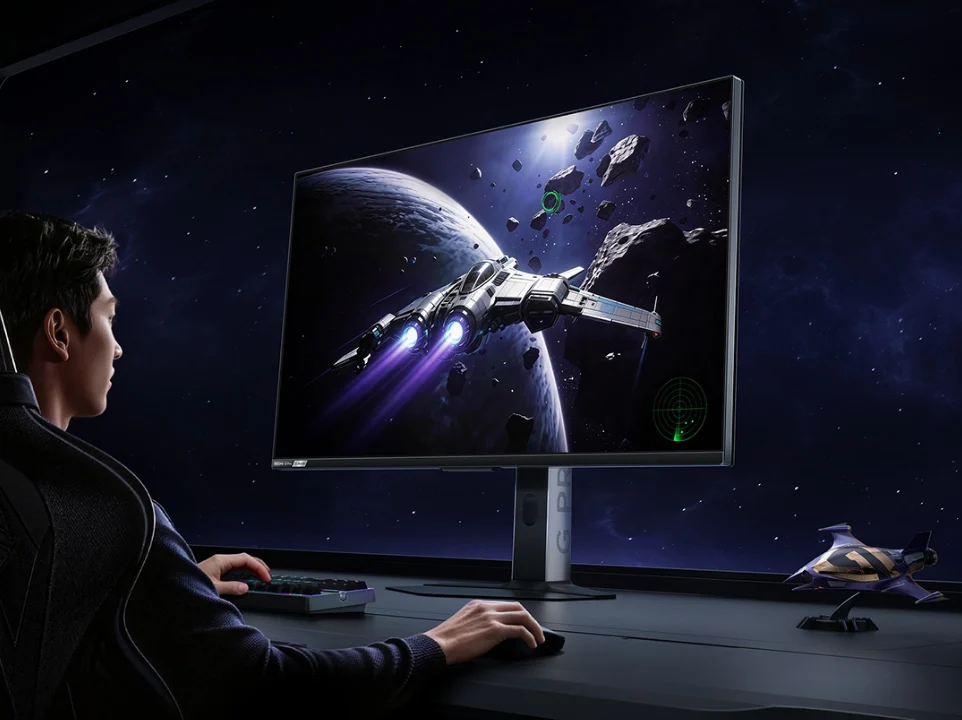
Xiaomi has officially announced its latest flagship monitor, the Redmi G Pro 32U 2026, a device meticulously engineered to cater to the demanding needs of both professional gamers and content creators. This new offering represents a significant leap in display technology for the company, promising an unparalleled visual experience with its cutting-edge features and smart functionalities. The launch positions Xiaomi as a serious contender in the premium monitor market, directly challenging established brands with a product that blends raw performance with integrated smart capabilities.
The Redmi G Pro 32U 2026 is built around a substantial 31.5-inch QD Mini-LED panel. This advanced display technology is the cornerstone of its impressive visual prowess, enabling an extraordinary level of detail and contrast. The monitor boasts an impressive 1152 local dimming zones, a critical feature that allows for precise control over illumination across the screen. This granular control is essential for achieving true blacks and vibrant highlights, thereby significantly enhancing the overall dynamic range of images and videos. For gamers and viewers of high-dynamic-range (HDR) content, this translates into a more immersive and lifelike viewing experience, where subtle details in both the darkest shadows and brightest highlights are rendered with remarkable clarity.
Complementing its advanced panel technology, the Redmi G Pro 32U 2026 delivers exceptional brightness. It achieves a peak brightness of up to 1600 nits, a figure that is crucial for HDR content to truly shine and for the monitor to meet stringent industry standards. Equally important is its ability to maintain an extremely low minimum brightness of 0.001 nits. This capability ensures that dark scenes are rendered with profound depth and realism, preventing any "greyish" appearance that can plague less capable displays. The synergy between high peak brightness and ultra-low minimum brightness is what allows the monitor to deliver a truly impactful HDR experience, making it ideal for cinematic viewing and gaming where atmospheric lighting plays a key role.
The monitor’s commitment to visual fidelity is further underscored by its impressive color reproduction capabilities. It covers an extensive 98% of the DCI-P3 color gamut, 100% of Adobe RGB, and 100% of sRGB. These figures are highly significant for professionals working with color-sensitive applications, such as graphic design, photo editing, and video production. The broad color gamut ensures that a vast spectrum of colors can be accurately displayed, leading to more faithful and impactful creative outputs. Furthermore, the Redmi G Pro 32U 2026 comes factory-calibrated, a crucial step that guarantees exceptional color accuracy right out of the box. This is quantified by a Delta E value of less than 1, a benchmark that indicates virtually imperceptible color differences to the human eye, making it a reliable tool for professionals who depend on precise color representation.
The monitor’s specifications also highlight its dedication to providing a superior gaming experience. It features a dual refresh rate capability, offering users the flexibility to switch between 4K resolution at a fluid 160 Hz and Full HD (1080p) at an ultra-fast 320 Hz. This dual-mode functionality caters to different gaming scenarios and system capabilities. For graphically demanding AAA titles where visual fidelity is paramount, the 4K 160 Hz option provides a smooth and detailed experience. For competitive esports titles or when system resources are more constrained, the 1080p 320 Hz mode offers unparalleled responsiveness, reducing motion blur and providing a distinct advantage in fast-paced gameplay.
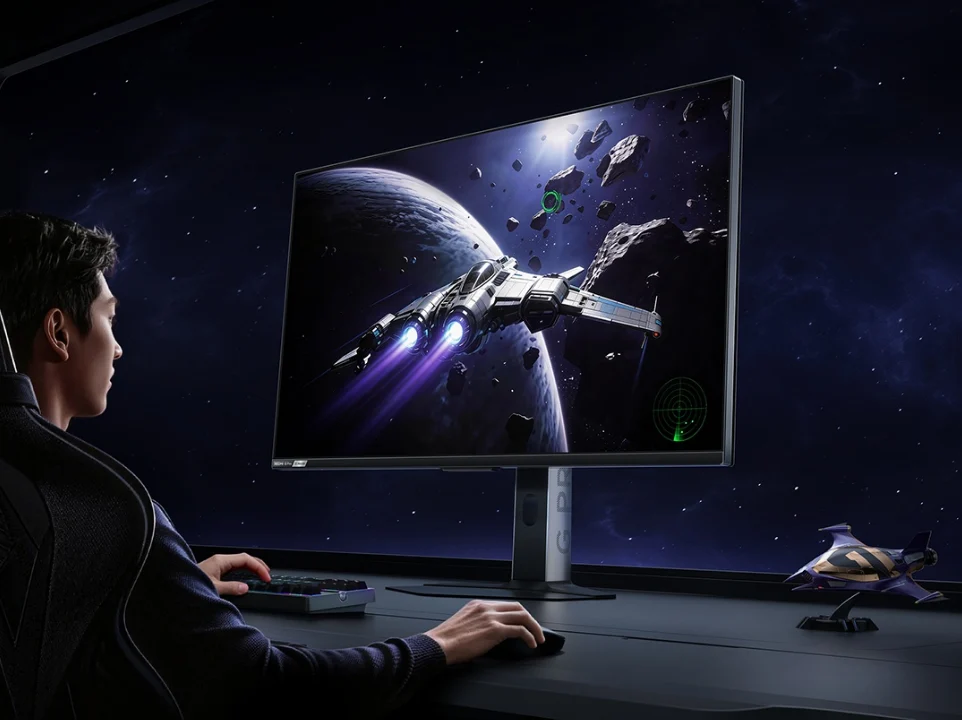
Adding to its gaming prowess, the Redmi G Pro 32U 2026 supports a rapid 1 ms GtG (Gray-to-Gray) response time. This minimizes ghosting and smearing, ensuring that fast-moving objects remain sharp and clear. The inclusion of Variable Refresh Rate (VRR) technology, Auto Low Latency Mode (ALLM), and AMD FreeSync Premium Pro further enhances the gaming experience. VRR synchronizes the monitor’s refresh rate with the graphics card’s frame output, eliminating screen tearing and stuttering. ALLM automatically optimizes display settings for gaming by reducing input lag, while AMD FreeSync Premium Pro ensures a tear-free, low-latency experience with HDR content, making it a comprehensive package for serious gamers.
A particularly innovative aspect of the Redmi G Pro 32U 2026 is its integration with Xiaomi’s proprietary HyperOS. Running on version 3.0, this smart operating system transforms the monitor from a mere display into an interactive hub. This integration allows for seamless access to a variety of streaming services, directly from the monitor itself, eliminating the need for external streaming devices for certain content consumption. Furthermore, HyperOS enables deep integration within the broader Xiaomi ecosystem, allowing the monitor to potentially interact with other Xiaomi smart devices, creating a more connected and convenient user experience.
To power these smart functionalities, the Redmi G Pro 32U 2026 is equipped with a Quad-core Cortex-A73 SoC. This processor is paired with 3 GB of RAM and 32 GB of internal storage, providing ample power and space for the operating system and applications. This hardware configuration suggests that Xiaomi is positioning the monitor not just as a peripheral but as a quasi-smart device capable of handling a range of tasks beyond traditional display functions.
The introduction of the Redmi G Pro 32U 2026 is not an isolated event but rather a continuation of Xiaomi’s aggressive strategy to capture market share across various technology sectors. In recent years, Xiaomi has consistently expanded its product portfolio, moving beyond its initial focus on smartphones to encompass smart home devices, laptops, and now, high-performance monitors. This diversified approach allows the company to leverage its brand recognition and established supply chains to introduce competitive products at attractive price points. The monitor’s release can be seen as a strategic move to consolidate its presence in the premium consumer electronics space, appealing to a demographic that values both performance and integrated smart features.
The year 2026 marks a period where display technology is rapidly evolving, with Mini-LED and OLED panels becoming increasingly accessible and sophisticated. Xiaomi’s timely entry with a QD Mini-LED monitor, boasting such high specifications, suggests an awareness of these market trends and a desire to be at the forefront of innovation. The emphasis on professional-grade color accuracy alongside gaming-centric features like high refresh rates and low response times indicates a product designed for versatility, aiming to serve a dual purpose for demanding users.
The inclusion of HyperOS is perhaps the most distinctive feature, setting it apart from many traditional monitors that primarily focus on display performance. This integration signifies a shift towards more connected and intelligent devices, where screens serve as central points for entertainment, productivity, and ecosystem interaction. This approach aligns with the broader trend of smart devices becoming more interconnected and user-friendly. The hardware specifications for the smart features—Quad-core Cortex-A73, 3GB RAM, 32GB storage—are robust enough to handle streaming and potentially light multitasking, suggesting a well-rounded smart experience.

While the initial announcement specifies availability in "certain countries," the lack of immediate global rollout raises questions about the phased release strategy. Typically, flagship products from major manufacturers are launched simultaneously or in quick succession across key markets. This selective availability could be due to logistical considerations, regional product certification processes, or a strategy to gauge market reception in specific territories before a wider launch. The question of whether this premium monitor will receive an official release in Indonesia, as posed by the original source, reflects a common interest among consumers in emerging markets for advanced technology.
The implications of the Redmi G Pro 32U 2026’s launch are multi-faceted. For consumers, it offers a high-performance monitor with a competitive feature set, potentially at a more accessible price point compared to some established premium brands. For the market, it intensifies competition in the high-end monitor segment, pushing other manufacturers to innovate and potentially adjust their pricing strategies. For Xiaomi, it represents a significant step in solidifying its position as a comprehensive consumer electronics provider, capable of delivering sophisticated products across a wide spectrum of categories.
The monitor’s target audience—gamers and content creators—are discerning consumers who demand high standards. Gamers prioritize smooth gameplay, low latency, and vibrant visuals, while content creators rely on color accuracy, high resolution, and consistent performance for their professional work. The Redmi G Pro 32U 2026 appears to address both these needs comprehensively, making it a compelling option for individuals who straddle both worlds, such as streamers who both play games and create video content.
The dual refresh rate feature is particularly noteworthy. While 4K 160Hz is a premium offering for visual fidelity and smoothness, the 1080p 320Hz option demonstrates a keen understanding of the esports scene, where frame rates and responsiveness are paramount. This flexibility ensures that the monitor can adapt to a wide range of gaming demands, from cinematic experiences to competitive arenas.
The integration of Dolby Vision and Dolby Vision Gaming certifications further enhances its appeal for media consumption and gaming. Dolby Vision is a premium HDR format that offers dynamic metadata, allowing for scene-by-scene optimization of picture quality. This ensures that HDR content is displayed with exceptional contrast, color accuracy, and brightness, providing a truly immersive viewing experience that transcends standard HDR.
Looking ahead, the success of the Redmi G Pro 32U 2026 will likely depend on its pricing strategy, actual real-world performance, and the long-term support and development of its HyperOS integration. If Xiaomi can deliver on the promise of this feature-rich monitor at a competitive price, it could significantly disrupt the premium display market and further cement its reputation as a versatile and innovative technology giant. The company’s track record of aggressive pricing and rapid product iteration suggests that this monitor is poised to make a substantial impact. The announcement is a clear signal that Xiaomi is not shying away from the high-end market and is willing to invest in advanced technologies to capture the attention of the most demanding consumers.