Chalifah Fatihah
The reign of the Burj Khalifa in Dubai as the world’s tallest tower is facing a significant challenge from an ambitious mega-project spearheaded by its neighboring nation, Saudi Arabia. The proposed "Rise Tower" in Riyadh is set to dwarf the iconic 828-meter Burj Khalifa, aiming for a staggering height of 2 kilometers, or 2,000 meters. This colossal undertaking, funded entirely by the Saudi Public Investment Fund (PIF), signals Saudi Arabia’s intent to redefine architectural boundaries and establish new global benchmarks in skyscraper construction.
A New Era of Vertical Ambition
The conceptual design for Rise Tower has been unveiled by the renowned global architecture firm HKS. This visionary project envisions a structure more than double the height of the Burj Khalifa, pushing the limits of engineering and design. The proposed tower is slated to feature an astonishing 678 floors, designed to accommodate a multifaceted array of luxury hotels, world-class fine-dining establishments, the highest observation decks on the planet, and premium office spaces.
Rise Tower is envisioned not merely as a standalone skyscraper but as the centerpiece of a much larger, transformative urban development. It will serve as the anchor for a sprawling future city project known as "North Pole," encompassing an area of 306 square kilometers. This master-planned development aims to create a futuristic urban ecosystem, integrating advanced technology, sustainable living, and unprecedented architectural marvels.
While the unveiling of the Rise Tower concept marks a significant milestone, it is crucial to acknowledge that the project is still in its nascent stages of planning and design. The sheer scale and complexity of a 2-kilometer-high structure necessitate extensive feasibility studies, advanced engineering solutions, and a meticulous design process. Consequently, the realization of Rise Tower is anticipated to be a long-term endeavor, requiring years of dedicated effort before construction can commence.
Saudi Arabia’s Skyward Momentum: Jeddah Tower’s Resurgence
The ambition behind Rise Tower is not an isolated event but part of a broader strategic push by Saudi Arabia to cement its position as a global leader in architectural innovation and megaproject development. Concurrent with the Rise Tower concept, the Kingdom is also revitalizing its other monumental skyscraper project, the Jeddah Tower. After a protracted period of hiatus and facing significant challenges for over a decade, construction on Jeddah Tower has officially resumed and is progressing at a critical pace.
The recommencement of the Jeddah Tower project was officially announced by Kingdom Holding Company, an investment firm owned by Saudi billionaire Prince Alwaleed bin Talal. This announcement has reignited enthusiasm for what was once poised to be the world’s first kilometer-high building.
Jeddah Tower: A Milestone in Progress
The Jeddah Tower is projected to stand at a minimum of 1,000 meters (1 kilometer) tall, with its primary structural support system reportedly capable of exceeding 1.5 kilometers. This colossal structure is set to become the nucleus of the Jeddah Economic Company City, a vast urban development spanning 5.3 million square meters.
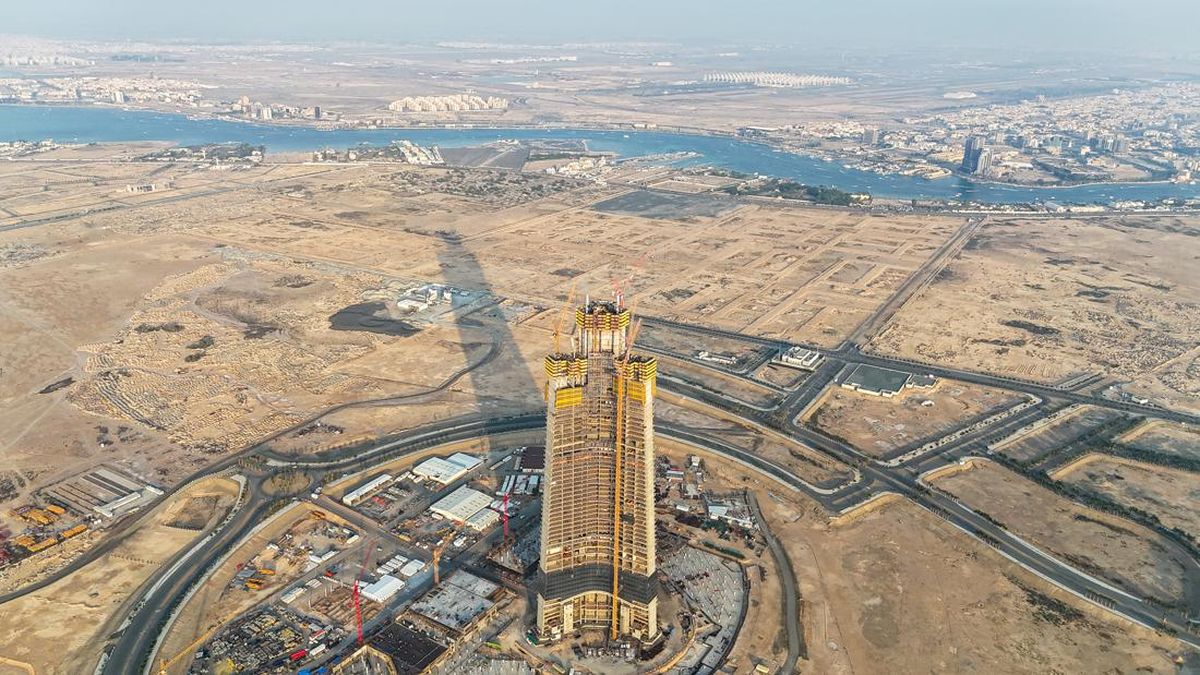
Current construction reports indicate that the building’s structure has surpassed the 91st floor, with its vertical height currently reaching approximately 370 meters. The construction process is reportedly proceeding with remarkable speed, averaging a rate of one floor every five days. This aggressive pace is supported by a workforce of 5,200 skilled laborers on-site. Furthermore, the installation of the exterior glass facade has also commenced, adding a visual testament to the project’s tangible progress.
The architectural vision for Jeddah Tower is the brainchild of Adrian Smith, an American architect renowned for his significant contributions to global landmark buildings, including the Burj Khalifa itself. The project is currently targeted for full completion by the year 2028, marking another significant milestone in Saudi Arabia’s ambitious development agenda.
Analyzing the Implications: Economic Diversification and Global Stature
The concurrent pursuit of both the Rise Tower and the resurgence of Jeddah Tower underscore Saudi Arabia’s strategic vision for economic diversification and enhanced global standing. These mega-projects are not merely about constructing tall buildings; they represent a concerted effort to:
- Drive Tourism and Hospitality: Iconic skyscrapers like these are powerful magnets for international tourism. They offer unique attractions, luxury accommodations, and world-class amenities that draw visitors from across the globe. This influx of tourists can significantly boost the hospitality sector, creating jobs and generating revenue.
- Attract Foreign Investment: The sheer ambition and scale of these projects signal a country committed to large-scale development and innovation. This can attract foreign direct investment in various sectors, including real estate, technology, and infrastructure.
- Showcase Technological Prowess: The engineering and architectural challenges involved in constructing buildings of such unprecedented heights require cutting-edge technology and expertise. Successfully executing these projects positions Saudi Arabia at the forefront of global construction innovation.
- Foster a Modern Image: These futuristic structures are integral to the Kingdom’s Vision 2030 plan, which aims to transform Saudi Arabia into a modern, dynamic global hub. They project an image of progress, modernity, and forward-thinking ambition.
- Create Employment Opportunities: The construction and subsequent operation of these mega-projects will generate thousands of direct and indirect employment opportunities, contributing to the nation’s economic growth and workforce development.
The Global Race for Height and Innovation
The pursuit of the world’s tallest building has long been a symbol of national pride and technological advancement. Historically, the title has passed through various nations, from the United States in the early 20th century to the Petronas Towers in Malaysia, and most recently, the Burj Khalifa in the United Arab Emirates. Saudi Arabia’s ambitious plans for Rise Tower and Jeddah Tower indicate a clear intention to reclaim and potentially redefine this global race.
The technological hurdles associated with constructing a 2-kilometer-high tower are immense. These include:
- Wind Engineering: Mitigating the immense wind forces at such extreme heights requires sophisticated aerodynamic design and advanced wind-tunnel testing.
- Structural Integrity: Ensuring the stability and safety of a structure that is over twice the height of the current tallest building presents unprecedented structural engineering challenges. This involves advanced materials, innovative foundation designs, and complex load-bearing systems.
- Vertical Transportation: Developing high-speed, efficient, and safe elevator systems to service hundreds of floors is a critical component. This may involve advanced technologies like double-decker elevators or even magnetic levitation systems.
- Material Science: The development and application of new, high-strength, lightweight materials will be crucial to reduce the overall weight of the structure and enhance its resilience.
- Logistics and Construction: The sheer scale of material transportation, site management, and worker safety at such extreme heights requires meticulous planning and execution.
A Glimpse into the Future of Urban Living
The "North Pole development" associated with Rise Tower suggests a holistic approach to urban planning, going beyond just the skyscraper. This implies a focus on creating self-sustaining communities with integrated residential, commercial, and recreational facilities, all designed with sustainability and technological advancement at their core. Such developments are indicative of a global trend towards creating "smart cities" that leverage technology to improve the quality of life for their inhabitants.
The successful realization of these projects would not only elevate Saudi Arabia’s architectural profile but also contribute to the global discourse on sustainable urban development, advanced engineering, and the future of vertical living. While the timelines are ambitious and the challenges significant, the commitment demonstrated by Saudi Arabia through the PIF and its chosen architectural partners signals a determined push towards achieving these extraordinary feats. The world will undoubtedly be watching as these ambitious plans transition from concept to concrete reality, potentially reshaping skylines and redefining the very notion of what is possible in the realm of skyscraper architecture. The race for the sky is far from over, and Saudi Arabia is making a bold statement that it intends to lead the pack.