Azin Asro
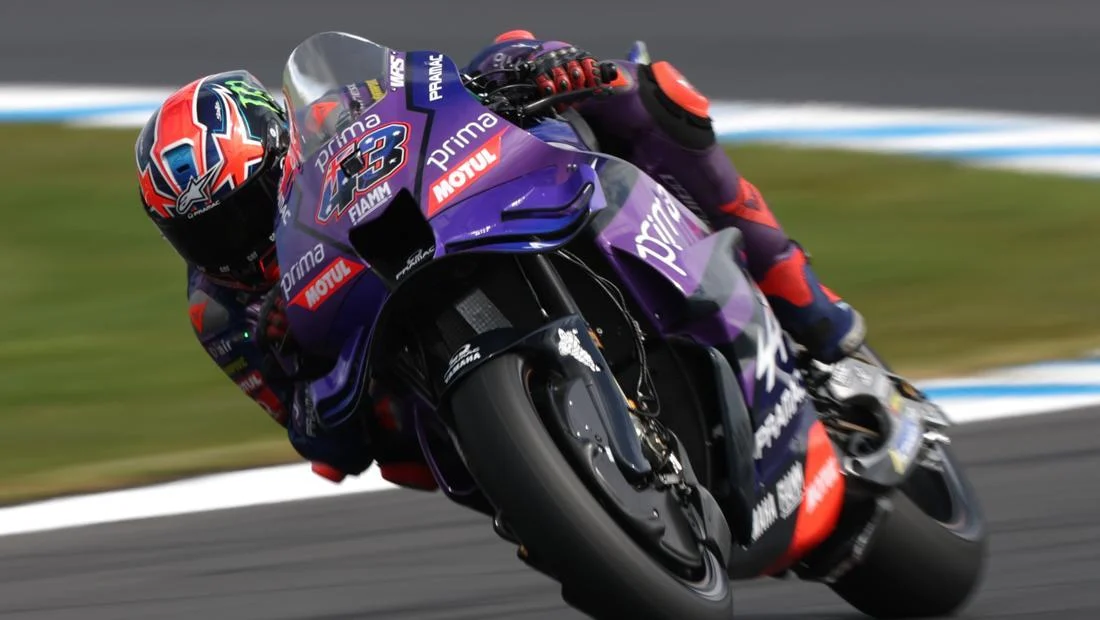
The landscape of motorcycle Grand Prix racing is undergoing a profound structural evolution, and the testing laboratories of Iwata are at the very epicenter of this transformation. As MotoGP prepares for a sweeping technical overhaul slated for the 2027 season, manufacturers are aggressively developing prototypes designed to comply with the radical new regulations. Among those at the vanguard of this engineering shift is Yamaha test rider Augusto Fernandez, who recently offered a striking assessment of the factory’s upcoming 850cc machinery. According to Fernandez, the gap in character, handling, and engineering philosophy between the current V4 1.000cc generation and the nascent 2027 prototype is so profound that the new machine barely resembles a traditional Yamaha, altering the brand’s identity on the track entirely.
Fernandez, whose primary mandate involves spearheading the developmental trajectory of Yamaha’s future grand prix program, found himself thrust back into the competitive cauldron of a grand prix weekend to substitute for an injured rider within the Pramac Yamaha stable. This temporary return to the grid offered the Spaniard a unique dual perspective: navigating the physical and mental demands of a current-specification MotoGP race weekend while simultaneously carrying the immense developmental weight of Yamaha’s post-2026 technological roadmap. Speaking to the international motorsport media ahead of a demanding Grand Prix weekend, Fernandez elaborated on the vast chasms separating the two eras of grand prix engineering.
The Technical Chasm: Moving from 1.000cc V4 to 850cc Prototypes
The upcoming regulatory shift for the 2027 MotoGP season represents one of the most significant rule resets in the modern era of the sport. In an effort to curb escalating cornering speeds, enhance safety parameters, improve racing spectacles, and increase the commercial relevance of road-going motorcycle technology, the Fédération Internationale de Motocyclisme (FIM) and Dorna Sports mandated a reduction in engine displacement from 1,000cc to 850cc. Furthermore, the regulations enforce strict limitations on aerodynamic developments, ban ride-height control devices entirely, and restrict GPS usage, fundamentally altering how engineers extract performance from the prototypes.
For Yamaha, a manufacturer historically synonymous with inline-four engine configurations before expanding its developmental horizons, the transition to the 850cc era requires a complete rethinking of chassis dynamics, power delivery, and electronic mapping. Fernandez explained that the divergence between the current V4 1.000cc machines competing in the championship and the 850cc prototype currently under development in the Yamaha racing department extends far beyond mere displacement figures. The cumulative impact of altered weight distribution, reduced aerodynamic downforce footprints, different tire construction characteristics, and the absence of ride-height adjusting mechanisms creates a profoundly distinct riding experience.
"Kondisi kami saat ini dengan 850 cc dan motor yang sedang kami bikin, sangat berbeda dengan V4 (1.000cc) ini," Fernandez remarked in an interview with Crash, capturing the immediate cognitive dissonance riders face when switching between the two developmental timelines. He continued, "Itulah mengapa akhir pekan ini akan lebih dari sekadar akhir pekan yang sulit bagi saya terkait adaptasi dan segala hal lainnya."
The complexity of modern MotoGP engineering means that a rider cannot simply adapt through muscle memory alone. The physical inputs required to wrestle a machine equipped with complex ride-height systems differ vastly from a simpler, lighter, and less mechanically assisted 850cc chassis. Fernandez emphasized that the visual and sensory feedback provided by the 2027 prototype breaks traditional molds associated with the Japanese manufacturer’s racing DNA. "(Bahkan) selain bannya, ini adalah motor yang benar-benar berbeda sekarang. Kelihatannya bukan Yamaha lagi. Hampir seperti bertukar merek," he asserted, highlighting how far removed the prototype’s handling characteristics are from the current factory machinery.
A Dual Mandate: Balancing Grand Prix Competition with Test Rider Duties
Fernandez’s sudden immersion into the competitive paddock came as a direct consequence of an unfortunate injury sustained by Pramac Yamaha regular rider Toprak Razgatlioglu. With Razgatlioglu ruled out of action for the foreseeable future, Yamaha required a seasoned, highly capable rider intimately familiar with the inner workings of their machinery to fill the vacant seat. Fernandez emerged as the logical choice, bridging the gap between race readiness and deep technical comprehension.
However, stepping into a race seat does not absolve a test rider of their primary institutional obligations. Yamaha’s 2027 development program is operating on a fiercely compressed timeline, leaving no room for stagnation in the test department. Consequently, Fernandez finds himself executing a grueling balancing act, maintaining his competitive sharpness on the active grand prix grid while continuing to log heavy mileage on test circuits alongside fellow test rider and former world champion Andrea Dovizioso.
Addressing this intense dual workload, Fernandez confirmed that his responsibilities remain heavily bifurcated. "Saya akan menjalani keduanya! Sangat sibuk," he stated regarding his overlapping duties. "Dovi membantu, tapi saya masih mengerjakan tesnya. Saya adalah pebalap di sini hingga akhir musim, dan ingin menikmati kesempatan ini, tetapi pekerjaan pengujian saya lebih penting."
This division of labor underscores the immense pressure currently resting on Yamaha’s racing division. As European manufacturers such as Ducati, KTM, and Aprilia pour vast resources into developing their respective 2027 concepts, Japanese heavyweights Yamaha and Honda are under immense pressure to claw back competitive ground. For Fernandez, every minute spent on track—whether battling for grid positions on a current-specification machine or evaluating prototype components behind closed doors—serves a vital function in Yamaha’s broader structural recovery plan.
Proving Adaptability: Wet Weather Pace at Phillip Island
Despite the immense cognitive load required to transition between contrasting machinery eras and manage a punishing dual-role schedule, Fernandez demonstrated his innate professionalism and adaptability during the grand prix weekend at the historic Phillip Island Circuit. Navigating a notoriously treacherous, rain-soaked asphalt layout during the qualifying sessions, the Spanish rider showcased his technical acumen and feel for low-grip conditions by extracting impressive performance from his machine.
In a qualifying performance that raised eyebrows across the paddock, Fernandez secured the 17th position on the starting grid. More notably, his lap time in the wet conditions placed him ahead of several high-profile riders, including factory Yamaha spearhead Alex Rins, 2021 MotoGP World Champion Fabio Quartararo, and VR46 Ducati rider Franco Morbidelli. Outperforming factory-supported riders on a satellite machine during a transitional weekend serves as a testament to Fernandez’s proficiency as both a developmental asset and a competitive racer capable of delivering under pressure.
This performance also provides crucial telemetry for Yamaha’s engineers. Operating in variable weather conditions allows the team to gather vital data on tire degradation, traction control mapping, and chassis compliance—metrics that feed directly into both the current racing program and the foundational parameters of the 2027 prototype project.
Broader Industry Implications and the Road to 2027
The observations shared by Augusto Fernandez offer a fascinating window into the behind-the-scenes realities of MotoGP’s upcoming regulatory transition. As the championship moves closer to the 2027 deadline, all participating manufacturers are grappling with the realities of designing motorcycles from a blank sheet of paper.
The elimination of ride-height devices—which have dominated technical debates and race strategies in recent years—is expected to place a greater emphasis on mechanical grip, rider skill, and natural chassis balance. Furthermore, the reduction in engine displacement to 850cc aims to lower top speeds at circuits with limited run-off areas, enhancing overall rider safety without sacrificing the thrilling spectacle of premier-class motorcycle racing.
For Yamaha, Fernandez’s comments indicate that the factory is not merely refining its existing philosophy, but is willing to take bold, radical departures in engineering design to ensure competitiveness in the new era. If a trusted test rider notes that a prototype feels so radically altered that it "looks like another brand," it suggests that Yamaha’s engineers are exploring unconventional paths regarding weight distribution, power delivery characteristics, and frame rigidity.
As the 2025 and 2026 seasons progress, the development race behind closed doors will only intensify. Test riders like Augusto Fernandez and Andrea Dovizioso will carry the heavy burden of translating engineering theories into tangible on-track performance. For Fernandez personally, his ongoing stint as a race replacement offers a dual platform: a chance to prove his enduring competitive viability on the grid, and a vital testing laboratory to shape the future of Yamaha in MotoGP.