Eko Sulistyo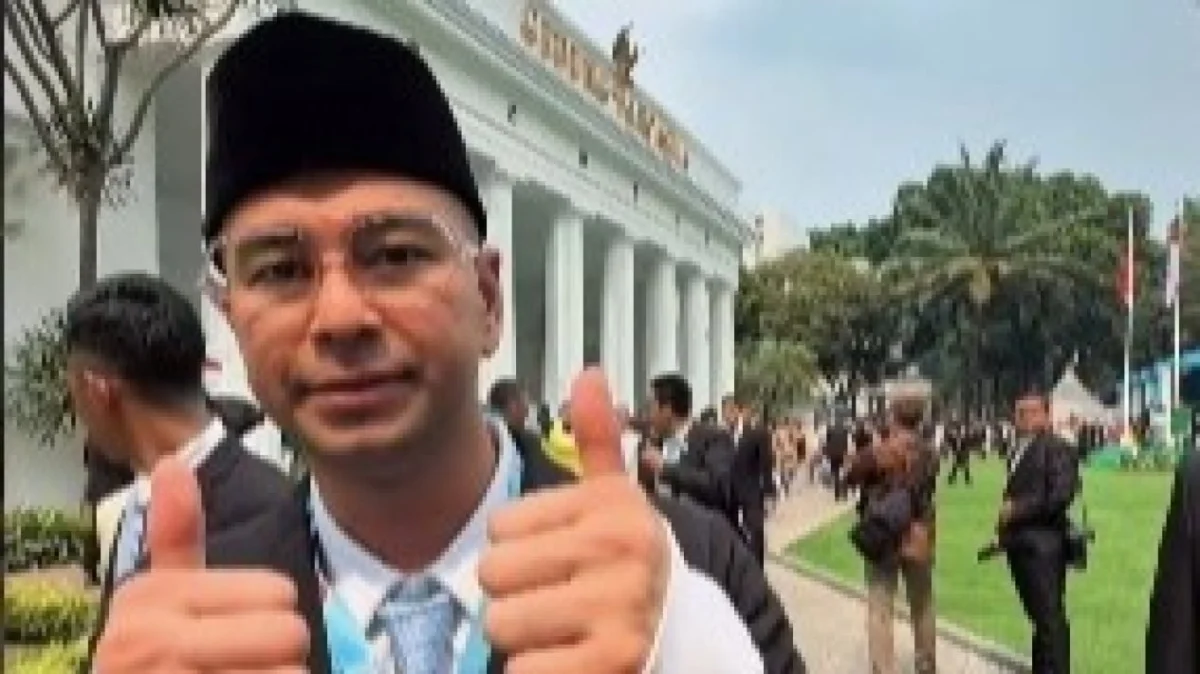
The commemoration of the Birth of Pancasila on June 1, 2026, served as a profound moment of national reflection, drawing together the highest echelons of government, military leaders, and prominent public figures at the historic Gedung Pancasila in Jakarta. Among the distinguished guests was Raffi Ahmad, the renowned media mogul and recently appointed Special Envoy to the President, whose presence underscored the administration’s strategy of bridging the gap between traditional statecraft and the younger generation. Attending the ceremony led by President Prabowo Subianto, Raffi Ahmad utilized his significant public platform to advocate for the enduring relevance of the state ideology, positioning Pancasila not merely as a historical relic but as a vital, living compass for Indonesia’s future in an increasingly complex global landscape.
The ceremony, held under the theme of "Pancasila: The Foundation of Indonesia’s Global Leadership," began in the early hours of Monday morning. The atmosphere at Gedung Pancasila—the site where the nation’s founding father, Sukarno, first delivered his landmark speech on the five principles in 1945—was one of solemnity and renewed purpose. As a Special Envoy, Raffi Ahmad’s participation was more than symbolic; it represented the integration of modern communication influencers into the formal structure of national character-building. Following the official proceedings, Raffi took to social media to share the event with his millions of followers, emphasizing that the values of unity, social justice, and democracy must remain the bedrock of the nation’s progress.
A Chronology of the 2026 Pancasila Day Observance
The day’s events commenced at 07:30 WIB as dignitaries began arriving at the Gedung Pancasila complex in Central Jakarta. Security was tight, reflecting the high-profile nature of the assembly, which included members of the Indonesia Onward Cabinet, heads of state institutions, and veteran organizations. President Prabowo Subianto arrived at approximately 07:50 WIB, accompanied by the Vice President and top military brass.
The formal ceremony began promptly at 08:00 WIB with the sounding of the sirens, followed by a moment of silence to honor the fallen heroes who fought for Indonesia’s independence and the preservation of its ideology. The reading of the original text of the 1945 Constitution’s Preamble and the recitation of the five principles of Pancasila were conducted with a precision that highlighted the state’s commitment to ideological continuity.
Raffi Ahmad, dressed in formal traditional attire, was observed standing among the presidential staff and advisors. His inclusion in the inner circle of the ceremony was a clear indicator of his evolving role within the Prabowo administration, where he has been tasked with engaging the youth and creative industries in national development goals. Following the President’s keynote address, which focused on economic self-sufficiency and national defense rooted in the second and fifth precepts of Pancasila, the ceremony concluded with a prayer for national unity.
By 11:00 WIB, Raffi Ahmad had transitioned from the formal ceremony to his role as a public communicator. Through his official digital channels, he provided a "behind-the-scenes" look at the event, effectively humanizing the rigid protocols of state functions for a younger audience. His message, which quickly went viral, centered on the idea that "the future of Indonesia is built on the pillars of hard work, mutual cooperation (gotong royong), and a steadfast national spirit."
The Role of the Special Envoy in Ideological Dissemination
The appointment of Raffi Ahmad as a Special Envoy to the President has been a subject of significant domestic interest since its inception. In the context of the 2026 Pancasila Day, his role was to translate the abstract concepts of the state ideology into actionable inspiration for the "Gen Z" and "Gen Alpha" cohorts. During his post-ceremony briefing, Raffi noted that the challenges of 2026—ranging from the rapid integration of artificial intelligence to shifting geopolitical alliances—require a stable internal moral compass.
"Today, I had the honor of attending the June 1st Pancasila Day Ceremony led directly by President Prabowo Subianto," Raffi stated. "Pancasila is not just a chapter in a history book. It is the guide for how we think, how we act, and how we create. For the younger generation, this is our foundation. We can reach for the stars and master the latest technology, but we must do so without losing our identity as Indonesians."
Analysts suggest that the administration’s use of a figure like Raffi Ahmad is a calculated move to combat ideological polarization and the perceived erosion of national values in the digital age. By framing Pancasila as a prerequisite for personal and professional success, the government aims to foster a brand of "productive nationalism" among the 70% of the population currently within the productive age bracket.
Historical Context: From 1945 to 2026
The significance of June 1st as the Birth of Pancasila was formally solidified in 2016 through a Presidential Decree by then-President Joko Widodo, which also designated the day as a national holiday. This move was intended to ensure that the origins of the state ideology were acknowledged and celebrated with the same fervor as Independence Day on August 17th.
Gedung Pancasila itself holds immense historical weight. Originally the Dutch colonial Volksraad (People’s Council) building, it became the meeting place for the Investigating Committee for Preparatory Work for Independence (BPUPKI). It was here, 81 years prior to the 2026 ceremony, that Sukarno articulated the five principles: Belief in the One and Only God, Just and Civilized Humanity, The Unity of Indonesia, Democracy Guided by the Inner Wisdom in the Unanimity Arising Out of Deliberations Amongst Representatives, and Social Justice for all the People of Indonesia.
In 2026, the context has shifted from decolonization to global competition. President Prabowo’s administration has consistently emphasized that Pancasila is the "immune system" of the nation, protecting it against foreign cultural hegemony and internal division. The presence of figures from the creative and entertainment sectors, led by Raffi Ahmad, signifies a "total social approach" to governance, where culture and ideology are seen as inseparable from political stability.
Supporting Data: The Demographic Imperative
The emphasis on youth during the 2026 celebrations is backed by compelling demographic data. According to the 2025-2026 National Statistics Agency (BPS) projections, Indonesia is currently in the peak of its demographic bonus. Approximately 190 million Indonesians are under the age of 40. This segment of the population is the primary driver of the digital economy, which is estimated to contribute over $150 billion to the GDP by the end of 2026.
However, government surveys conducted in early 2026 indicated a "value gap" among citizens aged 18 to 25. While 85% of respondents expressed pride in being Indonesian, only 40% felt they fully understood how to apply Pancasila in their daily professional lives. This discrepancy is what the Prabowo administration seeks to address by involving influential figures. Raffi Ahmad’s message—stressing that "innovation must be balanced with ethics and unity"—directly targets this "value gap," attempting to link economic productivity with ideological loyalty.
Official Responses and Broader Implications
The reaction from the political community has been largely supportive of the inclusive nature of the 2026 ceremony. Members of the House of Representatives (DPR) noted that seeing a mix of veteran statesmen and modern influencers creates a sense of "national continuity."
"The Birth of Pancasila is a moment for all elements of the nation to synchronize their vision," said a spokesperson for the Ministry of Home Affairs. "The President’s decision to involve diverse public figures ensures that the message of Pancasila reaches every corner of society, from the boardroom to the social media feed."
Critics, however, caution that the "celebrity approach" must be matched by substantive policy. While Raffi Ahmad’s involvement successfully garners views and engagement, the underlying goals of social justice and economic equality—core tenets of the fifth precept of Pancasila—remain the ultimate benchmark for the administration’s success. The 2026 ceremony served as a reminder that while the delivery method of the message may change, the accountability of the state to its founding principles remains absolute.
Conclusion: Pancasila as a Compass for 2045
As the ceremony concluded and the sun rose higher over the capital, the narrative of the day became clear: Indonesia is preparing its population for the "Golden Indonesia 2045" vision by anchoring its modern ambitions in its original 1945 values. Raffi Ahmad’s closing remarks in his viral post served as a call to action for the nation’s youth to be "courageous in dreaming big while remaining rooted in the spirit of gotong royong."
The 2026 Pancasila Day celebration at Gedung Pancasila will likely be remembered as a turning point in how the Indonesian state communicates its identity. By merging the gravity of President Prabowo’s leadership with the cultural reach of Raffi Ahmad, the government has signaled that the path to the future is paved with the principles of the past. In a world of rapid change, the message from Jakarta on June 1, 2026, was one of steadfastness: that Pancasila remains the ultimate compass for thinking, acting, and contributing to the global community.