Eko Sulistyo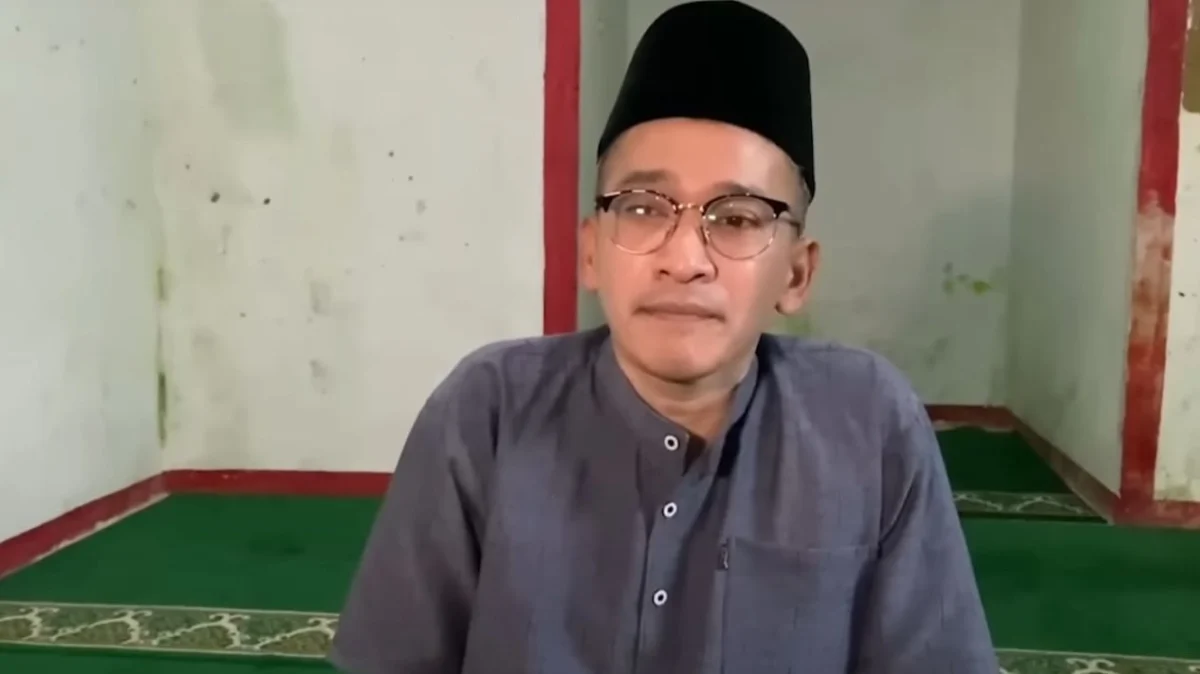
The post-divorce relationship between prominent Indonesian television personality Ruben Onsu and his former spouse, Sarwendah Tan, has once again entered the public spotlight following serious allegations regarding child visitation rights. On Monday, June 1, 2026, Ruben’s legal representative, Minola Sebayang, held a press conference to clarify the ongoing friction between the two parties, specifically focusing on what he described as the systematic obstruction of Ruben’s access to his three children. Through a series of documented evidences and legal arguments, the legal team sought to highlight a discrepancy between the agreed-upon post-divorce arrangements and the current reality faced by the veteran presenter.
At the heart of the dispute is a formal "akta kesepakatan" or a notarized agreement signed by both Ruben and Sarwendah prior to the finalization of their divorce. According to Minola, this document was intended to serve as a roadmap for co-parenting, ensuring that despite the dissolution of the marriage, the children—Betrand Peto Putra Onsu, Thalia Putri Onsu, and Thania Putri Onsu—would maintain a consistent and healthy relationship with their father. The agreement explicitly stipulates that Ruben is entitled to spend two to three days per week with his children. However, the legal team asserts that this provision is currently being ignored or intentionally complicated by the other side.
The Evidence of Restricted Visitation Rights
During the briefing, Minola Sebayang presented a copy of the agreement to the media, emphasizing that Ruben’s claims are not merely anecdotal but are backed by a legally binding document. "When we state that Ruben has the right to be with his children for two to three days a week, it is not just talk. It is a fact established in writing," Minola stated. The presentation of this document was a strategic move to counter public narratives that might suggest the dispute was based on a lack of clarity regarding custody or visitation schedules.
Beyond the physical document, the legal team also revealed digital evidence in the form of communication logs. These logs allegedly show Ruben’s repeated attempts to coordinate visitation times with Sarwendah. The responses from Sarwendah’s side, however, have been characterized by the legal team as dismissive or uncooperative. Specifically, when Ruben reaches out to arrange time with the children, he is frequently told to "contact the children directly."
While this might seem like a reasonable request on the surface, Minola argued that it serves as a practical barrier. The children, particularly the younger ones, do not always have their mobile devices in their possession. This leads to significant delays in communication, where messages or calls from Ruben often go unanswered for days. "The reality is that the phones are not always in the children’s hands. A message sent today might only receive a reply several days later. This makes spontaneous or even planned communication nearly impossible without the mother’s active cooperation," Minola explained.
A Chronology of the Marital Dissolution
The current conflict is the latest chapter in a saga that began in mid-2024 when Ruben Onsu officially filed for divorce from Sarwendah at the South Jakarta District Court. The news of their separation shocked the Indonesian public, as the couple had long been perceived as a pillar of domestic stability in the entertainment industry since their marriage in 2013. Throughout the decade they spent together, they built a massive business empire and a public image centered on family values.
The divorce proceedings were finalized in late 2024, with the court granting the dissolution of the marriage and approving the terms of the settlement, which included the visitation agreement now in question. Initially, both parties appeared to be moving toward an amicable co-parenting arrangement. However, as 2025 progressed, rumors of tension began to surface. By early 2026, the public rapport between the two had noticeably chilled, culminating in the current legal standoff.
The timeline of the dispute suggests that while the legal paperwork was completed efficiently, the emotional and practical execution of the "best interests of the child" principle has faced significant hurdles. Ruben’s legal team maintains that their client has remained patient throughout the process, but the persistent inability to exercise his parental rights has forced him to bring the matter back into the public and legal arena.
Financial Responsibilities and Ongoing Support
In addition to the issues of visitation and communication, Minola Sebayang addressed allegations and public speculation regarding Ruben’s financial commitment to his children. In many high-profile divorces, the issue of child support becomes a point of contention, often used as leverage in visitation disputes. However, the legal team was quick to point out that Ruben has gone above and beyond his legal obligations.
According to the statement, Ruben continues to fund the children’s education, healthcare, and daily living expenses. Minola asserted that Ruben is even paying for expenses that were not mandated by the court or the initial agreement. "There are numerous financial responsibilities that Ruben continues to shoulder, including things that are technically no longer his legal burden. He does this because his priority is the well-being and comfort of his children," the lawyer noted.
By highlighting Ruben’s continued financial diligence, the legal team aims to dismantle any narrative suggesting that he is an "absent" or "irresponsible" father. The argument presented is that Ruben is fulfilling all the duties of a father—financial, emotional, and legal—but is being denied the primary right that accompanies those duties: the right to spend time with his offspring.
Legal Framework: Visitation and the Rights of the Non-Custodial Parent
Under Indonesian law, specifically the Marriage Law of 1974 and the Compilation of Islamic Law (KHI) for Muslim citizens, the principle of the "best interests of the child" is paramount. While custody (Hadhanah) is often awarded to the mother for children of a young age, the law explicitly protects the rights of the non-custodial parent to maintain a relationship with their children.
Article 41 of the Marriage Law states that even after a divorce, both parents are still obliged to maintain and educate their children. If there is a dispute regarding these responsibilities, the court has the authority to make a determination. Legal experts suggest that if a custodial parent is found to be intentionally obstructing visitation rights granted by a court or a notarized agreement, the court can intervene. This intervention can range from a formal warning to, in extreme cases, a reassessment of the custody arrangement itself.
In Ruben Onsu’s case, the existence of a notarized "akta kesepakatan" provides a strong legal foundation. In the Indonesian legal system, such an agreement is considered a contract that must be honored by both parties (Pacta Sunt Servanda). Failure to adhere to the terms of a notarized agreement can be seen as a breach of contract, providing Ruben with the option to file a lawsuit for fulfillment or to seek a court-ordered enforcement of visitation.
The Psychological Impact and Broader Implications
The public nature of the Ruben-Sarwendah dispute brings to light the broader challenges of "celebrity co-parenting." For the children involved, the conflict is not just a private family matter but one that is dissected by millions of social media users. Child psychologists often warn that high-conflict divorces, especially those involving the restriction of access to one parent, can lead to parental alienation syndrome or long-term emotional distress for the children.
The "direct contact" policy mentioned by Sarwendah’s side—where a father must go through the children to see them—is a common point of friction in modern divorces. While it may be intended to empower the children or reduce direct conflict between the ex-spouses, it often places an undue burden on the children to act as mediators or gatekeepers. For Thalia and Thania, who are still in their formative years, navigating the complexities of parental scheduling can be overwhelming.
Furthermore, this case serves as a cautionary tale for the Indonesian public regarding the importance of clear, enforceable post-divorce agreements. While Ruben and Sarwendah had an agreement in place, the lack of a specific mechanism for communication (such as a designated co-parenting app or a third-party mediator) has allowed for the current breakdown.
Seeking a Resolution in the Best Interest of the Children
As the situation stands, Ruben Onsu’s legal team has signaled that they are prepared to take further steps if the current barriers to communication and visitation are not removed. The primary goal, according to Minola Sebayang, is not to engage in a public smear campaign but to restore the father-child bond that was promised in their legal agreements.
The response from Sarwendah’s camp has yet to be fully articulated in a formal legal setting following this latest press conference. Historically, her side has maintained that they are not preventing Ruben from seeing the children, suggesting instead that the timing and methods of communication are the main points of contention.
The resolution of this dispute will likely require a move away from the "he-said, she-said" dynamic and toward a more structured, perhaps court-monitored, visitation schedule. For Ruben Onsu, the stakes are high. As a public figure whose brand is built on sincerity and family, the struggle to be an active part of his children’s lives is both a personal heartbreak and a public challenge.
In the coming weeks, it remains to be seen whether the two parties can return to the negotiating table to refine their co-parenting strategy or if the South Jakarta District Court will once again be called upon to adjudicate the private lives of one of Indonesia’s most famous families. What is clear, however, is that the legal team’s presentation of evidence has shifted the burden of proof, placing the onus on the custodial side to demonstrate that they are indeed acting in accordance with the signed agreements and the best interests of the three children involved.