Tata Titiana
Depok, a municipality in West Java, Indonesia, officially became a city on April 27, 1999. Prior to this, it was an administrative district within the Bogor Regency. However, a lesser-known chapter of Depok’s past reveals a period when it functioned as an independent state, complete with its own president. This fascinating historical anomaly, often overlooked in mainstream narratives of Indonesian development, offers a unique glimpse into early forms of self-governance and land ownership during the colonial era. The story of Depok’s transition from a vast private estate to a self-governing republic is a testament to the complex socio-political landscape of the Dutch East Indies.
The origins of Depok as a distinct entity trace back to the late 17th century when Cornelis Chastelein, a wealthy Dutch merchant, purchased a significant tract of land spanning approximately 12.44 square kilometers. The transaction, valued at 2.4 million Dutch guilders, was for a "partikulier" estate, meaning it was private land not under the direct administrative control of the Dutch East Indies government. This distinction was crucial, as it allowed Chastelein considerable autonomy in managing his domain. By the 18th century, Depok had evolved into a formal administrative area with its own "gemeente bestuur," or civil government, with Chastelein himself serving as its first ruler and founder.
Initially, the land Chastelein acquired was largely untamed wilderness. Through the labor of his enslaved people, drawn from various ethnic groups across the archipelago, he systematically cleared forests to establish agricultural lands. The territorial scope of this private estate was remarkably extensive, encompassing what is now the entirety of modern Depok, as well as significant portions of South Jakarta, including Pasar Minggu, and even extending to Gambir in Central Jakarta. The very first inhabitants of this burgeoning territory were the enslaved individuals who toiled under Chastelein’s command, laying the groundwork for the community that would eventually govern itself.
The Genesis of an Independent Republic
Cornelis Chastelein, known for his devout Catholic faith, harbored a deep sense of benevolence towards his enslaved population. In his will, dated June 28, 1714, he stipulated that upon his death, his entire estate—including land, housing, livestock, and agricultural tools—be bequeathed to his enslaved people. Crucially, he also granted them their freedom. To prevent potential disputes and ensure an orderly transition, Chastelein appointed Jarong van Bali to lead and organize the newly freed community.

The freed inhabitants, conscious of the potential for power struggles after Jarong van Bali’s tenure, recognized the need for a structured leadership. This led to the establishment of a democratic system for electing a leader, designated as the president, every three years. The system eschewed the position of vice president; instead, the president was to be assisted by a secretary in carrying out governmental duties. This unique governmental framework was conceptualized by a Batavia-based lawyer and was formally implemented in 1913, marking the official establishment of the Republic of Depok.
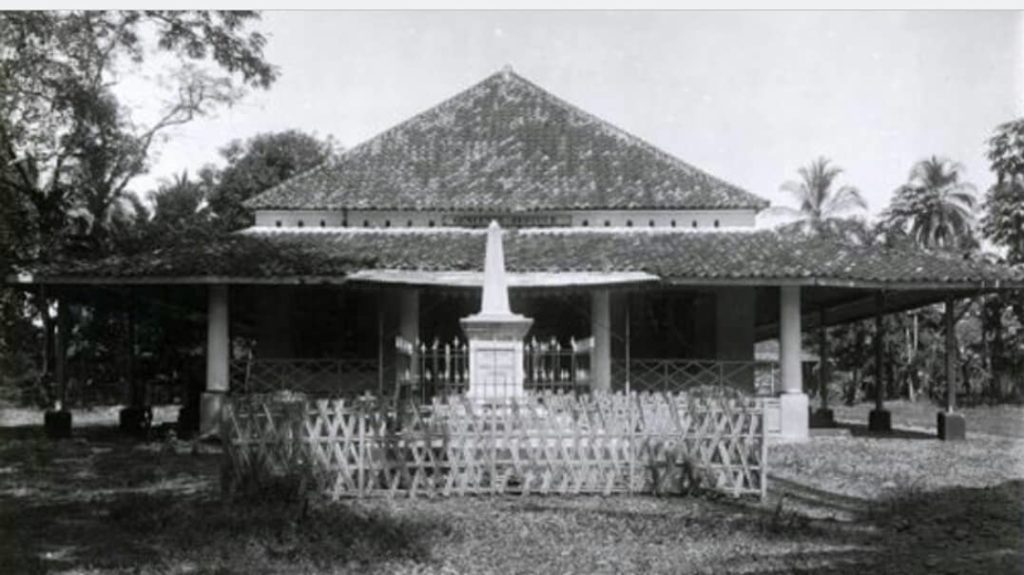
The first presidential election in Depok took place in 1913, ushering in a new era for the former private estate. The governmental structure was known as Het Gemeente Bestuur van Het Particuliere Land Depok (The Municipal Government of the Private Land of Depok). The center of this nascent republic was strategically located at the Kilometer 0 point, which is still marked by the Depok Monument. Not far from this landmark stood the former government building, which has since been repurposed as the Harapan Hospital. The presidential term was set at a concise three years, emphasizing a rotation of leadership.
A Lineage of Presidents
The first president of the Republic of Depok was Gerrit Jonathans, who assumed office in 1913. Following his term, three other individuals held the presidential office during the republic’s existence. Martinus Laurens served in 1921, followed by Leonardus Leander in 1930. The last president was Johannes Matjis Jonathans, who took office in 1952. Unfortunately, detailed historical records or comprehensive accounts of the specific achievements or challenges faced by each of these presidents during their respective tenures are scarce, leaving many aspects of their leadership to historical speculation.
From Legacy to Nationhood: A Timeline of Depok’s Transformation
- Late 17th Century: Cornelis Chastelein purchases a vast tract of land, establishing Depok as a private estate (partikulier land).
- 18th Century: Depok develops into an administrative area with its own civil government (gemeente bestuur), with Chastelein as its founder and first ruler. The land is cleared and developed by enslaved laborers.
- June 28, 1714: Cornelis Chastelein’s will is enacted, bequeathing his estate and freedom to his enslaved population. Jarong van Bali is appointed to lead the community.
- Early 20th Century: Fearing future power struggles, the freed inhabitants establish a democratic system for electing a president every three years.
- 1913: The Republic of Depok is formally established with the Het Gemeente Bestuur van Het Particuliere Land Depok. Gerrit Jonathans becomes the first president. The Kilometer 0 monument is established as the governmental center.
- 1921: Martinus Laurens serves as president.
- 1930: Leonardus Leander becomes president.
- 1952: Johannes Matjis Jonathans, the last president, formally hands over the Depok estate to the Indonesian government.
- 1957: Depok is designated as a district within the Bogor Regency.
- 1981: Depok is elevated to the status of an administrative city.
- 1999: Depok officially becomes a municipality (kotamadya), a level of government equivalent to a city, within West Java province.
Broader Implications and Historical Significance
The story of Depok’s republican period is more than just a local historical footnote; it offers significant insights into the complexities of land ownership, labor, and governance in colonial Indonesia. Chastelein’s will, in its progressive distribution of wealth and freedom, stands in stark contrast to the exploitative practices prevalent during the colonial era. His decision to empower his enslaved laborers to self-govern foreshadowed the broader Indonesian struggle for independence.
The establishment of a democratically elected presidency, albeit on a small scale, demonstrates an early adoption of republican ideals in a region dominated by monarchical and colonial rule. The very act of electing a leader and establishing governmental structures, even within a private estate, represents a form of self-determination. This period in Depok’s history predates Indonesia’s declaration of independence in 1945, making its claim to having "been independent before Indonesia" a matter of historical interpretation based on its autonomous governance.
The eventual handover of the Depok estate to the Indonesian government in 1952 by President Johannes Matjis Jonathans marked the end of its unique status as a self-governing republic. This act symbolized the integration of all territories into the newly formed nation. While the administrative city of Depok has only existed for a few decades, its historical roots as a private estate and then an independent republic stretch back over three centuries.
The legacy of Cornelis Chastelein and the independent Republic of Depok serves as a reminder that the path to modern Indonesian nationhood was paved by diverse and often surprising historical trajectories. Understanding these lesser-known narratives enriches our comprehension of Indonesia’s colonial past and its journey towards self-governance, highlighting instances where local initiatives and unique historical circumstances played a crucial role in shaping the nation’s present. The former governmental building, now a hospital, stands as a silent witness to this unique period, a tangible link to a time when Depok was not just a part of a larger administrative entity, but a republic unto itself.