Nila Kartika Wati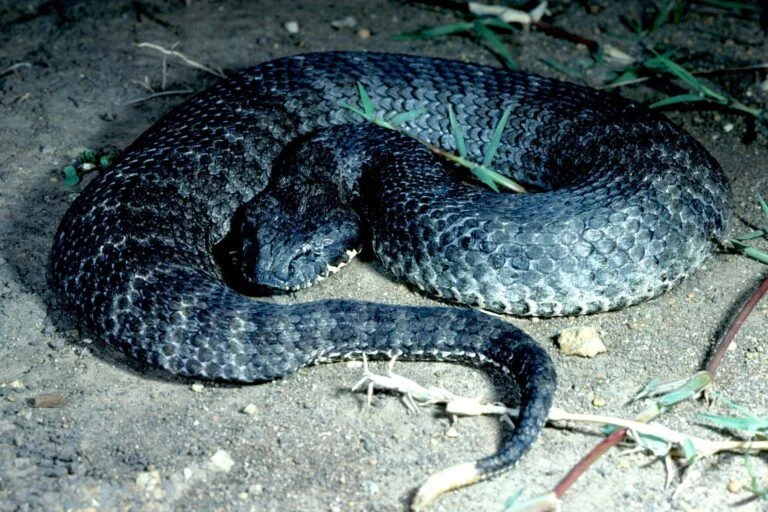
In the dense, humid rainforests of Papua, a seasoned trekker or a local guide will never shout the word "snake" upon spotting a camouflaged predator on the trail. Instead, they will lean in and whisper a calm, coded warning to those following behind: "Hati-hati, ada tali" (Be careful, there is a rope). This linguistic tradition is not born of superstition, but of a calculated necessity to prevent panic. In the treacherous terrain of the Indonesian eastern frontier, a sudden, panicked movement can be the difference between a safe passage and a fatal encounter with one of the most efficient killers in the animal kingdom.
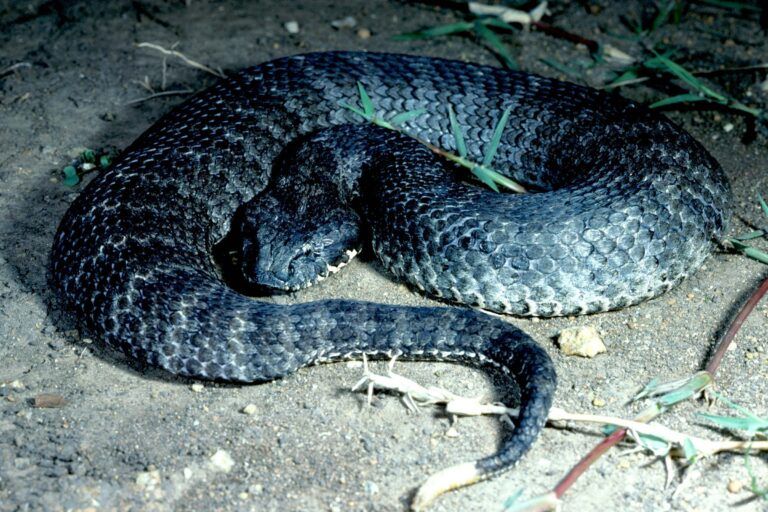
The creature necessitating such caution is the Death Adder, known scientifically as the genus Acanthophis. Among the indigenous communities of Papua, it is frequently referred to as the "ular bodoh" or the "stupid snake." This moniker is a profound irony of nature. The snake is labeled "stupid" not because it lacks predatory intelligence, but because of its startling lack of flight response. While most snakes will slither away at the vibration of human footsteps, the Death Adder remains motionless. Even when prodded with a stick or stepped near, it refuses to retreat, maintaining a stoic, statuesque presence that often leads to accidental treading—and subsequent tragedy.
The Biological Paradox: An Elapid in Viper’s Clothing
Hari Suroto, a prominent researcher from the National Research and Innovation Agency’s (BRIN) Environmental Archaeology Research Center, explains that the "stupid" behavior is actually a highly evolved survival strategy. Morphologically, the Death Adder is a fascinating anomaly of convergent evolution. While it belongs to the Elapidae family—the same lineage as cobras, mambas, and the highly venomous taipans—it looks and acts almost exactly like a member of the Viperidae family (vipers).
Unlike the long, slender bodies of typical elapids, the Death Adder possesses a short, stout, and thick-set frame, usually measuring between 40 and 70 centimeters in length. Its head is distinctly triangular or "axe-shaped," a trait usually associated with vipers, and it features vertical pupils and long, recurved fangs. Its coloration is a masterpiece of natural camouflage, featuring bands of red, brown, and black that allow it to disappear entirely into the leaf litter and organic serasah of the forest floor. This physical makeup is perfectly suited for its role as a sedentary ambush predator, rather than an active hunter.
The World’s Fastest Strike: 0.13 Seconds to Lethality
The lethality of the Death Adder is rooted in its unprecedented speed. While it may appear lethargic or "stupid" when stationary, its strike is the fastest recorded in the herpetological world. Research indicates that a Death Adder can strike, inject venom, and return to its defensive position in less than 0.13 seconds. To put this into perspective, the average human blink takes between 0.1 to 0.4 seconds. By the time a victim realizes they have been bitten, the snake has already completed its movement.
Furthermore, the Death Adder’s strike is unpredictable. Unlike some snakes that require a specific coiled posture to launch an attack, the Death Adder can strike from almost any position, including while partially submerged in sand or leaf litter. This speed, combined with its refusal to flee, makes it a high-risk encounter for anyone walking through the Papuan bush without extreme vigilance.
Master of Deception: The Caudal Luring Strategy
The hunting strategy of the Death Adder is a departure from the "seek and destroy" method used by its cobra cousins. It employs a technique known as "caudal luring." The snake buries its body under loose soil or decaying leaves, leaving only its head and its uniquely modified tail exposed. The tip of the tail is thin and shaped like a small grub or worm.
By twitching the tip of its tail in a rhythmic, worm-like motion, the Death Adder attracts curious birds, lizards, and small mammals. These prey animals, sensing an easy meal, approach the "worm" only to be met by the lightning-fast strike of the camouflaged predator. This sedentary lifestyle allows the snake to conserve energy for long periods, making it a permanent, invisible fixture in its chosen territory.
The 2019 Timika Incident: A Tragic Case Study
The danger posed by the Death Adder is not merely theoretical; it is a recurring reality in the remote regions of Papua. In July 2019, a tragic incident at Kali Iwaka in Timika served as a stark reminder of the snake’s potency. A member of the Indonesian Mobile Brigade (Brimob), who was reportedly resting near the riverbank, was bitten by a Death Adder. Despite being a trained professional in peak physical condition, the officer succumbed to the venom.
Jessik Kukuh, a specialist from Reptile Rescue Timika, confirmed at the time that the bite of the Acanthophis species is frequently fatal without immediate and specialized intervention. The incident highlighted a critical problem in the region: the deceptive nature of the bite. Initially, a Death Adder bite may not appear as dramatic as a cobra bite; there may be minimal swelling or local pain. However, the systemic effects of the neurotoxin begin to take hold rapidly, leading to paralysis and respiratory failure.
The Antivenom Crisis: A Multi-Million Rupiah Barrier
Perhaps the most harrowing aspect of a Death Adder encounter in Indonesia is the logistical and financial hurdle to treatment. Currently, Indonesia does not produce a domestic antivenom for the Death Adder. The state-owned pharmaceutical company, Bio Farma, produces the "Sabu" (Serum Anti Bisa Ular), which is effective against the Spitting Cobra, the Malayan Pit Viper, and the Banded Krait. However, it is ineffective against the specific neurotoxins found in the Death Adder.
The only viable treatment is the CSL Death Adder Antivenom, manufactured in Australia. The cost of a single vial can reach approximately Rp80 million (roughly $5,000 USD). In the context of rural Papua, where infrastructure is limited and the nearest specialized hospital may be hundreds of kilometers away via difficult terrain, the availability of such expensive medicine is almost non-existent. Furthermore, a single bite often requires multiple vials to neutralize the venom completely, pushing the cost of survival into a range that is unattainable for the average citizen.
Medical Protocol: The Life-Saving Importance of Immobilization
Given the scarcity of antivenom, the immediate first-aid response is the only factor that can delay the onset of fatal symptoms. Experts emphasize that the traditional "Hollywood" methods of treating snakebites—such as cutting the wound, sucking out the venom, or applying a tight tourniquet—are not only ineffective but actively dangerous.
The recommended protocol for a Death Adder bite is strict immobilization. The venom travels through the lymphatic system, which is moved by muscular action. By splinting the limb and keeping the victim completely still, the spread of the toxin to the vital organs can be slowed. Massaging the area or attempting to "squeeze out" the venom actually stimulates lymphatic flow, accelerating the damage to the nervous system. In the remote jungles, the goal is to keep the heart rate low and the body stationary until specialized medical evacuation can be arranged.
Biogeographical Roots: The Sahul Shelf Connection
The presence of the Death Adder in Papua is a testament to the region’s deep geological history. Millions of years ago, Australia and Papua were part of a single landmass known as the Sahul Shelf. This shared heritage explains why Papua’s fauna is more closely related to Australia’s than to the rest of the Indonesian archipelago (which lies west of the Wallace Line).
The Death Adder is endemic to these two regions, having evolved to fill the ecological niche of the ambush-hunting viper, which is largely absent from the Australian continent. This shared evolutionary history means that the snakes found in the Merauke scrublands or the Timika rainforests share the same high-potency neurotoxic profile as those found in the Australian Outback.
Broader Implications and Public Health Challenges
The Death Adder represents a significant public health challenge in Papua, particularly as human activity expands into previously untouched forest areas for mining, logging, and infrastructure development. The intersection of high-potency venomous wildlife and a lack of localized medical resources creates a high-risk environment for both locals and migrant workers.
There is a growing call among herpetologists and medical professionals for the Indonesian government to collaborate more closely with Australian health authorities or to invest in the local production of polyvalent antivenoms that include coverage for Sahul-region species. Until such medical advancements are made accessible in Papua, the best defense remains education and the preservation of indigenous knowledge.
The cultural practice of calling the snake "tali" is more than just a linguistic quirk; it is a sophisticated psychological tool designed to maintain the collective composure of a group in a high-stakes environment. In the rainforest, where the "stupid snake" waits in its perfect, invisible silence, panic is the true killer. For those who understand the forest, the Death Adder is a reminder that in nature, the most dangerous threats are often the ones that refuse to move, refuse to warn, and refuse to give their victims a second chance. Those who fail to respect the "rope" on the path often do not live long enough to tell the tale.